
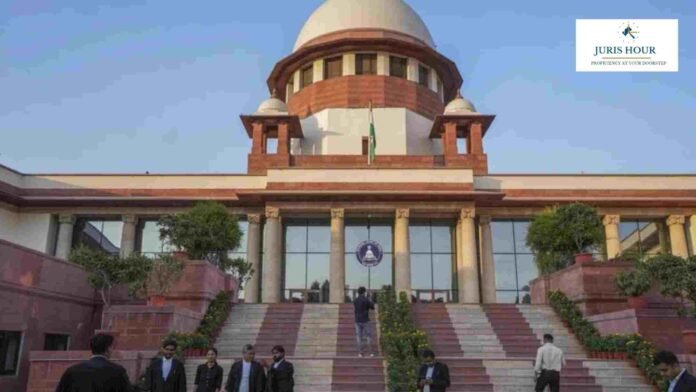
The Supreme Court has enhanced compensation awarded in a motor accident claim involving the death of a 22-year-old engineering student, holding that the notional income of an engineering student cannot be equated with the wages of an unskilled worker and that courts must consider the academic promise and future prospects of such students while determining compensation.
The Bench of Justice Vijay Bishnoi and Justice S. V. N. Bhatti has observed that future prospects cannot be denied merely because the income is assessed notionally. Applying the principles laid down in Pranay Sethi and Sarla Verma, the Court added 40% towards future prospects and deducted 50% towards personal expenses as the deceased was unmarried.
The case arose out of a fatal road accident that occurred on 28 May 2000, when Karan Pal Singh, a third-year mechanical engineering student, was travelling on a motorcycle along with his classmate near Mathura. An allegedly rashly driven truck hit the motorcycle, causing severe injuries to the student, who later succumbed during treatment.
The deceased’s mother had filed a compensation claim before the Motor Accident Claims Tribunal, asserting that her son was a meritorious engineering student with strong employment prospects. She relied on records showing that he had completed a diploma in Plastic Mould Technology from Chennai, obtained AutoCAD certification, and was also imparting computer training. The Tribunal, however, assessed his income at only ₹3,000 per month and awarded total compensation of ₹2.23 lakh.
On appeal, the Punjab and Haryana High Court enhanced the compensation to ₹13.44 lakh by taking the notional income at ₹6,000 per month and applying multiplier 18. However, it denied future prospects on the ground that the income was merely notional.
Before the Supreme Court, the claimant argued that the deceased was a bright engineering student with substantial future earning capacity and that the High Court failed to properly apply earlier Supreme Court rulings dealing with compensation for students and young professionals.
The Supreme Court observed that while it may be difficult to precisely quantify the future income of a student, the compensation awarded by the High Court was still inadequate considering the deceased’s educational qualifications and future prospects.
Relying on earlier judgments including Navjot Singh v. Harpreet Singh, the Court reiterated that the notional income of an engineering student cannot be treated at par with the minimum wages payable to an unskilled worker.
The Bench also referred to earlier decisions where higher notional incomes were accepted for engineering graduates and students with strong academic backgrounds.
Taking note of the deceased’s diploma qualification, AutoCAD certification, and engineering education, the Court held that his monthly income should reasonably be assessed at ₹12,000 considering that the accident occurred in the year 2000.
The Court recalculated the loss of dependency at ₹18.14 lakh and further enhanced compensation under conventional heads including loss of estate, filial consortium, funeral expenses, and motorcycle damage.
Consequently, the Supreme Court enhanced the total compensation to ₹19,25,070 along with interest at 7.5% per annum from the date of filing of the claim petition till realization.
The Court directed the respondents to pay the enhanced compensation within eight weeks.
Case Details
Case Title: Mohinder Kaur (D) Versus Brij Lal Arora
Citation: JURISHOUR-1234-SC-2026
Case No.: SLP (CIVIL) NO. 580 OF 2020
Date: 13/05/2026

