
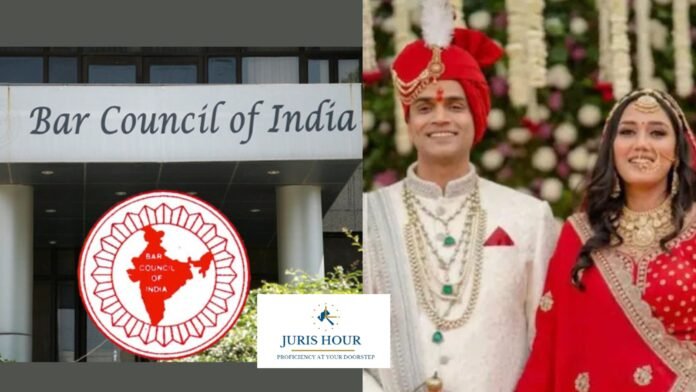
The Bar Council of India (BCI) has suspended Licence of Advocate Samarth Singh and barred him from practising law with immediate effect in connection with the ongoing investigation into the death of his wife, Twisha Sharma, a former model and actor who was found dead at her matrimonial home in Bhopal earlier this month and he has been sent to the 7 days police custody.
The move comes amid increasing scrutiny surrounding the case, allegations of dowry-related harassment, and continuing judicial proceedings before the Madhya Pradesh High Court.
In an order issued on Friday, the apex statutory body regulating the legal profession directed that Singh would not be permitted to appear, act, plead, file vakalatnamas, or otherwise represent himself as entitled to practise law before any court, tribunal, authority, or judicial forum across the country until further orders. The suspension has been imposed as an interim measure and will continue pending consideration by the Bar Council and its disciplinary processes.
The action by the BCI follows criminal proceedings initiated against Singh after the death of Twisha Sharma, who was found dead at her residence in Bhopal on May 12, only a few months after her marriage. Investigating authorities are examining allegations of dowry harassment, cruelty, and other related offences raised by Sharma’s family. The matter has drawn considerable public attention, particularly because Singh is a practising advocate and his mother, Giribala Singh, is a retired judicial officer.
In its observations, the Bar Council noted that the allegations against Singh are serious and potentially impact the dignity and credibility of the legal profession. The Council stated that advocates occupy a unique position as officers of the court and members of a regulated profession, making it necessary for the institution to intervene where allegations may undermine public trust in the justice system.
The development also coincided with Singh’s appearance before a court in Jabalpur after he had reportedly remained unavailable to investigating authorities for several days following registration of the case. During proceedings before the Madhya Pradesh High Court, counsel appearing on his behalf informed the court that Singh was willing to surrender before the competent authority. Following this, police took him into custody for further investigation.
The investigation itself has witnessed several significant developments over the past week. Singh had earlier approached the courts seeking anticipatory bail after a sessions court declined to grant him protection from arrest. However, the indication before the High Court regarding his willingness to surrender altered the course of the proceedings.
Separately, the Madhya Pradesh High Court directed a second post-mortem examination of Twisha Sharma after her family raised objections regarding the initial autopsy and sought a more detailed investigation into the circumstances surrounding her death. The family has consistently alleged that Sharma was subjected to physical and mental harassment after marriage and has questioned the manner in which the investigation has been conducted.
The matter has also led to demands for an independent investigation. During recent court proceedings, the State indicated that it was considering transferring the case to the Central Bureau of Investigation (CBI), while the High Court has continued to closely monitor developments. Sharma’s family has alleged procedural deficiencies and sought accountability from the authorities handling the investigation.
Public focus on the case intensified after information relating to Sharma’s personal communications and allegations concerning dowry-related harassment surfaced during the investigation. Authorities had also reportedly initiated lookout measures and intensified efforts to locate Singh during the period when he was allegedly unavailable to investigators.
The BCI’s intervention represents one of the most significant professional consequences arising from the case thus far. While the suspension does not constitute a determination of guilt, it signals the regulator’s position that the seriousness of the allegations necessitates immediate preventive action to maintain public confidence and preserve the integrity of the legal profession while criminal and disciplinary proceedings continue.

