
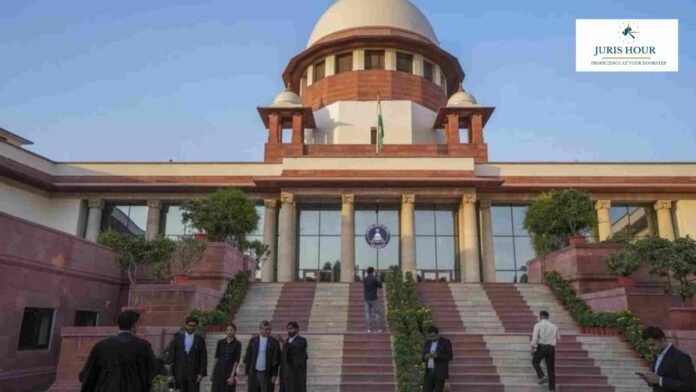
The Supreme Court has quashed criminal proceedings against an a person accused under Section 306 of the Indian Penal Code, holding that mere allegations—such as an alleged illicit relationship—without any direct or proximate act of instigation cannot sustain a charge of abetment to suicide.
The bench of Justice K.V. Viswanathan and Justice Atul S. Chandurkar has observed that the evidence on record merely indicated that the deceased was addicted to alcohol and used to consume liquor with the appellant. There were also general allegations regarding an illicit relationship, but these were largely hearsay and not supported by any concrete or proximate acts linking the appellant’s conduct to the suicide. Importantly, there was no suicide note, nor any evidence of immediate provocation or conduct close in time to the incident that could establish a causal nexus.
The judgment came in the case of Balaji Jaiswal v. State of Chhattisgarh, where the Court set aside the order of the Chhattisgarh High Court that had refused to interfere with the framing of charges against the appellant.
The case arose from the death of one Komal Sahu, who was found hanging from a tree in May 2024. While the investigation ruled out murder and concluded it to be a case of suicide, the prosecution alleged that the deceased was driven to take his life due to humiliation caused by his wife and her alleged illicit relationship with the appellant. Based on witness statements, the appellant was charged under Section 306 read with Section 34 IPC for abetment of suicide.
However, the Supreme Court found that even if the entire prosecution case was accepted at face value, there was no material to show any act of instigation, incitement, or active involvement by the appellant that could have driven the deceased to commit suicide. The Court emphasized that abetment requires a clear mens rea and a direct or indirect act that leaves the victim with no option but to take their life.
The Court held that for an offence under Section 306 IPC to be made out, there must be a “positive act of instigation” coupled with intention. Mere harassment or strained personal relationships, without more, would not meet the threshold. The Court also stressed that the alleged act of instigation must be in close proximity to the act of suicide to establish a direct link.
The Court concluded that the essential ingredients of abetment under Section 107 IPC were not satisfied in the present case. It held that continuing the criminal proceedings would amount to an abuse of process of law.
The Supreme Court allowed the appeal, quashed the charges framed against the appellant, and discharged him from the case. It clarified, however, that the trial against the co-accused would proceed independently and remain unaffected by its observations.
Case Details
Case Title: Balaji Jaiswal Versus State Of Chattisgarh
Citation: JURISHOUR-812-SC-2026
Case No.: SLP (CRL.) NO.14640 OF 2025
Date: 16/04/2026
Read More: Supreme Court Grants Anticipatory Bail in ‘Honeytrap’ Allegations Case, Says FIR Appears Counterblast to Failed Rs. 30 Crore Settlement

