
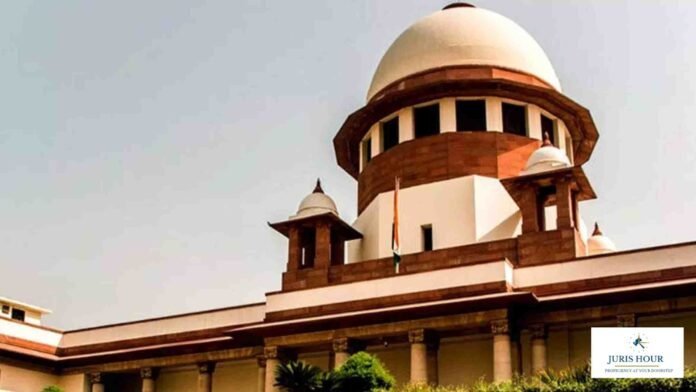
The Supreme Court has delivered a significant judgment resolving the long-pending dispute arising out of the collapse of recognition of Sardar Rajas Medical College, Hospital and Research Centre (SRMCH), Odisha, and the subsequent relocation of MBBS students to other private medical colleges.
The bench of Justice Vikram Nath and Justice Sandeep Mehta held that students who were shifted from SRMCH to transferee private medical colleges cannot indefinitely continue to enjoy Government-rate fee benefits and directed that the financial burden primarily be borne by the defaulting Selvam Educational and Charitable Trust, which managed SRMCH.
The controversy originated after inspections conducted by the Medical Council of India (now National Medical Commission) revealed serious deficiencies in infrastructure, faculty and regulatory compliance at SRMCH during the academic sessions 2013-14 and 2014-15. Due to these deficiencies, renewal of recognition was denied, placing the academic future of MBBS students in jeopardy.
The Odisha High Court had initially directed relocation of students to other recognised medical institutions within the State. However, the matter eventually reached the Supreme Court, which passed a series of interim orders ensuring that students did not lose an academic year and were accommodated in recognised private medical colleges through a State-supervised counselling process.
Ultimately, 122 students were relocated to three private medical colleges — Kalinga Institute of Medical Sciences (KIMS), Institute of Medical Sciences & SUM Hospital, and Hi-Tech Medical College & Hospital.
The transferee colleges later approached the Supreme Court seeking reimbursement of fees, contending that the students had paid only Government-rate fees pursuant to interim orders, whereas the actual fee structures of private colleges were substantially higher. The colleges also argued that they had incurred considerable financial burden by accommodating the transferred students and even paying stipends during the course.
The students opposed any additional liability, arguing that they had already suffered immense hardship and uncertainty due to the sudden transfer and had completed their education after paying fees in accordance with interim directions of the Court.
The Supreme Court observed that the issue was no longer about the legality of the High Court’s transfer directions, but about equitable allocation of financial liability arising from an extraordinary situation created by the failure of SRMCH to maintain mandatory standards.
Importantly, the Court held that the relocated students could not claim perpetual entitlement to Government-rate fees merely because interim orders had earlier permitted such payment. The Bench noted that the students had originally taken admission in a private medical college under a higher fee structure and had consciously agreed to such payment terms.
The Court stated that allowing the students to continue benefiting from heavily subsidised Government fees despite studying in private colleges would amount to “unjust enrichment.”
At the same time, the Court strongly criticised SRMCH and the Selvam Trust for failing to maintain requisite standards. Referring to the deficiencies recorded by the MCI/NMC, the Bench remarked that the institution could not be permitted to benefit from its own wrongs. The Court invoked the maxim Commodum ex injuria sua nemo habere debet — no one should derive benefit from their own wrong.
The Supreme Court then directed that approximately Rs.10 crore secured through bank guarantees furnished by the Selvam Trust before the MCI/NMC, along with Rs.2 crore deposited before the Supreme Court and accrued interest, be released to the three transferee colleges in equal proportions.
The Court ordered the MCI/NMC to ensure release of the bank guarantee amount within three months.
The Bench also took note of the fact that the total fee liability recoverable by the transferee colleges, even if calculated at SRMCH rates rather than higher private college rates, would amount to nearly Rs.16.2 crore.
Recognising that the deposited and secured amounts would still leave a shortfall, the Court permitted the transferee colleges to submit detailed representations before the NMC regarding remaining dues recoverable from individual students. The NMC was directed to provide appropriate redressal mechanisms for recovery of deficit amounts, after accounting for payments already made by students to SRMCH at the time of admission.
The Supreme Court further clarified that students who comply with the fee liability determined under the judgment would be entitled to receive all academic and course completion certificates and related documents without delay.
The Court ultimately disposed of the appeals and connected interlocutory applications, bringing closure to a decade-long litigation surrounding the collapse of recognition of SRMCH and the relocation of affected MBBS students.
Case Details
Case Title: Soumya Ranjan Panda & Ors. Versus Subhalaxmi Dash
Citation: JURISHOUR-1271-SC-2026
Case No.: SLP(Civil) No(s). 35075-35076 of 2015
Date: 14/05/2026
Read More: CESTAT Upholds Penalty On Philips Electronics In Excise Undervaluation Case

