
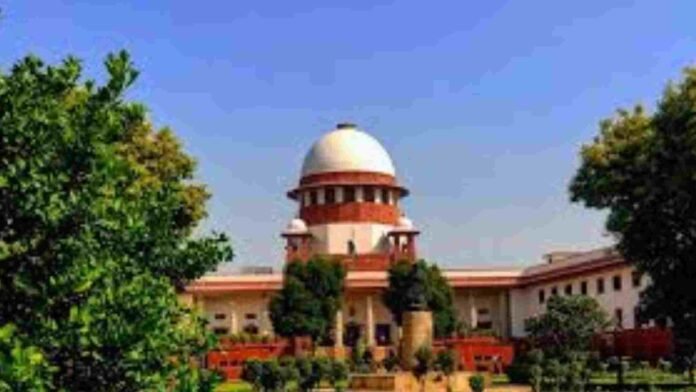
The Supreme Court held that an employee illegally deprived of regularisation cannot be denied back wages merely because formal regularisation occurred at a later date.
The Bench of Justice Sanjay Karol and Justice Nongmeikapam Kotiswar Singh set aside the Bombay High Court’s Nagpur Bench judgment and restored the Labour Court’s order granting back wages to the employee from October 1993 till January 20, 2011, albeit with a reduced interest rate of 8% instead of 12%.
The appellant was appointed as a Cleaner in April 1993 on a daily wage basis with a monthly salary of ₹500. His services were orally terminated in May 1994. Following this, he pursued legal remedies, and the Labour Court found the termination illegal, directing reinstatement with continuity of service and back wages.
Despite multiple favourable orders, including a 2007 Industrial Court direction for regularisation upon completion of 180 days of service, the employer failed to comply. The employee was only regularised in January 2011, nearly two decades after his initial engagement.
The central question before the Supreme Court was whether the employee was entitled to back wages from the date he became eligible for regularisation (i.e., after completing 180 days in 1993) or only from the date of his actual regularisation in 2011.
Buy Now: E-Compilation of Supreme Court Judgements – March 2026
The employer argued that since the employee accepted regularisation in 2011, he could not claim retrospective benefits.
Rejecting the employer’s contention, the Court held that such an argument was untenable, especially in light of the prolonged litigation and the employer’s failure to comply with earlier binding orders.
The Court observed that the employee had continuously fought for his rights and had rendered uninterrupted service since 2003. It emphasized that the doctrine of estoppel cannot be used as a shield by the employer to deny legitimate dues.
The Court took note of the Industrial Court’s 2007 order granting regularisation from the date of completion of 180 days of service, which had attained finality and was never challenged.
The Supreme Court also criticized the employer for imposing fresh conditions in the 2011 appointment letter, requiring the employee to complete an additional five years for regularisation. The Court termed this as a misuse of unequal bargaining power.
It held that once the Industrial Court had already directed regularisation from an earlier date, the employer could not unilaterally alter those terms to the detriment of the employee.
The Court restored the Labour Court’s award granting back wages amounting to ₹8,09,218 for the period from October 1993 to January 2011.
However, considering the financial implications, the Court reduced the interest rate from 12% to 8%. It further directed that the amount be paid within eight weeks, failing which the original 12% interest would be reinstated.
The Court awarded litigation costs of Rs. 1,00,000 to the appellant.
Case Details
Case Title: Balaji Madhukar Konkanwar Versus Maharashtra State Road Transport Corporation
Citation: JURISHOUR-902-SC-2026
Case No.: Habeas Corpus Wirt No. 369 of 2026
Date: 21/04/2026

