
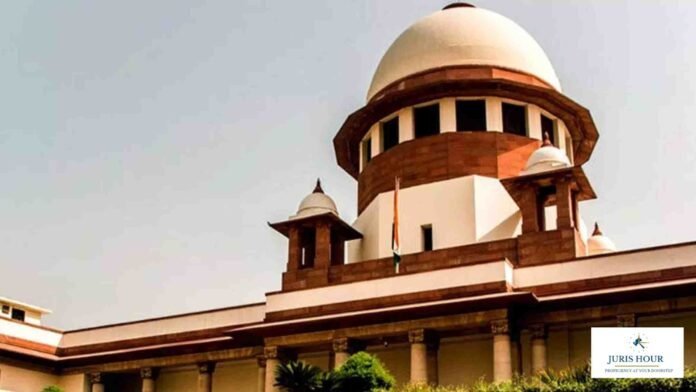
The Supreme Court has held that legal representatives of a deceased party cannot bypass the statutory remedy under the Arbitration and Conciliation Act, 1996 and must challenge an arbitral award only through Section 34, and not by invoking the supervisory jurisdiction under Article 227 of the Constitution.
The bench of Justice Sanjay Karol and Justice Vipul M. Pancholi has held that Section 34 provides the exclusive remedy to challenge an arbitral award. It emphasized that the Arbitration Act is a self-contained and complete code, and the use of the word “only” in Section 34 clearly restricts recourse to the statutory framework. The Court reiterated that judicial interference outside this mechanism must be exercised only in cases of exceptional rarity.
The dispute originated from a 2007 agreement for sale of property executed between the appellant’s uncle and the respondent. After the uncle’s death, arbitration proceedings were initiated in 2011, resulting in an award directing execution of the sale deed. The appellant later claimed that he was a legal heir with a share in the property and was never made a party to the arbitration proceedings. He further alleged that the person shown as legal representative was incorrect and that he became aware of the proceedings only at a later stage.
Challenging the arbitral award, the appellant approached the High Court under Article 227 of the Constitution. However, the High Court dismissed the plea, observing that the appropriate remedy lay under the Arbitration Act. This finding was carried to the Supreme Court, raising the central issue of whether a legal heir can invoke constitutional remedies instead of the statutory mechanism provided under Section 34.
A significant aspect of the ruling is the Court’s clarification regarding the status of legal representatives. It held that arbitration proceedings do not terminate upon the death of a party. Under the scheme of the Act, legal heirs step into the shoes of the deceased and are bound by the arbitral award. Consequently, they also inherit the right to challenge such an award under Section 34.
Buy Now: E-Compilation of Supreme Court Judgements – March 2026
The Court further observed that denying legal representatives the right to challenge an award under the Act, while simultaneously binding them to its consequences, would defeat the object of the legislation. It highlighted that Sections 35 and 40 of the Act ensure continuity of arbitration proceedings and extend the binding nature of awards to persons claiming under the parties.
The Court reiterated that supervisory jurisdiction cannot be used to circumvent statutory remedies. Such intervention is permissible only when no alternative remedy exists or where there is clear evidence of bad faith or exceptional injustice. In the present case, since an effective remedy was available under Section 34, the invocation of Article 227 was held to be unsustainable.
The Supreme Court dismissed the appeal and upheld the Madras High Court’s order. However, it granted liberty to the appellant to avail the remedy under Section 34 of the Arbitration Act and clarified that the limitation period for filing such a challenge would run from the date of the judgment.
Case Details
Case Title: V.K. John Versus S. Mukanchand Bothra
Citation: JURISHOUR-903-SC-2026
Case No.: Special Leave Petition (Civil) No. 16162/2023

