
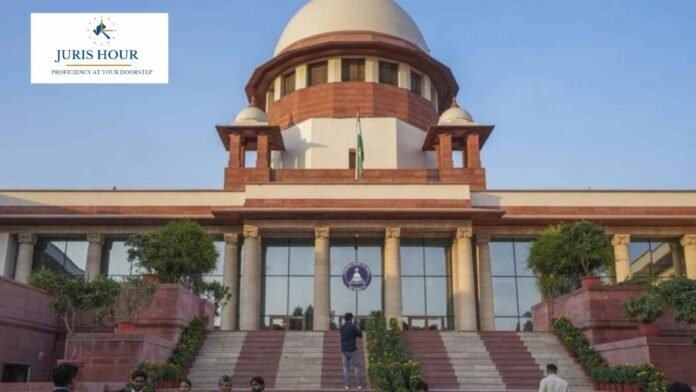
The Supreme Court has issued a comprehensive set of directions to strengthen enforcement of mandatory motor-vehicle insurance across India, directing the integration of Automatic Number Plate Recognition (ANPR) cameras with insurance databases and the VAHAN portal for automatic e-challans against uninsured vehicles.
The bench of Justice Sanjay Karol and Justice Prashant Kumar Mishra directed that third-party insurance for new private cars must be purchased for four years and for new two-wheelers for six years, extending the earlier three-year and five-year requirements.
While the appeal itself arose from a motor accident compensation dispute, the Supreme Court used the proceedings to address the larger systemic problem of uninsured vehicles, fragmented insurance products, delays in motor accident claims and the protection available to occupants of insured vehicles.
Buy Now: 50+ Supreme Court Judgments – July 2026
The Supreme Court observed that although Section 146 of the Motor Vehicles Act, 1988 makes third-party insurance mandatory, compliance remains seriously deficient. The Court noted that nearly 56% of vehicles plying on Indian roads were uninsured, translating into approximately 16.54 crore uninsured vehicles out of 30.48 crore vehicles, according to the material placed before it.
The Court stressed that the consequences are not merely regulatory. When an uninsured vehicle causes an accident, victims and their families can be forced into prolonged litigation to establish liability and secure compensation. The problem becomes particularly serious where the accident results in death or permanent disability, because the financial consequences for the affected family are substantially greater.
The Bench also noted the continuing scale of road accidents. According to the figures referred to in the judgment, India recorded 4,87,705 road accidents in 2024, compared with 4,80,583 in 2023 and 4,61,312 in 2022.
A major component of the judgment is the Court’s direction to integrate existing road-surveillance technology with insurance databases.
The Supreme Court directed that ANPR cameras deployed on highways and roads be integrated with data from the Insurance Information Bureau and the VAHAN portal so that uninsured vehicles can be identified and automatic e-challans issued. The measure is intended to build upon the existing electronic monitoring and enforcement framework for road-safety violations.
The Court further directed that State Police personnel be provided with handheld devices or downloadable applicationsconnected to the Insurance Information Bureau and VAHAN databases. These systems are intended to enable police officers to verify the insurance status of vehicles in real time and issue challans where mandatory insurance is absent.
The judgment records that the Ministry of Road Transport and Highways had informed the Court that electronic detection of uninsured vehicles had already commenced in Odisha, West Bengal, Rajasthan, Gujarat, Himachal Pradesh, Chhattisgarh and Uttarakhand.
The Supreme Court placed the insurance-enforcement issue within the broader constitutional framework of road safety and the right to life under Article 21.
Referring to its recent decision in In Re: Phalodi Accident v. National Highways Authority of India, the Court reiterated that safe travel is an integral component of the State’s obligation to protect life. It emphasized that the constitutional protection of life is not limited to preventing unlawful deprivation of life but also requires the State to create conditions in which human life is protected from avoidable hazards.
The Court also referred to the Patna High Court’s observation in Abhijeet Kumar Pandey v. State of Bihar that the right to safe travel is inherent in both the right to free movement under Article 19(1)(d) and the right to life and liberty under Article 21.
Against this backdrop, the Bench concluded that integration of existing road-enforcement systems with technological platforms was necessary to ensure compliance with the statutory insurance mandate.
The Supreme Court has also directed the implementation of a four-layer structure for private motor-vehicle insurance, intended to make the distinction between mandatory and optional coverage clearer for consumers.
The first layer is the Third-Party Only Policy, which will constitute the basic minimum insurance required under Section 146 of the Motor Vehicles Act. Its pricing will be fixed through a consultative process involving IRDA and the Central Government.
The second layer will be an optional legal-liability cover for occupants and pillion riders, other than the owner, driver and family of the insured. This cover will be available on payment of an additional premium, with pricing to be determined by individual insurers.
The third layer will consist of personal accident cover for the owner, driver and occupants or pillion riders, including the insured’s family. The fourth layer will be own-damage cover, protecting the insured vehicle against loss or damage.
To prevent confusion over the scope of coverage, the Court has directed that every customer purchasing motor insurance must receive a customer option form, whether the transaction takes place online or offline.
The form will allow customers to expressly opt in to the different additional covers and will specify the nature of the cover, the coverage available and the premium payable. The judgment contains a model format showing the mandatory third-party policy alongside optional legal-liability, personal-accident and own-damage covers.
The IRDA has also been directed, in consultation with the General Insurance Council and insurance companies, to formulate uniform policy wordings for the optional covers. At the same time, insurers will retain scope to innovate in relation to coverage and determine pricing for own-damage policies according to market forces.
A consumer-friendly information sheet explaining the four-layer structure and identifying mandatory and optional coverage has also been made mandatory for motor-insurance sales, both offline and online.
One of the most significant directions concerns the duration of third-party insurance for newly purchased vehicles.
The Court recalled its earlier directions in S. Rajaseekaran v. Union of India, under which third-party insurance for new private cars was required for three years and for new two-wheelers for five years. Despite those directions, the Court noted that a substantial number of vehicles continue to remain uninsured.
The Supreme Court therefore directed that, henceforth, third-party insurance for new cars must be purchased for four years and for new two-wheelers for six years. The IRDA has been directed to issue the necessary directions immediately.
The judgment also envisages a pilot project under which members of the public may be able to verify the insurance status of vehicles.
The Court said the system should identify whether the vehicle carries mandatory third-party insurance or a comprehensive policy. Such a mechanism would enable people to ascertain whether vehicles in which they are travelling, transporting goods or carrying employees have valid insurance, while also facilitating prompt reporting of uninsured vehicles.
In another significant technology-driven enforcement proposal, the Court directed IRDA, in consultation with the Ministry of Road Transport and Highways, to deliberate on a pilot project linking fuel supply to valid insurance status.
Under the proposed mechanism, an uninsured vehicle could potentially be denied fuel at petrol pumps until valid insurance is obtained. The Court noted that such a system could assist in identifying uninsured or unregistered vehicles and encourage vehicle owners to maintain valid insurance. ANPR technology could be used for implementing such a system, and the Ministry of Petroleum and Natural Gas had no objection in principle.
The Court’s directions extend beyond insurance enforcement to the disposal of motor accident compensation claims.
The judgment referred to the continuing pendency of Motor Accident Claims Tribunal matters and earlier directions requiring police authorities to prepare and submit Detailed Accident Reports (DARs). Under the framework discussed by the Court, police are required to submit the DAR along with relevant documents, while insurers are expected to assess compensation within the prescribed period.
For cases relating to accidents that occurred before March 31, 2022, the Supreme Court directed State Police authorities to promptly file DARs, along with documents such as FIRs, medical and post-mortem reports, insurance policies and permits, before the concerned MACTs. Police authorities have also been directed to assist in the prompt service and production of witnesses.
The broader directions originated from a motor accident compensation dispute arising out of an accident that took place on July 13, 1996.
The deceased, T. Ramu, was travelling from Tirupathi to his village Venkanur in a Maruti 800 when an unidentified lorry allegedly struck the vehicle from behind near Singarayakonda at around 5 a.m. He sustained injuries and subsequently died during treatment. His legal representatives sought compensation of ₹10 lakh before the Motor Accident Claims Tribunal.
The MACT rejected the claim, relying on the evidence that no additional premium had been paid to cover the personal risk of the owner of the vehicle.
The Telangana High Court subsequently reversed that decision and awarded ₹10,00,500 with interest at 7.5% per annum. It held that the policy was a comprehensive policy and covered the owner of the vehicle who was travelling in it.
On the individual dispute, the Supreme Court rejected the insurance company’s challenge.
The Court held that motor accident claims should not be approached in an overly technical manner. Importantly, it relied upon the IRDA circular dated November 16, 2009, under which insurance companies are liable to compensate occupants of a vehicle covered by a comprehensive/package policy. Finding no reason to disagree with the High Court’s reasoning, the Supreme Court dismissed the appeal to that extent.
Thus, the judgment simultaneously resolves the underlying compensation dispute and establishes a much broader regulatory and enforcement framework concerning motor-vehicle insurance.
The Supreme Court has placed primary responsibility for implementing the directions upon the Ministry of Road Transport and Highways and the Insurance Regulatory and Development Authority of India.
The framework includes technological detection of uninsured vehicles, real-time verification by police, automatic e-challans, standardized insurance options, mandatory consumer disclosures, longer third-party insurance periods for newly purchased vehicles, public verification mechanisms and pilot projects for linking insurance status with fuel access.
The Court has directed all stakeholders to comply with the directions and file their responses by August 14, 2026, with the matter directed to be listed on August 18, 2026 at 2 p.m. for consideration of the affidavits of compliance.
Membership Required to Access Case Details & Order Copy
To view the complete Case Details and Download Order Copy, you must have an active membership. Please subscribe to continue.

