
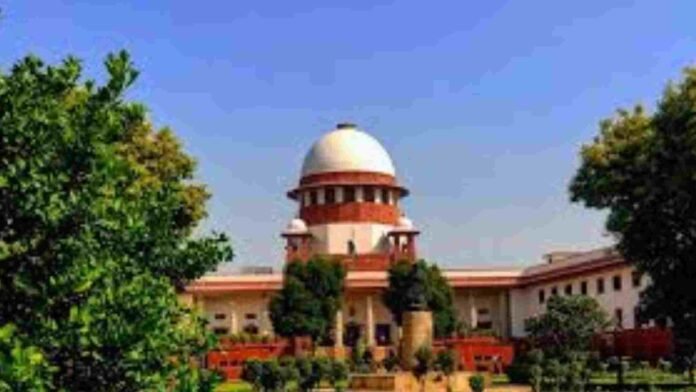
The Supreme Court has held that amounts received under a Mediclaim or medical insurance policy cannot be deducted from compensation awarded by a Motor Accident Claims Tribunal (MACT), even where compensation under the same head of medical expenses is claimed.
The bench of Justice Sanjay Karol and Justice Vipul M. Pancholi clarified that Mediclaim benefits and statutory compensation under the Motor Vehicles Act operate in separate spheres and cannot be treated as overlapping benefits.
The ruling came in New India Assurance Company Limited v. Dolly Satish Gandhi & Anr., where the principal issue before the Court was whether a claimant who had already obtained reimbursement of medical expenses under a personal Mediclaim policy could again claim compensation for medical expenses before the MACT. The insurance company argued that allowing such claims would amount to duplication of compensation and create a “double benefit” contrary to the principle of “just compensation.”
The insurer relied upon earlier judgments, including Reliance General Insurance Co. Ltd. v. Shashi Sharma, contending that compensation under the same head should not be awarded twice and that once medical expenses had been reimbursed, there remained no surviving loss under that category. The insurer further argued that Mediclaim reimbursement was directly linked to accident-related injuries and therefore stood on a different footing from benefits such as provident fund or life insurance proceeds, which accrue independently of accidents.
On the other hand, the claimants argued that compensation under the Motor Vehicles Act is a statutory entitlement triggered by negligence and injury, whereas Mediclaim benefits arise from a private contract supported by payment of premiums. They contended that both benefits derive from distinct legal sources and therefore one cannot diminish the other.
The Supreme Court extensively examined its earlier precedents, including Helen C. Rebello, Patricia Jean Mahajan, Shashi Sharma, Sebastiani Lakra and Swaminathan, while also reviewing divergent views adopted by several High Courts across India. The Court noted an alarming judicial inconsistency, observing that even benches of the same High Courts had taken contrary positions on whether Mediclaim benefits should be deducted from compensation awards. Charts included in the judgment recorded conflicting views across the Bombay, Delhi, Kerala, Punjab and Haryana, and Madhya Pradesh High Courts.
Explaining the distinction, the Court stated that statutory benefits arise directly from legislation while contractual benefits arise from agreements entered into between parties. A Mediclaim policy, according to the Court, represents a financial safeguard purchased by an individual after paying premiums over time and is intended to protect against unforeseen medical expenses. Such benefits do not lose their independent character merely because an accident subsequently occurs.
The Court warned that accepting the insurance company’s argument could create unfair consequences. It observed that if Mediclaim reimbursements were deducted from MACT compensation, claimants would effectively lose the benefit of the premiums they had paid for years. Simultaneously, the insurer of the offending vehicle would receive an unintended advantage merely because the victim had prudently secured personal insurance protection.
The Bench further observed that viewing both benefits as a “double benefit” was not entirely appropriate because one benefit represented the outcome of past financial contributions by the insured person while the other arose from beneficial statutory legislation designed to compensate accident victims. It emphasised that compensation under the Motor Vehicles Act enjoys a higher footing because of the Act’s beneficial character and its objective of placing victims, as far as possible, in the position they would have occupied had the accident not occurred.
The Court also delivered broader observations concerning judicial discipline. It remarked that inconsistent rulings create uncertainty, complicate legal strategy, burden courts, and affect judicial efficiency. The Bench emphasised that both lawyers and judges carry a responsibility to ensure consistency and avoid decisions rendered in ignorance of binding precedents.
The Supreme Court held that Mediclaim amounts are not deductible from MACT compensation, including compensation under the head of medical expenses.
The Court ruled that the two benefits stand on separate legal foundations—one being a statutory entitlement under a welfare legislation and the other arising from a private contractual arrangement funded through premium payments. The appeal filed by New India Assurance was dismissed and the matter was remanded to the High Court for determination consistent with these findings.
Case Details
Case Title: New India Assurance Company Limited Versus Dolly Satish Gandhi & Anr.
Citation: JURISHOUR-1302-SC-2026
Case No.: Special Leave Petition (Civil) Nos.18267 of 2025
Date: 15/05/2026

