
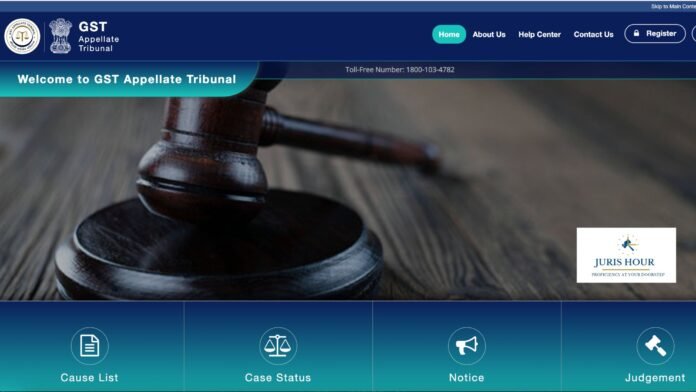
The GST Appellate Tribunal (GSTAT) Bar Association, Chhattisgarh, has submitted a detailed representation to the Vice-President of the Goods and Services Tax Appellate Tribunal seeking clarification, simplification and suitable amendments to procedural requirements under the GSTAT portal and the GSTAT (Procedure) Rules, 2025.
The representation raises concerns that while the launch of electronic filing before the Tribunal is a significant step towards digital adjudication, several practical and procedural issues may impede taxpayers, advocates and authorised representatives from effectively exercising their statutory right to appeal.
The Association stated that commencement of e-filing before the Tribunal was expected to improve access and efficiency. However, users have encountered multiple operational bottlenecks that, according to the representation, are not merely technical issues but directly affect access to justice. The Bar Association argued that unless procedural changes are introduced at an early stage, taxpayers may face avoidable litigation and procedural hardships.
Among the major concerns highlighted is the requirement of selecting a “brief issue involved” from a fixed dropdown menu while filing an appeal. According to the Association, many GST disputes involve multiple interconnected questions and cannot be accurately captured through a rigid classification system. It has sought either a multi-select option or a free-text field allowing appellants to explain the dispute in their own words. The representation points out that matters such as Input Tax Credit, place of supply disputes, export issues, classification matters and valuation issues frequently overlap.
The Association also objected to the portal design requiring appellants to classify themselves as “individual”, “firm” or “company” before filing appeals. It argued that entities such as trusts, societies, HUFs and other forms of organisations may not neatly fit within these categories, thereby creating unnecessary confusion and the possibility of incorrect filings. The recommendation is to permit broader entity classifications or allow self-description.
A significant concern raised pertains to mandatory attachment requirements. The Association pointed out that the portal requires uploading numerous supporting documents, including appeal memos, statements of facts, case summaries and annexures. It argued that such requirements create difficulties because different disputes may require different documentary sets. Standardised requirements may result in unnecessary rejection of filings or additional compliance burdens.
Issues regarding representation through authorised representatives also occupy a substantial portion of the representation. The Bar Association noted that GST practitioners frequently appear on behalf of multiple taxpayers and expressed concern that the present mechanism may not adequately facilitate authorised representative registration and seamless association with appeals. It has suggested introducing an independent dashboard for authorised representatives and easier mapping of multiple clients to one representative profile.
The representation further highlighted difficulties relating to OTP-based authentication. According to the Association, OTP verification mechanisms may create hardships where registered mobile numbers or e-mail IDs are inactive, unavailable or inaccessible. The Association recommended alternate verification mechanisms and emergency procedures to avoid denial of access to appeal filing merely because of communication issues.
Another issue concerns data inconsistencies and date-related confusion in the portal. The Bar Association noted that discrepancies in dates appearing across different fields can create uncertainty regarding limitation periods and procedural compliance. Since GST litigation is heavily dependent on timelines, any inconsistency in reflected dates could potentially affect maintainability and appeal rights.
The representation also raises concerns over language and translation requirements. It notes that many documents may originate in regional languages and mandatory translation requirements could create additional expense and delay. The Association has sought procedural flexibility and practical mechanisms for handling such situations.
Further, concerns were raised regarding the filing of additional evidence before the Tribunal. The Bar Association observed that practical situations frequently arise where parties may need to place additional materials on record after filing an appeal. It suggested introducing a simpler process for uploading supplementary documents without creating procedural barriers.
Concluding its representation, the GSTAT Bar Association stated that its objective is not to oppose digitisation but to ensure that technology supports rather than restricts access to justice. It requested that the Tribunal consider amendments and procedural modifications before the filing system becomes fully operational across the country. The Association stressed that an efficient and user-friendly GSTAT ecosystem would reduce procedural disputes and strengthen confidence in the newly established appellate mechanism.
Read More: From Seizing/freezing to forfeiture: Unmasking Section 68J of NDPS Act

