
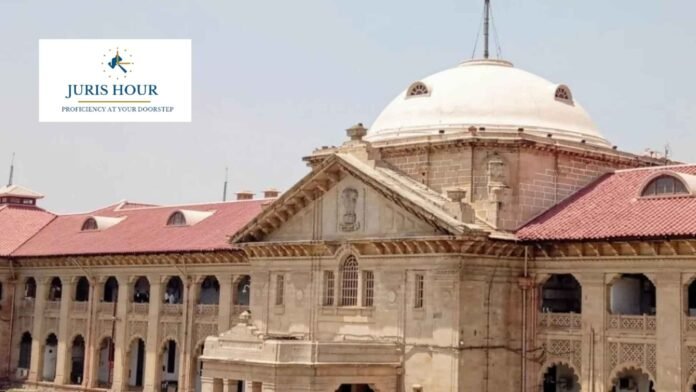
The Allahabad High Court has held that a show-cause notice merely proposes a liability and does not create an enforceable debt, while setting aside a revisional order sustaining a penal interest demand of approximately ₹6.54 crore over excess bottling wastage.
The bench of Justice Piyush Agrawal ruled that, under Section 38-A of the Uttar Pradesh Excise Act, 1910, excise duty on alleged excess bottling wastage becomes legally recoverable only when a competent authority determines and demands it. Since the company paid the entire quantified principal duty within the statutory three-month period, the condition necessary for imposing interest was not satisfied.
Buy Now: 80+ Judgements Indirect Tax – September 2026 E-Magazine
However, the bench declined to grant a refund of the principal duty, leaving the validity of the underlying levy to the pending proceedings before the Supreme Court.
The appellant/assessee is engaged in the distillery and bottling unit at Rosa in Shahjahanpur, Uttar Pradesh. The company held a licence for distillation of rectified spirit and a bottling licence under the U.P. Bottling of Indian Made Foreign Liquor Rules, 1969.
On June 12, 2003, the excise authorities issued show-cause notices under Rule 7(11) concerning alleged excess bottling wastage during 2001–02 and 2002–03. The notices proposed demands of ₹4,25,38,320 and ₹6,39,26,520, respectively.
The company submitted its reply on July 28, 2003, and requested a hearing. However, no demand for these two financial years was raised in the department’s subsequent letter dated February 23, 2004, which concerned earlier years.
The notices for 2001–02 and 2002–03 were first adjudicated on February 18, 2012. The Deputy Excise Commissioner imposed a duty of ₹3,40,22,656 for 2001–02 and ₹5,17,50,040 for 2002–03.
The company deposited ₹3.61 crore on February 29, 2012, and challenged the adjudication order.
On May 17, 2012, the Excise Commissioner set aside the February 2012 order, holding that duty on excess bottling wastage had to be calculated at the rate applicable to the relevant liquor category rather than at the highest rate.
Following the appellate determination, the duty stood fixed at ₹3,67,81,469. The company paid the remaining ₹6,81,469 on June 16, 2012.
The High Court noted that the initial payment was made within three months even of the earliest possible demand date, February 18, 2012. The balance was also paid within three months of the final determination on May 17, 2012.
Despite payment of the principal duty, the department issued letters in November 2012 demanding penal interest of ₹6,54,39,977.15, calculated from 2001–02 and 2002–03.
The company’s appeal against the interest demand was dismissed on September 7, 2019. In subsequent writ proceedings, the High Court directed that no coercive action be taken if the company deposited 50% of the demand and pursued the available revisional remedy.
The company accordingly deposited ₹3,27,19,989 on October 11, 2019. Its revision was later dismissed by an order dated May 22/24, 2024, prompting the present challenge.
The State argued that duty became payable when excess wastage occurred and that interest was compensatory. According to the department, the company could not retain public revenue during the intervening period.
The High Court explained that interest under a fiscal statute can be imposed only in the manner and from the date prescribed by that statute.
The Court read Section 38-A with Section 3(1), which refers to excise revenue arising from a duty, fee, tax or fine imposed or ordered under the Act. It held that a competent authority must first determine and demand the duty before it becomes legally recoverable.
The Court observed, “A show cause notice merely proposes a liability and does not create a debt.”
It held that the Revisional Authority’s approach—allowing interest to run from the date of wastage regardless of whether a demand existed—effectively ignored the statutory expression “becomes payable”.
The Court relied on the Division Bench judgment in M/s Mohan Meakin Limited v. State of U.P. and Others, decided on May 27, 2016, which interpreted Section 38-A of the same Act.
That ruling explained that excise revenue becomes payable when it is legally recoverable. It also distinguished between a demand that has been stayed and one that has been quashed: a stay does not erase the demand, whereas a quashed demand cannot automatically revive without the necessary fresh demand.
The present judgment recorded that the Division Bench’s view had attained finality following the Supreme Court’s dismissal of the Revenue’s challenge on September 4, 2024.
Applying that reasoning, Justice Agrawal held that the company’s liability had been finally determined only on May 17, 2012, after the earlier adjudication order was set aside in appeal.
The Court also examined Rule 7(11)(b), which contemplates a statement showing actual wastage and the duty payable, on receipt of which the Collector recovers the duty.
It found no such statement or demand on record for the two disputed years before the 2012 adjudication. The 2003 show-cause notices themselves indicated that the department treated the liability as contested and awaiting determination.
The Court held that a liability left undetermined by the department for nearly nine years could not be treated as an arrear attracting interest throughout that period.
Since the entire principal duty was paid within the statutory period, there was no default capable of supporting the penal interest demand.
The company had separately challenged the validity of Rule 7(11), with that dispute pending before the Supreme Court in Civil Appeal No. 10094 of 2011. Payments made by the company were subject to the outcome of those proceedings.
The High Court rejected the argument that the pendency of that appeal prevented the Revisional Authority from deciding the interest issue. It clarified that an appeal pending without a stay does not bar adjudication of a distinct question concerning the operation of Section 38-A.
Nevertheless, the Court expressly refrained from deciding the validity of Rule 7(11) or the levy on bottling wastage exceeding 1%.
The Court declined to grant a refund of the principal duty for 2001–02 and 2002–03 because the underlying levy remained subject to the Supreme Court proceedings.
It distinguished that claim from the claim concerning penal interest, holding that the two stood on different footings.
The Court quashed the revisional order dated May 22/24, 2024. Although the judgment records the company’s claim for refund of the ₹3.27 crore interest deposit, its operative portion does not expressly prescribe a refund deadline or award interest on that deposit.
Membership Required to Access Case Details & Order Copy
To view the complete Case Details and Download Order Copy, you must have an active membership. Please subscribe to continue.

