
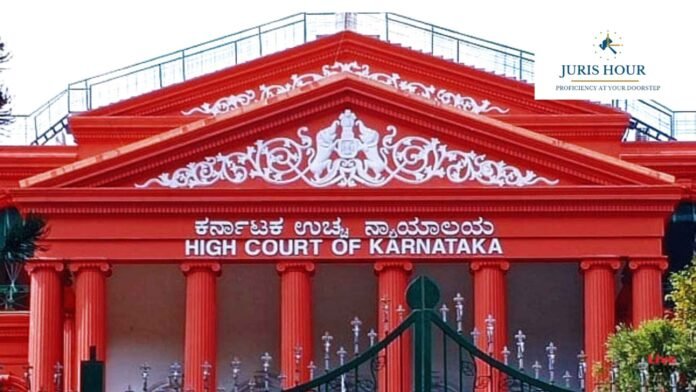
The Karnataka High Court has held that a sugar manufacturer would have no obligation to deduct tax at source under Section 194C of the Income-tax Act, 1961, on harvesting and transportation payments where those amounts form part of the sugarcane purchase price payable to farmers and are deducted from their dues. However, the Court remanded the issue to the Assessing Officer to verify whether such adjustment had actually taken place.
The Bench of Chief Justice Vibhu Bakhru and Justice K.S. Hemalekha also upheld the Income Tax Appellate Tribunal’s acceptance of ₹1,500 per tonne as the arm’s length price of bagasse transferred between the company’s sugar and power divisions. It further sustained the deduction of ₹3.79 crore in irrecoverable advances to a wholly owned Ghanaian subsidiary established to expand its sugar business overseas.
Buy Now: Direct tax (Income Tax) Judgments E-Magazine October 2026
The company manufactures sugar and generates electricity, using part of the power for captive consumption and supplying the balance to electricity distribution companies under power purchase agreements.
During scrutiny assessment, the tax authorities examined the valuation of bagasse transferred from its sugar divisions to its power divisions, the write-off of advances to its Ghana subsidiary, and payments towards sugarcane harvesting and transportation.
The Transfer Pricing Officer proposed an adjustment of ₹30,77,53,817 on the bagasse transactions. The Assessing Officer also disallowed the write-off of ₹3,79,70,871 relating to the Ghana subsidiary.
A further disallowance of ₹12,39,31,392 was made under Section 40(a)(ia), representing 30% of harvesting and transportation payments totalling ₹41,31,06,305, on the ground that tax had not been deducted under Section 194C.
Following adverse directions from the Dispute Resolution Panel, the company approached the ITAT, which granted relief on these issues. The Revenue challenged that relief before the High Court under Section 260A.
The Revenue argued that payments to harvesters and transport contractors were distinct contractual payments attracting TDS under Section 194C. According to the department, those payments could not simply be merged with the sugarcane purchase price payable to farmers.
The ITAT had accepted the company’s explanation that it merely facilitated payments on behalf of farmers and subsequently adjusted them against the cane price. The Tribunal consequently held that the disallowance under Section 40(a)(ia) did not arise.
Before the High Court, the company produced a sample agreement indicating that the farmer had agreed to bear harvesting charges and authorised the company to deduct those payments from the amount payable for sugarcane supplied.
The Revenue nevertheless contended that the factual position had not been fully examined. Its counsel submitted that the company had deducted tax in some cases and that adequate enquiries had not been conducted into whether the payments formed part of the cane purchase price.
The High Court accepted the conditional legal position that, where harvesting and transportation payments were part of the purchase cost payable to farmers and were deducted from their dues, the company would have no obligation to deduct tax under Section 194C.
It remanded the matter to the Assessing Officer to examine whether the company had actually deducted payments made to contractors and harvesters from the sugarcane purchase price payable to farmers.
If the officer concludes that the payments were not part of the sugarcane purchase cost, the Court directed that the officer may also examine the company’s claim that tax had been deducted at source on those payments.
The ultimate disallowance on this issue therefore remains subject to factual verification.
The transfer pricing dispute concerned bagasse, a by-product of sugar manufacture used as fuel by the company’s co-generation power units.
The company valued internal transfers at ₹1,500 per tonne. It had also sold bagasse to an unrelated party at ₹1,200 per tonne.
The TPO rejected reliance on the third-party sales because they occurred on only two dates. Instead, the officer adopted fuel costs used by the Central Electricity Regulatory Commission for electricity tariff determination: ₹2,274 per tonne for the Aland unit in Karnataka and ₹2,632 per tonne for the Jay Mahesh unit in Maharashtra.
The company supported its valuation with quotations from unrelated parties, regulatory material and a study identifying different approaches to valuing bagasse. The ITAT found that the third-party quotations demonstrated availability in the open market at the price adopted by the company.
The Tribunal also considered the Karnataka Electricity Regulatory Commission’s bagasse cost of ₹1,161.28 per tonne.
Although the relevant KERC tariff order originated in 2018, the High Court noted that the price had been adjusted for variation for the relevant financial year. The earlier date of the tariff order did not, therefore, justify rejecting it outright.
The ITAT additionally considered calculations linked to the fair and remunerative price of sugarcane and the quantity of bagasse generated during manufacture.
The High Court held that the Tribunal’s acceptance of ₹1,500 per tonne was supported by cogent material. In the circumstances, the CERC fuel price used for tariff determination could not be treated as determinative of the arm’s length price.
The Bench found no departure from the statutory transfer pricing principles and held that no substantial question of law arose on this issue.
The second dispute involved payments made during financial year 2012–13 to vendors of the company’s wholly owned Ghana subsidiary. These included professional charges, accounting charges, audit fees and guest house rent.
The company explained that it had established the subsidiary to expand its sugar manufacturing business overseas. During its initial operations, the parent company supported the subsidiary by paying consultants, professionals and other vendors directly.
These amounts were recorded as loans and advances. The subsidiary suffered continuing losses, ceased operations and was wound up, leaving the advances irrecoverable.
The DRP had inferred an absence of commercial expediency because the company paid vendors directly rather than making an equity investment in the subsidiary.
The High Court rejected that reasoning as unsustainable. The relevant inquiry was whether the subsidiary extended the company’s existing business and whether the payments supported that business.
The Ghana subsidiary had been established to manufacture sugar, which was the company’s core business. There was no material indicating that the payments had been made for any purpose other than supporting the subsidiary.
The Court also rejected the Revenue’s assumption that the payments bore no nexus with the parent company’s business, finding that assumption unsupported by the record.
The Bench referred to ACE Designers Limited v. Additional Commissioner of Income Tax, where a loss connected with a wholly owned subsidiary’s business operations had been accepted as a business loss.
It also relied on the principles explained by the Supreme Court in S.A. Builders Ltd. v. Commissioner of Income-tax (Appeals) concerning expenditure incurred on grounds of commercial expediency.
Those principles recognise that expenditure may serve business purposes even where it is voluntarily incurred, produces an indirect benefit, or also benefits another entity.
The High Court further discussed decisions concerning Vaibhav Global Ltd. and Colgate Palmolive (India) Ltd. involving business losses linked to subsidiaries.
Applying these principles, the Bench found no flaw in the ITAT’s decision allowing the ₹3,79,70,871 write-off under Section 37(1).
The High Court disposed of the Revenue’s appeal by sustaining the ITAT’s conclusions on bagasse valuation and the Ghana subsidiary write-off, while remanding the harvesting and transportation issue to the Assessing Officer.
Membership Required to Access Case Details & Order Copy
To view the complete Case Details and Download Order Copy, you must have an active membership. Please subscribe to continue.

