
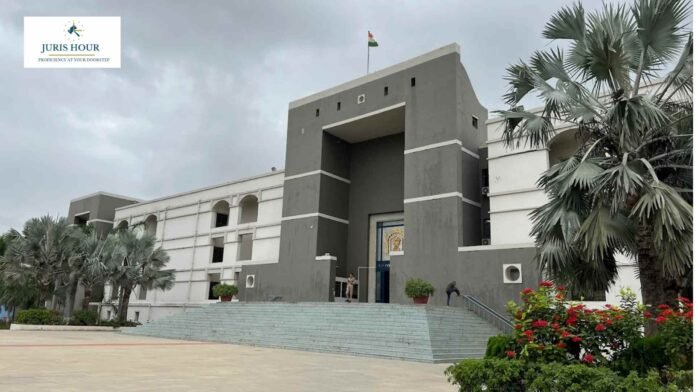
The Gujarat High Court has quashed reassessment notices issued under Sections 148 and 148A(3) of the Income Tax Act, 1961 against holding that merely because an assessee has undertaken high-value banking transactions, it cannot automatically lead to the conclusion that income has escaped assessment in the absence of tangible evidence.
The Bench of Justice A.S. Supehia and Justice Vaibhavi D. Nanavati has observed that non-charging of interest on loans could not by itself justify an inference that taxable income had escaped assessment. Commercial decisions regarding charging or waiving interest are matters for the assessee and cannot automatically trigger reassessment proceedings.
The Income Tax Department had issued a show cause notice under Section 148A(1) alleging that substantial transactions reflected in the company’s bank accounts were not in consonance with its business activities. Subsequently, notices under Section 148 and orders under Section 148A(3) were issued reopening the assessments.
According to the department, analysis of the company’s bank accounts revealed massive credit and loan transactions running into hundreds of crores. The department suspected that these transactions indicated escapement of taxable income and sought to reopen the completed assessments.
The company, however, contended that every transaction reflected in its bank statements had been duly recorded in its books of account, supported by audited financial statements, and disclosed in the income tax returns already processed by the department.
The petitioner argued that the reassessment proceedings were founded entirely on assumptions and conjectures. The petitioner submitted that detailed explanations had been furnished regarding credit entries aggregating approximately ₹977 crore, including supporting bank statements and loan transaction details.
The company further argued that all transactions were duly reflected in audited books of account. Borrowing from group concerns did not require an NBFC licence. Non-charging of interest on certain loans could not by itself indicate income escapement. Allegations regarding mark-to-market (M2M) losses and bullion purchases were introduced without adequate opportunity of response. Similar reassessment proceedings for Assessment Year 2017-18 had already been quashed by the High Court on nearly identical allegations.
The department sought to distinguish the earlier judgment by relying upon the post-2021 reassessment regime. It argued that the amended provisions of Sections 147, 148 and 148A require only “information suggesting escapement of income” and not the earlier standard of “reason to believe.”
The department maintained that unsecured loan transactions and repayments involving hundreds of crores lacked adequate supporting documentation and therefore generated sufficient suspicion to justify reopening the assessments.
The Court found that the department itself had recorded in the impugned notices that the entities involved in the transactions were regularly filing income tax returns. Therefore, the genuineness of those entities was not doubted by the department.
The Bench noted that all credit entries appearing in the bank accounts had already been reflected in the books of account and considered while filing the original returns. The transactions were also largely with group entities that were regular tax filers.
Rejecting the Revenue’s reasoning, the Court observed that a bank account may legitimately contain various credits, loans, advances, investments and turnover-related transactions. Merely because such transactions are of high value does not establish escapement of taxable income.
The Court categorically held that reopening an assessment solely on the assumption that transactions are not in coherence with the nature of business is impermissible when the assessee has already explained those transactions and no independent evidence has been brought on record by the department.
The High Court also rejected the department’s allegation that the company lacked an NBFC licence. It held that borrowing funds from group concerns does not convert an entity into a Non-Banking Financial Company and therefore absence of such licence cannot be treated as evidence of escaped income.
On the issue of mark-to-market loss of approximately ₹15.18 crore, the Court found that the allegation was never part of the original Section 148A notice. Consequently, the Revenue could not introduce adverse findings on that issue at the stage of the final order without first granting an opportunity to the assessee to explain the matter.
The Court also found the allegation relating to bullion purchases unsupported by any material evidence, describing it as a bald assertion lacking factual foundation.
Allowing both writ petitions, the Gujarat High Court quashed the notices issued under Section 148 and the corresponding orders passed under Section 148A(3) for Assessment Years 2019-20 and 2021-22. The Court held that the reassessment proceedings were based on presumptions rather than evidence and failed to demonstrate any actual escapement of income chargeable to tax.
Membership Required to Access Case Details & Order Copy
To view the complete Case Details and Download Order Copy, you must have an active membership. Please subscribe to continue.

