
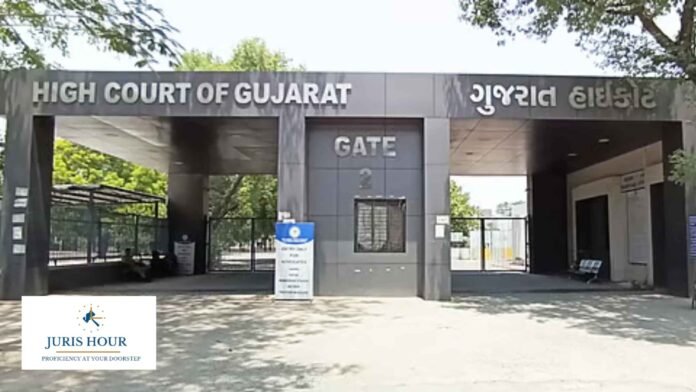
The Gujarat High Court has referred three questions concerning the release of cash seized during an income tax search to a larger bench. The reference arose from a petition seeking the return of ₹5,68,37,500 seized from a company in Ahmedabad.
The bench of Justice A.S. Supehia and Justice Vaibhavi D. Nanavati held that the petitioner was entitled to apply for release of the cash under Section 132B of the Income Tax Act, even though it was seized from another person’s premises.
Buy Now: Think Before You Pay Cash: 50+ Landmark Rulings on Section 40A(3) Of The Income Tax Act, 1961
The bench nevertheless declined to direct its release at this stage. It found that the petitioner’s application was filed beyond the prescribed time and did not explain the nature and source of the money. The firm’s assessment was pending and that proceedings concerning the petitioner were contemplated.
The central question is how the 120-day period in Section 132B operates when a person seeks the release of seized assets. Earlier Gujarat High Court decisions had treated the Department’s failure to decide a timely application within that period as a ground for release. The bench said those decisions had not examined the effect of the provision requiring the government to pay interest on money retained beyond 120 days. Because the earlier rulings had been followed in subsequent cases, it referred the issue to a larger bench rather than treating them as per incuriam.
The Income Tax Department received information on May 9, 2024, about cash found at the Ahmedabad premises of M/s Prime Enterprise, an Angadiya firm. A search warrant was issued the next day, and officers seized ₹5,68,37,500.
The petitioner claimed that the money belonged to him. He said cash withdrawn from bank accounts was kept with Prime Enterprise for safe custody and for making payments connected with purchases of agricultural produce.
Proceedings were also initiated under the Prohibition of Benami Property Transactions Act. On December 30, 2025, the Benami authority dropped those proceedings, recording that ownership of the cash had been established and that it was not benami property. Zala then applied for release of the money on January 28, 2026, and sent a reminder in April. He approached the High Court after it was not released.
The Income Tax Department argued that the Benami order did not settle the question of the money’s source for income tax purposes. It said the cash was seized from Prime Enterprise, whose assessment for assessment year 2025–26 remained pending, and that Zala had not supplied contemporaneous documents establishing the claimed transaction or the source of the funds. The Department also said that neither Zala nor the firm’s partners had responded to notices or summons issued during its inquiry.
The High Court rejected the Department’s contention that Zala could not seek release merely because he was a third party to the search. It held that the expression “person concerned” in Section 132B could include someone whose assets were seized from another person’s premises. The bench also read the Benami order as establishing Zala’s ownership of the cash for the purpose of those proceedings.
That finding, the court said, did not itself require the money’s release. Establishing who owns the cash does not establish the nature and source of its acquisition under the Income Tax Act. The court found that Zala’s release application did not provide the explanation required by Section 132B and had been made well after the prescribed period of 30 days from the end of the month of seizure.
Under the first proviso to Section 132B(1)(i), a person seeking early release must apply within the specified period and explain the nature and source of the asset to the Assessing Officer’s satisfaction. A further proviso states that the asset or relevant portion “shall be released” within 120 days from execution of the last search authorisation.
The bench observed that Section 132B(4) provides for interest on qualifying seized money retained after the 120-day period, running from the day following that period until completion of the assessment as specified in the provision. In its view, that interest mechanism was relevant to deciding whether the words “shall be released” require automatic release in every case, including where an application contains no explanation of the asset’s source.
The court distinguished the earlier rulings in Nadim Dilip Bhai Panjvani, Mitaben R. Shah and Ashish Jayantilal Sanghavi on the ground that they had not considered this aspect of Section 132B(4). It said the conflict in approach warranted consideration by a larger bench.
The larger bench has been asked to decide whether release after 120 days is mandatory where an application was filed within the prescribed 30-day period; whether assets can be released after 120 days without a completed determination of tax liability when the Assessing Officer has not decided the application; and whether an officer must act on, or communicate rejection of, an application that does not disclose the nature and source of the assets.
The Registry has been directed to obtain appropriate orders from the Chief Justice for the reference. The larger bench has not yet answered those questions, and the judgment does not direct the immediate return of the ₹5.68 crore.
Membership Required to Access Case Details & Order Copy
To view the complete Case Details and Download Order Copy, you must have an active membership. Please subscribe to continue.

