
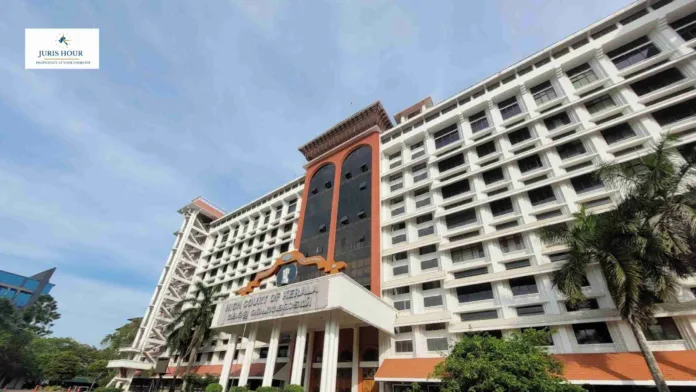
The Kerala High Court has ruled that cash loans exceeding Rs. 20,000, in violation of the Income Tax Act, cannot be treated as a legally enforceable liability unless a valid justification is provided.
The bench of Justice P V Kunhikrishnan made this declaration while setting aside the conviction of a man in a cheque dishonour case. The man had been sentenced to one year in prison and fined ₹9 lakh by a sessions court under Section 138 of the Negotiable Instruments (NI) Act, which penalizes cheque bounce due to insufficient funds.
Challenging his conviction, the accused contended that the Rs. 9 lakh he received from the complainant was paid entirely in cash, violating Section 269SS of the Income Tax Act, which prohibits cash loans above ₹20,000. Therefore, he argued, the debt was not legally enforceable.
Agreeing with the accused, Justice Kunhikrishnan observed that accepting such cash-based debts as legally binding would effectively legitimize transactions prohibited by law. “If a criminal court indirectly legalises such illegal transactions in violation of the IT Act, it would undermine the country’s efforts to discourage large cash dealings and promote digital transactions,” the court stated.
The judgment underlined that discouraging cash transactions above ₹20,000 aligns with the broader vision of the ‘Digital India’ initiative and efforts to curb the parallel economy and circulation of black money.
The court emphasized that debts stemming from illegal cash transactions cannot be enforced through criminal proceedings unless a valid explanation is offered for the mode of payment. “If courts begin regularising such transactions, it would only embolden citizens to engage in illegal cash dealings and potentially launder black money through the legal system,” the judge noted.
In the case at hand, the accused had successfully rebutted the statutory presumption under Section 139 of the NI Act, which typically assumes that a cheque is issued to discharge a legally enforceable debt. The accused pointed out that the complainant lacked the financial capacity to lend ₹9 lakh and failed to justify the cash transaction.
As a result, the High Court allowed the revision petition, overturned the sessions court’s order, and acquitted the accused.
Justice Kunhikrishnan further clarified that any person who pays more than ₹20,000 in cash as a loan — and subsequently seeks to recover the amount via a cheque — must bear the risk of non-recovery unless the transaction is justified under the provisions of the Income Tax Act.
The court concluded that, henceforth, such illegal transactions would not find remedy in criminal courts unless substantiated by lawful explanation, making it clear that the ruling would apply prospectively.
Case Details
Case Title: P.C. Hari Versus Shine Varghese
Case No.: CRL.REV.PET NO. 408 OF 2024
Date: 25/07/2025
Counsel For Petitioner: D.KISHORE
Counsel For Respondent: MANU RAMACHANDRAN

