
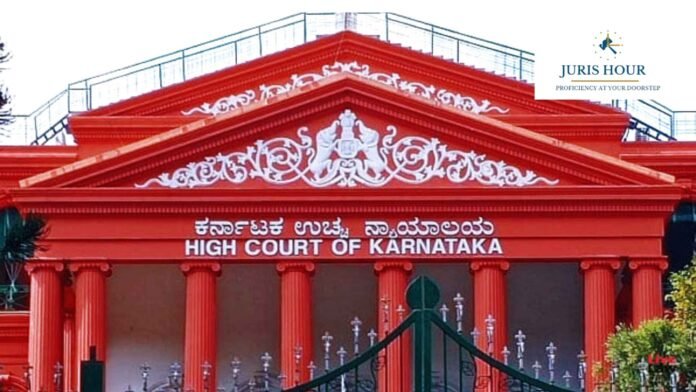
The Karnataka High Court has quashed two GST adjudication orders passed after the dissolution of a company, observing that any liability following the company’s dissolution could have been pursued against its directors only in accordance with Section 93 of the Goods and Services Tax laws.
The bench of Justice B.M. Shyam Prasad noted that one of the adjudication orders did not even refer to the issuance of a show-cause notice contemplated under the Karnataka Goods and Services Tax Act, 2017 and the Central Goods and Services Tax Act, 2017. The order could not justify continuing the proceedings against the petitioners.
Buy Now: E-Magazine: 1000+ Landmark GST Judgments (2017–2026)
The dispute arose after a voluntary liquidation petition was filed before the National Company Law Tribunal under Section 59(7) of the Insolvency and Bankruptcy Code, 2016.
The NCLT allowed the liquidation petition on August 24, 2023, resulting in the dissolution of the company.
Despite the dissolution, the GST authorities passed adjudication orders dated December 30, 2023 and February 25, 2025. Notices in Form GST DRC-13 were subsequently issued for recovery of the alleged dues.
The petitioners approached the High Court seeking the quashing of the adjudication orders and the recovery notices.
Appearing for the petitioners, advocate Hemanth R. Rao submitted that no proceedings could have been initiated against them after the company had been dissolved.
It was argued that if any tax liability survived the dissolution, proceedings could have been taken only against the persons who were directors of the company and strictly in accordance with the statutory mechanism governing such liability.
The petitioners also relied upon a communication from the official liquidator to the adjudicating authority. According to the submissions, the official liquidator had informed the authority that the company’s liabilities had been discharged and no further claims could be made against the company.
The communication was referred to in the adjudication order dated February 25, 2025, which was challenged in one of the writ petitions.
The Additional Government Advocate appearing for the State could not dispute that, after the company’s dissolution, proceedings relating to any surviving liability could have been initiated only against its directors in view of Section 93 of the KGST and CGST Acts.
Section 93 deals with liability in special cases, including circumstances involving the liquidation of a company. It prescribes the conditions under which persons who were directors during the relevant period may be held jointly and severally liable for the company’s tax, interest or penalty.
The High Court’s order indicates that the authorities could not simply continue or enforce proceedings against individuals without invoking and complying with the legally prescribed route.
The Court also identified a fundamental procedural deficiency in the adjudication proceedings.
Justice Shyam Prasad observed that one of the impugned adjudication orders did not even refer to the show-cause notice required under the KGST and CGST Acts.
The Court stated that where the adjudication order itself did not refer to the show-cause notice, it could not justify continuation of proceedings against the petitioners.
A show-cause notice is the foundational document in adjudication under Section 73. It is intended to inform the taxpayer of the allegations, the proposed tax liability and the grounds on which the department seeks to proceed, thereby providing an opportunity to submit a defence before an adverse order is passed.
Allowing both writ petitions, the High Court quashed the adjudication order dated December 30, 2023 for the tax period 2017-18 and the adjudication order dated February 25, 2025 for the tax period 2020-21.
However, the Court clarified that the quashing of the orders would be without prejudice to the authorities’ liberty to commence fresh proceedings as permissible under law.
Membership Required to Access Case Details & Order Copy
To view the complete Case Details and Download Order Copy, you must have an active membership. Please subscribe to continue.
Read More: Bank Transaction Limits 2026: Cash, UPI, Gold, RTGS/NEFT & Credit Card Rules Explained

