
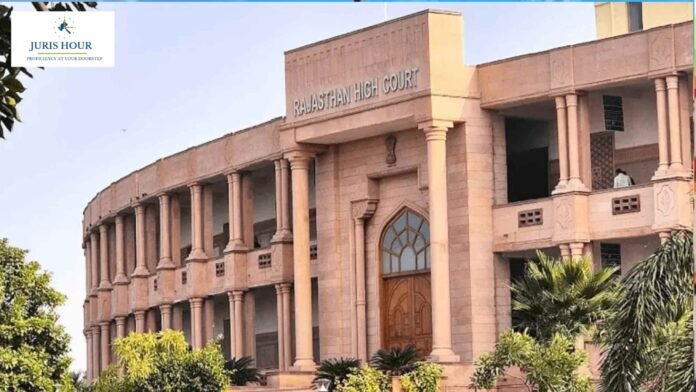
The Rajasthan High Court has condoned the delay in pursuing a statutory GST appeal after finding that the taxpayer could not file it within the prescribed period because of a lack of timely communication by its Chartered Accountant.
The bench of Justice Pushpendra Singh Bhati and Justice Praveer Bhatnagar has observed that refusing adjudication on merits in such circumstances would cause grave injury and prejudice to the taxpayer.
The petitioner also sought permission to pursue the statutory appellate remedy notwithstanding the limitation prescribed under Section 107(4) of the Central Goods and Services Tax Act, 2017 and the Rajasthan Goods and Services Tax Act, 2017. Alternatively, it requested that the matter be remanded to the adjudicating authority for fresh consideration after providing an adequate and effective opportunity of hearing.
Buy Now: 130 GST Judgments – E-Magazine July 2026
Counsel for the petitioner submitted that the dispute was covered by the Rajasthan High Court’s decision in M/s Pratap Power Spares v. Union of India and Others, decided on July 28, 2026. In that case, the Court had condoned a delay of 99 days beyond the permissible statutory period after considering the exceptional circumstances that had prevented the taxpayer from filing its appeal in time.
In Pratap Power Spares, the Court had recognised that although an appellate authority is bound by the limitation stipulated under Section 107 of the GST law, the High Court may exercise its extraordinary constitutional jurisdiction where circumstances beyond the taxpayer’s control prevented the filing of an appeal and a refusal to examine the dispute on merits would result in serious prejudice.
The petitioner also relied upon the High Court’s ruling in M/s Kakar Automobiles v. Union of India and Others, decided on July 13, 2026, in support of its request for restoration of the appellate remedy.
The respondents, however, referred to the ruling in Sharwan Singh Devda v. Union of India and Others. In that judgment, the High Court had observed that the extraordinary writ jurisdiction under Articles 226 and 227 of the Constitution could not ordinarily be invoked merely to circumvent the statutory limitation for filing an appeal.
The judgment in Sharwan Singh Devda clarified that the High Court cannot disregard the statutory limitation scheme and routinely direct appellate authorities to decide time-barred appeals on merits. It nevertheless recognised that there is no absolute bar against invoking writ jurisdiction after the limitation period has expired.
According to that ruling, judicial interference may be justified in exceptional circumstances, including cases where the original order was passed in complete disregard of the principles of natural justice or where an inherent lack of jurisdiction is established. Such interference, however, cannot be granted as a matter of course.
Counsel for New Godara Trading Co. argued that even the ruling relied upon by the respondents left room for intervention in exceptional and extraordinary cases. It was submitted that the petitioner’s case fell within that category because the delay was caused by a lack of communication by its Chartered Accountant.
The petitioner contended that it remained unaware of the relevant developments and, consequently, could not pursue the statutory appeal within the stipulated period. The delay was therefore neither intentional nor attributable to deliberate inaction on the firm’s part.
After considering the rival submissions, the High Court acknowledged that an appellate authority remains bound by the limitation provisions contained in Section 107 of the CGST and RGST Acts. The Bench, however, found that the lack of timely communication by the petitioner’s Chartered Accountant had prevented the petitioner from submitting the appeal within time.
The Court treated the circumstances leading to the delay as being beyond the petitioner’s control. It further observed that denying adjudication of the appeal on merits would cause grave injury and prejudice to the taxpayer.
“Considering the lack of timely communication on the part of the petitioner’s CA, which resulted in the petitioner not submitting the appeal within the stipulated time, being beyond his control, and also the fact that non-adjudication of the appeal on merits would cause grave injury and prejudice to the petitioner, the delay deserves to be condoned,” the Bench observed.
Taking note of the relief granted by a coordinate Bench in similar circumstances, the High Court allowed the writ petition and set aside the appellate order dated December 9, 2025.
The Court directed the appellate authority to consider and decide the petitioner’s appeal independently on its merits and in accordance with the law. The restoration of the appellate remedy was made subject to the petitioner firm depositing the applicable late fee, penalty and other statutory amounts required for entertaining the appeal.
Membership Required to Access Case Details & Order Copy
To view the complete Case Details and Download Order Copy, you must have an active membership. Please subscribe to continue.

