
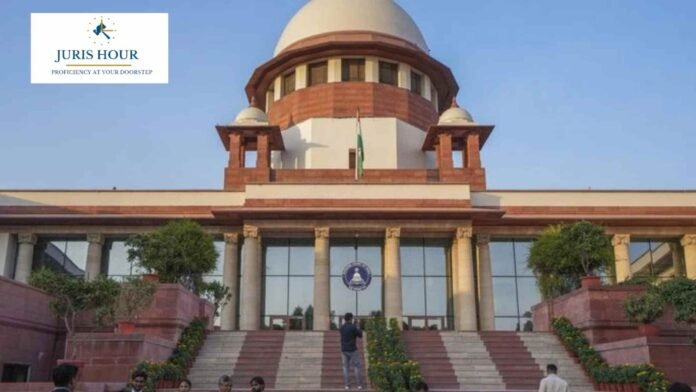
The Supreme Court has set aside an Orissa High Court order that had directed Punjab National Bank (PNB) to accept ₹29.55 lakh from a charitable trust in full and final settlement of its loan dues, holding that the High Court had incorrectly calculated the outstanding liability by ignoring interest maintained by the bank in a separate suspense account after the loan was classified as a non-performing asset.
The Bench of Justice Sanjay Kumar and Justice Sanjeev Sachdeva allowed PNB’s appeals and restored the September 1, 2023 order of the Debts Recovery Appellate Tribunal (DRAT), Kolkata, which had determined the liability of M/s Shree Jyoti Education and Management Trust World and its trustees at ₹54,90,413, together with pendente lite and future simple interest at 9% per annum from February 5, 2018 until realization.
The dispute arose from a ₹5 crore loan sanctioned by United Bank of India, the predecessor of PNB, to the charitable trust on June 27, 2011, for construction of a college building. The managing trustee and other trustees stood as guarantors for the loan. The loan was disbursed over a period of two years.
Buy Now: 50+ Supreme Court Judgments – July 2026
The account was classified as a non-performing asset (NPA) on June 30, 2017. Subsequently, United Bank of India approached the Debts Recovery Tribunal (DRT), Cuttack, seeking recovery of ₹75,56,680 as outstanding dues as on May 4, 2018, along with future interest.
The amount claimed comprised ₹64,25,915 reflected in the loan account, along with ₹11,30,765 towards interest calculated at 12.90% for the relevant period after the account became an NPA.
During the pendency of the proceedings, United Bank of India was amalgamated with PNB with effect from April 1, 2020.
PNB subsequently issued a certificate stating that the Trust had paid ₹93,31,842 between June 30, 2017 and October 13, 2020, and that the outstanding loan amount as on October 13, 2020 was ₹31,99,000.
The DRT, in its February 5, 2021 judgment, substantially reduced the amount sought by the bank. After taking into account payments of ₹93,88,516 made after the account became an NPA, the Tribunal determined that only ₹1,83,268remained payable, with pendente lite and future simple interest at 10% per annum.
The DRT’s calculation treated ₹95,71,784 as the total amount payable, comprising the original claim of ₹75,56,680 and ₹20,15,104 as interest, and deducted payments of ₹93,88,516 to arrive at the balance of ₹1,83,268.
PNB challenged the DRT’s determination before the Debts Recovery Appellate Tribunal at Kolkata.
In an affidavit filed before the DRAT, PNB stated that, after adjusting payments made towards the loan and interest, the dues as on February 5, 2021 stood at ₹56,87,774.02. The DRAT partly allowed the bank’s appeal and ultimately determined the liability at ₹54,90,413, with pendente lite and future simple interest at 9% per annum.
The DRAT also took note of additional payments made by the Trust after the DRT’s judgment and adjusted the liability accordingly. PNB accepted this order, but the Trust and its managing trustee approached the Orissa High Court challenging the DRAT decision.
The Orissa High Court took a different view of the outstanding amount.
It placed considerable reliance on PNB’s December 24, 2020 certificate, which stated that the outstanding loan amount as on October 13, 2020 was ₹31,99,000.
The High Court further noted that the Trust had subsequently deposited ₹59,321.98 on December 28, 2020 and ₹1,84,000 on February 11, 2021. After deducting these payments, the Bench concluded that the outstanding dues were ₹29,55,678.02.
The High Court accordingly directed the Trust and its managing trustee to pay the amount within four weeks in full and final settlement of the dues and for closure of the loan account. PNB’s subsequent application seeking recall or modification of the order was dismissed.
The Supreme Court disagreed with the High Court’s approach.
The Bench examined an affidavit filed by PNB’s Chief Manager along with the Trust’s account statement maintained by United Bank of India from February 22, 2012 onwards. The statement showed that, as on June 30, 2017, when the account was classified as an NPA, the principal loan amount together with interest calculated up to that date stood at ₹1,25,30,842.
The Court explained that, after classification of the account as an NPA, interest was no longer reflected in the regular loan account. Instead, the bank maintained the interest component in a separate suspense account.
Consequently, the ₹31,99,000 figure appearing in the December 2020 certificate could not be treated as representing the entire liability because it did not include the interest component maintained in the suspense account.
The Supreme Court held that the High Court’s calculation amounted to an oversimplification because it ignored the separate accounting treatment of interest after the loan account became an NPA.
The Court observed that the Trust and its trustees could not disregard the banking accounting system and rely selectively on different figures at different stages of the proceedings.
Importantly, the Court referred to Section 2(g) of the Recovery of Debts and Bankruptcy Act, 1993, which defines “debt” to include a liability, inclusive of interest, claimed as due from a person by a bank or financial institution.
The Bench also referred to Section 19(20) of the 1993 Act, which empowers the DRT to pass an order for payment of interest from the date on which the amount is found due until realization or actual payment.
The Court additionally noted Section 21A of the Banking Regulation Act, 1949, concerning the circumstances in which the rate of interest charged by a banking company to its debtor may be examined.
The Bench referred to the Constitution Bench judgment in Central Bank of India v. Ravindra, where the Supreme Court had emphasized the need for banks to disclose the manner in which interest and compound interest were charged and capitalised, consistent with applicable Reserve Bank of India directives.
The Court noted that statements of account should contain appropriate details of debit entries and, where a debit relates to interest, indicate the rate and period for which such interest was charged.
The judgment also referred to the subsequent application of the same principle by a three-Judge Bench in Union of India v. Association of Unified Telecom Service Providers of India.
The Supreme Court was also critical of the changing calculations advanced by the Trust and its trustees.
The Bench noted that the Trust had relied upon a self-serving statement of account showing the principal amount due as on June 29, 2017 as ₹64,25,915. On that basis, it attempted to arrive at a negative balance and claimed that it had made excess payments which should be refunded by PNB.
The Court described this calculation as erroneous and found that it was contrary to the records produced by the bank.
The Court further pointed out that the Trust had taken a different position before the DRT, where it had disputed the rate of interest and claimed that its liability was substantially lower. Before the High Court, however, it relied on the December 2020 certificate to assert that only ₹29,55,678.02 was payable.
Having found the High Court’s approach unsustainable, the Supreme Court held that PNB was entitled to claim the interest calculated and maintained in the separate suspense account in addition to the outstanding principal loan amount.
The Court therefore restored the DRAT’s calculation contained in its September 1, 2023 order.
The rate of pendente lite and future simple interest was fixed at 9% per annum on ₹54,90,413 from February 5, 2018 until realization, in accordance with the DRAT’s order, which PNB had accepted.
The Supreme Court consequently allowed PNB’s appeals and set aside the Orissa High Court’s orders dated January 11, 2024 and May 14, 2024.
The September 1, 2023 order of the Debts Recovery Appellate Tribunal, Kolkata, in Appeal No. 16 of 2021 was restored.
The Court clarified that PNB would be entitled to recover its dues in terms of the restored DRAT order through appropriate proceedings, after giving credit for any payments made by the Trust and its trustees after the date of the DRAT order, in accordance with law.
Membership Required to Access Case Details & Order Copy
To view the complete Case Details and Download Order Copy, you must have an active membership. Please subscribe to continue.

