
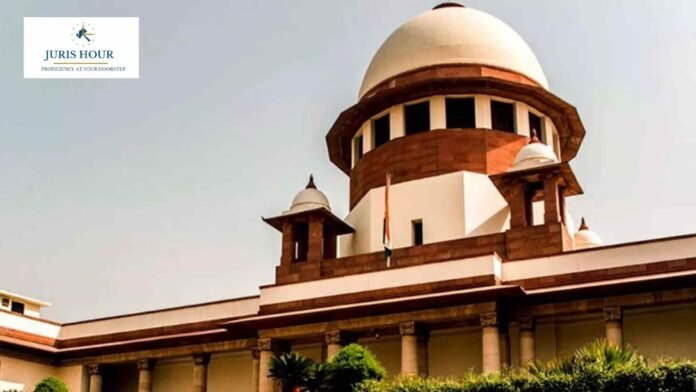
The Supreme Court has restored the conviction of an accused under Section 138 of the Negotiable Instruments Act, 1881 (NI Act), holding that the Karnataka High Court exceeded the limited scope of its revisional jurisdiction by reappreciating evidence and overturning concurrent findings of conviction recorded by the trial court and the appellate court.
The bench of Justice B.V. Nagarathna and Justice Ujjal Bhuyan, in its judgment dated August 4, 2026, held that once the accused admitted his signature on the cheque, the statutory presumptions under Sections 118 and 139 of the NI Act came into play. The burden then shifted to the accused to rebut the presumption through cogent evidence.
The bench found that the defence based on alleged misuse of a blank cheque and the complainant’s alleged financial incapacity was unsupported by convincing evidence.
Buy Now: 50+ Supreme Court Judgments – July 2026
The case arose from a financial transaction between the complainant and the accused, who were acquainted with each other. In December 2010, the complainant allegedly advanced a hand loan of ₹4,50,000 to the accused for purchasing a house site. The parties had agreed that the amount would be repaid within one year with interest at 16% per annum.
Subsequently, the accused issued a cheque bearing No. 524714 dated March 20, 2013, drawn on ICICI Bank, Malleshwaram Branch, Bengaluru, for ₹4.5 lakh. When the cheque was presented for encashment, it was returned unpaid on March 22, 2013 with the endorsement “funds insufficient.”
The complainant issued a statutory demand notice on March 28, 2013, demanding payment of the cheque amount along with interest. When payment was not made, a complaint under Section 138 of the NI Act was instituted on May 6, 2013.
The trial court convicted the accused under Section 138 of the NI Act on September 1, 2015 and imposed a fine of ₹9 lakh, with six months’ simple imprisonment in default.
The trial court noted that the accused had admitted that the signature on the cheque belonged to him and that the cheque had been dishonoured for insufficiency of funds. It also found that the statutory requirements had been complied with and that the presumptions under Sections 118 and 139 had not been rebutted by the defence.
The accused appealed, but the Sessions Court dismissed the appeal on September 19, 2016 and affirmed the conviction. It, however, reduced the fine from ₹9 lakh to ₹6.5 lakh.
The accused thereafter approached the Karnataka High Court in revision.
The High Court, by order dated October 6, 2023, allowed the revision and acquitted the accused. It principally questioned the complainant’s financial capacity to advance ₹4.5 lakh, noting that the complainant had stated that his monthly income was between ₹20,000 and ₹25,000.
The High Court also took issue with the complainant’s failure to disclose precisely from which relatives he had obtained funds, the absence of a specific date for advancement of the loan and the alleged improbability of arranging ₹4.5 lakh when the complainant’s monthly income was comparatively modest. On that reasoning, the High Court concluded that the accused had successfully rebutted the statutory presumption.
The complainant then approached the Supreme Court challenging the acquittal.
The Supreme Court extensively examined the statutory scheme governing dishonour of cheques.
It noted that Chapter XVII of the NI Act was introduced to enhance confidence in banking operations and the credibility of negotiable instruments. Section 138 seeks to make the drawer accountable when a cheque issued towards a legally enforceable debt or liability is dishonoured for specified reasons, while simultaneously incorporating safeguards for honest drawers.
The Court particularly emphasised Section 139, under which it is presumed, unless the contrary is proved, that the holder of a cheque received it for discharge, wholly or partly, of a debt or other liability.
According to the Court, the presumption under Section 139 is statutory and mandatory, though rebuttable. Once execution of the cheque is admitted or proved, the burden shifts to the drawer to rebut the presumption.
The Court reiterated that the accused cannot discharge this burden through a mere denial. The defence must place circumstances or evidence before the court from which the non-existence of the debt becomes sufficiently probable.
Applying these principles, the Supreme Court found that the accused had admitted his signature on the disputed cheque.
Consequently, the Court held that the presumptions under Sections 118 and 139 were required to be invoked. The cheque was presumed to have been issued for consideration and towards discharge of a debt or liability unless the accused could establish otherwise.
The Court further found that the complainant had fulfilled the statutory requirements relating to presentation of the cheque, dishonour, issuance of the demand notice and institution of the complaint. Once these requirements were satisfied, the burden shifted to the accused to establish a credible defence.
The accused claimed that the disputed cheque was actually a blank cheque given as security for a separate ₹40,000 loan allegedly obtained from S.B. Ramachandraiah, who was examined as PW-2.
The Supreme Court found that the accused had not produced documentary evidence establishing either the alleged ₹40,000 loan or its repayment. There was also no convincing evidence showing that the accused had taken steps to recover the alleged blank cheque after it was supposedly misplaced or misused.
The Court attached particular significance to the fact that the accused issued a legal notice demanding return of the cheque only on September 16, 2014, whereas the Section 138 complaint had already been filed on May 6, 2013.
The Supreme Court held that the subsequent notice could not assist the accused because it came after commencement of the criminal proceedings and completion of the complainant’s evidence. The Court characterised the notice as an ex post facto attempt to create a documentary defence and held that it had no evidentiary value in supporting the accused’s case.
One of the significant aspects of the judgment concerns the complainant’s financial capacity.
The High Court had relied substantially on the complainant’s stated monthly income of ₹20,000–₹25,000 to conclude that it was improbable for him to advance ₹4.5 lakh.
The Supreme Court disagreed.
It noted that the complainant had stated during his evidence that he regularly invested in other business ventures, including chit funds, with investments going up to ₹2 lakh. More importantly, the complainant’s evidence that he had obtained financial assistance from PW-2 and PW-3 was corroborated by their testimony. The Supreme Court found that their evidence remained intact despite cross-examination.
The Court therefore held that the complainant’s financial capacity had been sufficiently supported by the evidence on record.
The Supreme Court also noted that the accused had failed to respond to the statutory demand notice by raising a specific plea that the complainant lacked the financial capacity to advance the loan.
The Court held that where an accused intends to challenge the complainant’s financial capacity, the defence must initially raise the issue and may then establish it through independent witnesses, documentary evidence, or effective cross-examination.
In the present case, however, the accused failed to place any convincing material demonstrating that the complainant lacked the means to advance the loan.
The Supreme Court found material corroboration in the evidence of PW-2 and PW-3.
PW-2 stated that he had advanced ₹1 lakh to the complainant on December 8, 2010, while PW-3 stated that he had advanced ₹50,000 on December 5, 2010. Their evidence indicated that the complainant had sought financial assistance because his money was tied up with the accused.
The Supreme Court found that their testimony was consistent with the complainant’s case that he had arranged funds to advance the ₹4.5 lakh loan. The cross-examination did not bring out anything substantial to discredit their evidence.
The Court accordingly held that the complainant had established the transaction and that the accused had failed to rebut the statutory presumption through cogent evidence.
The judgment’s broader legal significance lies in the Supreme Court’s discussion of the limited scope of revisional jurisdiction.
The Court stressed that a High Court exercising revision does not function as an appellate court. Its jurisdiction is supervisory and is primarily directed towards examining the correctness, legality or propriety of the order under challenge.
A revisional court should ordinarily refrain from undertaking an elaborate reappreciation of evidence merely because another view of the facts may be possible.
Relying upon earlier decisions including State of Maharashtra v. Jagmohan Singh Kuldip Singh Anand and State of Kerala v. Puttumana Illath Jathavedan Namboodiri, the Supreme Court reiterated that revisional jurisdiction cannot be converted into a second appellate jurisdiction.
The High Court cannot ordinarily conduct an in-depth re-examination of oral evidence and substitute its own factual conclusions for consistent findings recorded by the trial court and the appellate court.
The Supreme Court identified the circumstances in which interference in revision may be justified. These include findings that are perverse, grossly erroneous, glaringly unreasonable, wholly unreliable or legally untenable, findings based on irrelevant material or no material, or cases involving arbitrary or capricious exercise of judicial discretion.
The Court also referred to its 2025 decision in Sanjabij Tari v. Kishore S. Borcar, reiterating that in the absence of perversity or jurisdictional error, a revisional court should not upset concurrent factual findings merely by reanalysing and reinterpreting the evidence.
In the present case, the Supreme Court found that the Karnataka High Court had failed to identify any glaring contradiction or perversity warranting interference with the concurrent findings of conviction.
Holding that the High Court had effectively acted as an appellate court while exercising revisional jurisdiction, the Supreme Court set aside its October 6, 2023 judgment.
The Court restored the judgments and orders of the trial court and the Sessions Court, thereby restoring the conviction under Section 138 of the Negotiable Instruments Act. The appeal was accordingly allowed.
Membership Required to Access Case Details & Order Copy
To view the complete Case Details and Download Order Copy, you must have an active membership. Please subscribe to continue.

