
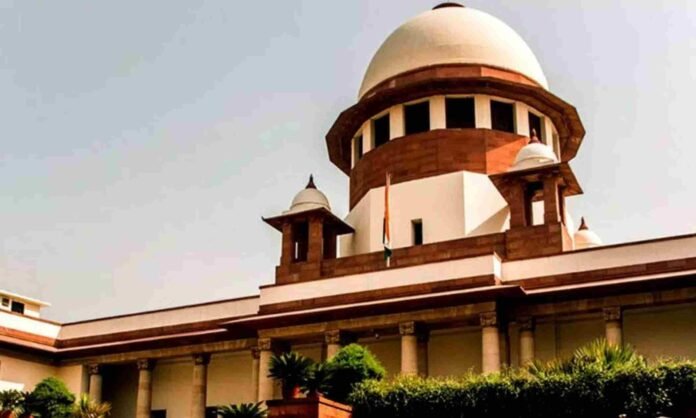
The Supreme Court held that to constitute a valid hiba all its necessary ingredients- declaration by donor, acceptance by donee and taking possession of land – are done publicly rather than secretly.
The Bench of Justices Ahsanuddin Amanullah and S.V.N. Bhatti has set aside concurrent findings of the Karnataka High Court and a trial court in a decades-old land ownership dispute from Kalaburagi, holding that the plaintiff’s claim of ownership through an alleged oral gift (Hiba) and inheritance was neither legally proved nor filed within the limitation period.
The dispute traces back to 1971, when Khadijabee—the original owner—filed a partition suit over the land. Following a decree in her favour in 1987, she allegedly gifted 10 acres of the land orally (Hiba) to her daughter, Syeda Arifa Parveen, on December 5, 1988, which was later recorded in a memorandum of gift dated January 5, 1989. Khadijabee died in 1990.
Subsequently, her husband, Abdul Basit, mutated his name for the entire property in 1991 and sold it in five parcels to the defendants in February 1995. These sale deeds became the foundation of the appellants’ claim of ownership.
Nearly 18 years later, in October 2013, Syeda Arifa Parveen filed a suit (OS No. 212/2013) seeking a declaration of ownership, cancellation of the 1995 sale deeds, and an injunction against the purchasers, alleging that the deeds were executed fraudulently by a non-existent person, “Abdul Bas.”
The Trial Court partly decreed the suit, holding that the plaintiff was the daughter of Khadijabee and Abdul Basit; The oral gift was not proved for want of possession. Under Mohammedan Law, the plaintiff inherited a 3/4th share (18 acres 21 guntas), and the defendants’ sale deeds were valid only for the 1/4th share.
On appeal, the Karnataka High Court (Kalaburagi Bench) not only upheld her lineage but went further — recognising the oral gift of 10 acres and declaring her the absolute owner of that portion, in addition to her 3/4th inherited share. This effectively granted her ownership over the entire land.
The apex court found serious errors in both lower court judgments, particularly the High Court’s expansion of relief without any cross-appeal by the plaintiff. Referring to Banarsi v. Ram Phal (2003) 9 SCC 606, it held that an appellate court cannot enlarge the scope of a decree in favour of a party that has not appealed.
On the key issues, the Bench held:
- Lineage Not Sufficiently Proved:
The Court ruled that mere oral testimony under Section 50 of the Indian Evidence Act is insufficient to prove parentage, especially when documentary evidence like school or birth records could have been produced. It faulted the lower courts for relying uncritically on “interested witnesses.” - Invalid Oral Gift (Hiba):
Reaffirming that a valid Hiba under Mohammedan Law requires declaration, acceptance, and delivery of possession, the Court held that the plaintiff failed to establish possession — a critical condition. It noted inconsistencies such as Khadijabee’s continued control over the property after the alleged gift and the lack of any mutation in the donee’s name. - Suit Barred by Limitation:
Applying Articles 58 and 59 of the Limitation Act, the Court ruled that the suit was filed 23 years after Khadijabee’s death and 18 years after the 1995 sale deeds. The plaintiff’s inaction amounted to “constructive notice” of the transactions. “Negligence in law signifies a failure in the performance of duty,” Justice Bhatti observed, adding that the claim could not be revived after such prolonged silence.
Setting aside both the trial and High Court decrees, the Supreme Court dismissed the plaintiff’s suit in its entirety and restored ownership in favour of the defendants, terming the oral gift and succession claims unproven and time-barred.
The Court’s order stated, “The plaintiff’s suit OS No. 212 of 2013 is dismissed; the civil appeal is allowed; all pending applications are disposed of. No order as to costs.”
Case Details
Case Title: Dharmrao Sharanappa Shabadi And Others Versus Syeda Arifa Parveen
Case No.: SLP (C) NO. 16996 OF 2022
Date: 07/10/2025
Read More: 3 MIAL Staff Impersonating Customs Officers Nabbed at Mumbai Airport for Extortion

