
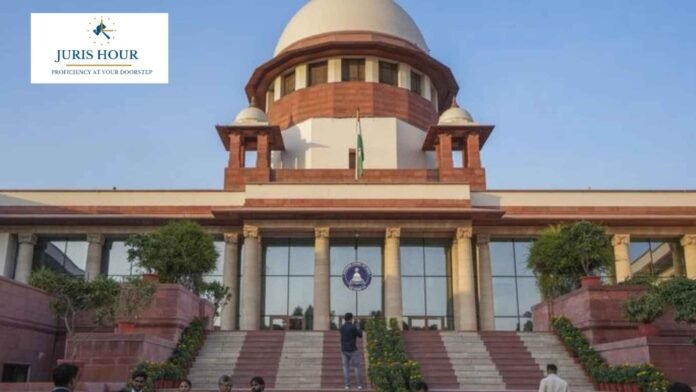
The Supreme Court has laid down safeguards for handling allegations under the Protection of Children from Sexual Offences (POCSO) Act when a child’s parents are in a matrimonial dispute and the accused is a parent or a family member living with the child.
The Justices J.B. Pardiwala and Justice K.V. Viswanathan quashed the POCSO case against a father, directed that legal custody of the child rest with him, and ordered a supervised process to restore physical custody.
Buy Now: E-Magzine On Landmark Supreme Court Judgements Under Limitation Act Till 2025 : PART-1
The Court said that an allegation of sexual abuse must be investigated with the seriousness required by the POCSO Act. At the same time, where parents are in conflict, authorities must examine the circumstances carefully before taking coercive action against an accused parent. The safeguards announced in the judgment apply only when both conditions exist: the alleged offender is a parent or another family member living under the same roof as the child, and there is a matrimonial dispute between the child’s parents, whether or not that dispute is already before a court.
The parents married in 2011, and their child was born in 2015. Their relationship deteriorated, and the mother left the matrimonial home with the child in April 2018. The father subsequently filed a guardianship petition before a Bengaluru family court.
In March 2022, the family court directed that custody of the child be handed to the father. The Karnataka High Court upheld that decision in January 2023 while providing for the mother’s visitation. The dispute nevertheless continued through further proceedings.
A POCSO complaint was later registered against the father in March 2024. The Supreme Court examined the complaint alongside the custody history and a subsequent CBI investigation. It concluded that the FIR had been registered to create a basis for returning custody to the mother. The Court noted that the CBI, after investigation, had found the case unsustainable.
Accordingly, the Court quashed FIR No. 76/2024, later registered as a CBI case, which alleged offences under Section 10 of the POCSO Act, Section 75 of the Juvenile Justice Act and provisions of the Indian Penal Code.
For cases meeting the two conditions identified by the Court, the investigating officer or Special Juvenile Police Unit must engage an expert in child and adolescent psychiatry or clinical psychology, in consultation with the District Child Protection Unit. Where that unit is unavailable, consultation may take place with the District Legal Services Authority.
The expert’s evaluation must be independent and conducted without pressure or repeated harassment of the child. Its purpose is to assist investigators in assessing the material before deciding whether there is reason to believe that the accused committed the offence and whether arrest is warranted.
The Court made clear that the expert’s opinion does not bind the investigating officer. Nor can it, by itself, determine whether a chargesheet or closure report should be filed. In exceptional cases where the material is clear, investigators may dispense with expert involvement, but must record their reasons in writing.
The safeguards also extend to private complaints brought directly before a POCSO Special Court. Where the threshold conditions are met, the Special Court must consider an expert evaluation before deciding whether there are sufficient grounds to proceed and issue summons. It may dispense with that step in exceptional cases after recording reasons.
The Supreme Court said that the mere registration of a POCSO case should not automatically lead a custody court to treat the allegation as true or defeat the accused parent’s claim to guardianship. The court handling custody must assess the relevant material and circumstances on a case-by-case basis.
The Bench stressed that its directions do not dilute the protection given to children under the POCSO Act. It also asked courts dealing with remand and bail in cases covered by the safeguards to examine whether the decision to arrest complied with the applicable legal requirements.
For police cases, the safeguards apply to investigations still underway on the date of the judgment. For private complaints under Section 33 of the POCSO Act, they apply where summons had not yet been issued on that date.
While directing that legal custody rest with the father, the Supreme Court recognised that the child had been in the mother’s physical custody since March 2024. It therefore sent the matter to the IV Additional Principal Judge, Family Court, Bengaluru, to oversee the child’s reintegration with the father and his family.
A committee comprising two CBI officers and two NIMHANS specialists will advise the family court. It will first consider where the child should stay during the transition and what visitation arrangements are needed. Once reintegration is complete, the family court will decide the mother’s visitation arrangements. The Court directed the parties and the child to appear before the family court on September 28, 2026.
The Supreme Court also quashed a separate 2018 FIR filed by the father and its related proceedings, terminated the mother’s fresh guardianship petition, and disposed of the connected contempt petition. It directed that the judgment be circulated to criminal courts and police stations across the country so that the safeguards are observed.
Membership Required to Access Case Details & Order Copy
To view the complete Case Details and Download Order Copy, you must have an active membership. Please subscribe to continue.
Read More: Supreme Court Permits Mother to Take Children to UK Amid Custody Dispute and Pending POCSO Case

