
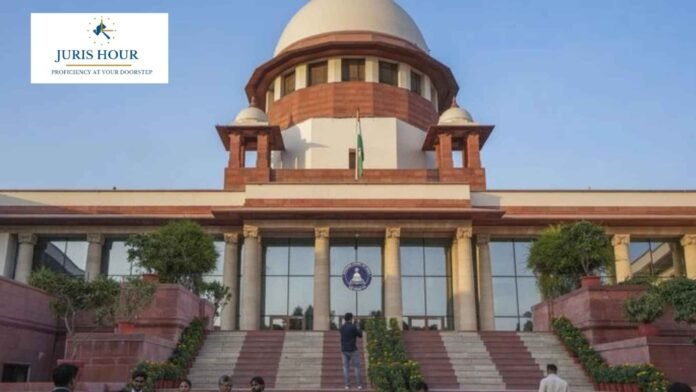
The Supreme Court has struck down Maharashtra rules that restricted the purchase of methanol, required the chemical to be mixed with a colourant and bitterant before sale to non-drug manufacturers, and permitted its confiscation when found with a person who did not hold a particular form of licence.
The bench of Justice J.B. Pardiwala and Justice K. Vinod Chandran has observed that Rules 18A and 18B of the Maharashtra Poisons Rules, 1972 were manifestly arbitrary, disproportionate and violative of Articles 14 and 19(1)(g) of the Constitution. It found that the rules imposed a substantial and continuing burden on lawful industries while failing to effectively address the diversion and pilferage of methanol for manufacturing spurious liquor.
Buy Now: E-Magazine: Supreme Court Judgments on GST (2017–2026)
The Court allowed the writ petitions challenging the provisions and disposed of the connected civil appeal. It also directed the Registry to forward a copy of the judgment to all High Courts and to the Chief Secretaries of every State.
The proceedings concerned a notification issued by the Maharashtra Medical Education and Drugs Department on January 21, 2011. The notification amended the Maharashtra Poisons Rules and inserted methanol in the Schedule of substances recognised as poisons.
Rule 18A(1) required a licensed seller to ascertain the proposed use of methanol by verifying that the purchaser held a licence in Form A. Rule 18A(2) prohibited the sale of methanol to any person other than a certified drug manufacturer unless every 100 litres of methanol was first mixed with one gram of methylene carmine and four grams of denatonium saccharide. Rule 18B provided for confiscation of methanol found in the possession of a person who did not hold a valid Form A licence.
The amendments followed recommendations made by a committee headed by P.R. Parthasarthy, then Additional Director General of Police. The committee had been constituted after the 1991 Chhaya Bar hooch tragedy in Mumbai, in which around 250 people reportedly consumed spurious liquor and approximately 93 persons died.
Chemical manufacturers and industry associations challenged the rules on the ground that methanol is an essential raw material for formaldehyde, paraformaldehyde, disinfectants, paints, resins, decorative laminates and several other products. They argued that the mandatory additives would contaminate their final products, damage catalysts, affect manufacturing efficiency and make their products unacceptable to customers.
The Bombay High Court had upheld the validity of the rules in May 2019. The dispute thereafter reached the Supreme Court, while separate writ petitions invoking the Court’s original jurisdiction also questioned the constitutional validity of the notification.
Examining the licensing framework, the Supreme Court noted that Form A is ordinarily issued to a person who sells poison or possesses it for sale. Industrial manufacturers purchasing methanol as a raw material would not necessarily hold such a licence. The existing rules also recognised a permit in Form B, which could authorise a person to purchase poison.
The Court found that Rule 18A(1), by insisting upon a Form A licence for every purchaser, effectively prevented downstream manufacturers and industrial consumers from buying methanol. It also excluded Form B permit-holders, even where methanol was lawfully required as a raw material.
According to the Bench, the provision changed the purpose of a Form A licence, placed the seller and purchaser on the same footing and rendered the Form B permit nugatory. The requirement also duplicated safeguards already found in the rules, including the seller’s obligation to record the purpose for which a poison was purchased.
The Court accepted that dangerous substances may legitimately be regulated through permits and licences. However, a restriction on the freedom to carry on business must be reasonable, necessary in the public interest and no wider than required to achieve its object.
Rule 18A(1) failed that test, the Court held. Merely checking whether a purchaser held a Form A licence did not establish how the methanol would ultimately be used and could not ensure that it would not be diverted for adulterating liquor.
The Bench observed that less drastic measures were available, including cancellation or debarment of defaulting licensees, stricter conditions during grant or renewal of licences, mandatory return of unused or excess methanol, and penalties for discrepancies in stock and consumption records.
It consequently held that Rule 18A(1) did not constitute a reasonable restriction protected by Article 19(6) and violated the right to carry on trade or business under Article 19(1)(g).
The Court separately examined Rule 18A(2), which required methanol sold to non-drug manufacturers to be mixed with methylene carmine as a colourant and denatonium saccharide as a bitterant.
The State defended the requirement as a means of making methanol recognisable and unpalatable, thereby reducing its use in spurious liquor. The Court, however, found that the measure addressed only lawful sales and left untouched the principal risks of diversion through illegal channels and pilferage.
The Parthasarthy Committee itself had identified multiple causes of hooch tragedies, including illegal diversion of methanol, its availability as a cheaper substitute for ethyl alcohol, corruption in enforcement agencies, confusion between methyl and ethyl alcohol, and pilferage. Many of these causes did not arise at the point of a lawful sale that Rule 18A sought to regulate, the judgment noted.
The Court recorded the practical consequences identified by industrial users. Balaji Formalin stated that its paraformaldehyde is produced as white crystals and would become unacceptable if affected by a colourant. It also submitted that ultra-pure formaldehyde supplied to the Bhabha Atomic Research Centre and products supplied to paint and pharmaceutical industries could not contain colour traces.
Other manufacturers explained that the additives could contaminate colourless chemicals, damage catalysts, interfere with the production of pharmaceutical ingredients and undermine the supply of high-purity methanol used in laboratories and research.
The Bench said the additives could, at best, assist identification, but did not prevent methanol from being used to make illicit liquor. The State had not demonstrated that the additives would deter continued consumption, alter methanol so that it could no longer be used in spurious liquor, or definitively prevent deaths. It was also undisputed that the colour and bitter taste could be masked through other colouring and flavouring agents.
Describing the measure as one that addressed a surface-level concern rather than the core problems of diversion and pilferage, the Court held that even complete compliance would not prevent the misuse that the rule purported to stop.
The restriction therefore lacked a reasonable and proximate nexus with its object. It continuously burdened industry while offering only a speculative public benefit, the Court said.
Rule 18B authorised confiscation of methanol possessed without a Form A licence. The Supreme Court found the provision unworkable when applied to a person who lawfully possessed methanol under a Form B permit.
By treating Form A as the sole basis for lawful possession, the rule effectively made the alternative permit recognised by the same regulatory framework redundant.
Applying the proportionality test, the Court acknowledged that preventing deaths caused by methanol-laced liquor was unquestionably a legitimate State objective. It nevertheless concluded that the challenged measures were unsuitable for achieving that aim, were not shown to be necessary, and placed a burden on industry out of proportion to any likely benefit.
The Maharashtra rules already contained safeguards governing sale, records, stock, inspection, storage, packaging and labelling. Proper implementation of those controls, the Bench said, could address diversion and pilferage more effectively and with less interference in lawful industrial activity.
The Court noted that industry faced loss of yield, reduced catalyst and equipment life, greater by-product formation, increased power consumption, deterioration in formaldehyde quality and additional health and environmental risks. Against these concrete consequences, the State’s claimed benefit remained only a possibility.
The Bench therefore declared Rules 18A and 18B violative of both the equality guarantee under Article 14 and the freedom of trade and business under Article 19(1)(g).
Although it invalidated Maharashtra’s approach, the Supreme Court emphasised that methanol is hazardous and must remain subject to effective regulation. It issued a set of suggestions for consideration by all States and Union Territories to prevent future hooch tragedies.
The Court called for coordination among the prohibition, excise, police, transport, industries, health, education and social justice departments. It suggested stricter monitoring at State borders, deployment of checking squads, identification of local illicit breweries and closer scrutiny of industrial units manufacturing or dealing in chemical solvents.
It also recommended a comprehensive review of the rules governing methanol licences and permits. Authorities should verify applicants’ antecedents, credentials and genuine requirements before granting licences and should conduct periodic reviews to ensure continued eligibility and compliance.
Industrial consumers, the Court suggested, should periodically return unused or excess methanol to the seller or a designated authority. Licensees and permit-holders should maintain consumption and closing-stock records, subject to regular reconciliation, so unexplained shortages can be quickly detected and investigated.
Those breaching licence or permit conditions should face suspension or cancellation and possible debarment from obtaining a fresh authorisation. Methanol should be transported in dedicated tankers or containers, under strict supervision, with tamper-evident seals whose numbers and condition are recorded at dispatch and receipt.
On the public-health side, the Court suggested specialised cells and disaster-management systems to handle mass poisoning incidents, greater availability of medicines and equipment in public hospitals, more de-addiction centres, family counselling facilities, and public-awareness campaigns.
The Bench stressed that effective enforcement ultimately depends upon the police and regulatory machinery. It called upon the authorities to strictly implement laws governing alcohol, investigate illegal supply chains and meaningfully act upon the Parthasarthy Committee’s recommendations.
Membership Required to Access Case Details & Order Copy
To view the complete Case Details and Download Order Copy, you must have an active membership. Please subscribe to continue.

