
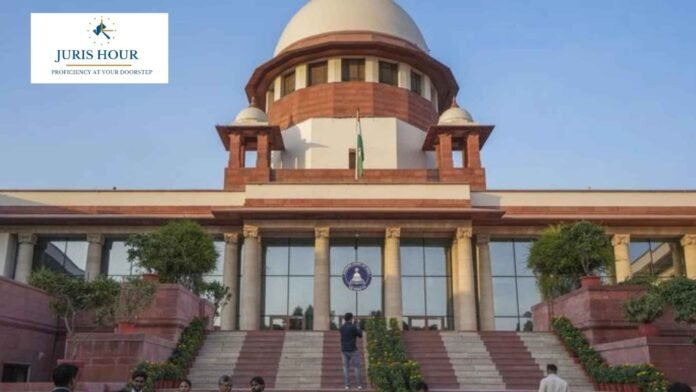
The Supreme Court has allowed a belated amendment to a property suit to introduce pleadings concerning a subsequently discovered compromise decree, holding that delay alone does not justify rejection when the party satisfies the requirement of due diligence and the proposed changes directly relate to the existing dispute.
The Bench of Justice B.V. Nagarathna and Justice R. Mahadevan set aside the orders of the trial court and the Orissa High Court, refusing the amendment. It permitted the legal heirs of the original plaintiff to amend the plaint, subject to payment of ₹25,000 to the contesting respondents.
The Court clarified that allowing the amendment did not establish the validity of the amended claims or invalidate the compromise decree. Questions concerning limitation, maintainability, title, possession and the statutory bar against a separate suit challenging a compromise decree were expressly left open for the trial court.
Buy Now: 90+ Supreme Court Judgments – September 2026
The dispute arose from a civil suit instituted by Rabindranath Sahoo seeking declaration of his right, title and interest over the suit property, recovery of possession, rectification of registered sale deeds executed in 1971 and 1978, and consequential reliefs.
The litigation involved competing claims arising from several transactions concerning the disputed plots. According to the plaintiff’s side, one plot had been transferred through successive sale deeds in 1976, 2005 and 2015, while another was sold to two defendants in 2007.
After the defendants disclosed particulars of the revenue entries relating to the latter plot, the original plaintiff sought amendments to explain his claim over the property.
He subsequently maintained that a search at the office of the Tahsildar, Niali, revealed a compromise decree in T.S. No.105 of 1998, proceedings to which he had not been a party. According to his case, the decree allotted land to a defendant and affected a portion of the property already under dispute.
The plaintiff therefore sought a further amendment under Order VI Rule 17 read with Section 151 of the Code of Civil Procedure to introduce the relevant factual foundation and seek a declaration that the final decree in the earlier suit was null and void.
During the pendency of the amendment application, the original plaintiff died and his legal heirs were substituted. The trial court rejected the application on September 21, 2022. The Orissa High Court declined to interfere on April 10, 2023, leading to the appeal before the Supreme Court.
The appellants argued that the dispute involved a complicated chain of transactions dating back to 1940 and incomplete disclosures concerning the defendants’ source of title. They contended that the amendment was necessary to enable a complete determination of the rights claimed over the same property.
The contesting respondents opposed the application, alleging that repeated amendments had prolonged the proceedings. They argued that the proposed changes would enlarge the scope of the suit, alter its nature and introduce claims barred by limitation.
They also relied on Order XXIII Rule 3A of the CPC, which bars a separate suit to set aside a decree on the ground that the compromise on which it is based was unlawful. Their submission was that the plaintiff could not circumvent that prohibition by introducing such a challenge through an amendment.
The Supreme Court explained that Order VI Rule 17 gives courts discretion to permit amendments necessary to determine the real questions in controversy.
Once trial has commenced, however, the proviso imposes an additional condition: the court must be satisfied that, despite due diligence, the party could not have raised the matter before commencement of trial.
In this case, it was undisputed that the amendment application was filed after trial had begun. The Court therefore examined whether the explanation for the late introduction of the compromise decree satisfied that condition.
It considered significant the plaintiff’s assertion that he was not a party to the compromise proceedings, that the defendants had not disclosed their vendors’ source of title, and that certified copies of the plaint and final decree were obtained on June 22, 2020.
The Bench held that these circumstances supplied a sufficient basis to accept the plea of due diligence for deciding the amendment application. At that stage, it was unnecessary to conclusively determine whether the plaintiff’s asserted date of knowledge was correct.
The Court rejected the contention that the amendment fundamentally altered the nature and character of the litigation.
The original suit concerned title, possession and related reliefs over the disputed property. The proposed amendment concerned a compromise decree alleged to affect part of that same property.
Although the amendment could widen the factual and legal questions requiring determination, that expansion did not itself amount to a fundamental change in the suit.
The relevant distinction, the Court explained, was between introducing an independent controversy unrelated to the original cause of action and adding facts and consequential reliefs directly connected with the existing dispute. The proposed amendment fell within the latter category.
The Bench recognised that a clearly time-barred claim, particularly one that would defeat an accrued right of the opposite party, is a relevant consideration when deciding whether to permit an amendment.
However, where limitation depends on disputed facts, including when and how the plaintiff acquired knowledge of a document or transaction, the amendment need not necessarily be rejected at the threshold.
Here, the date of knowledge of the compromise decree had not been conclusively determined. The Court therefore left the limitation objection open, allowing the respondents to raise it before the trial court.
It similarly declined to decide the applicability of Order XXIII Rule 3A. Whether the challenge to the compromise decree was maintainable, and what consequences followed from the plaintiff not being a party to the earlier proceedings, would require consideration after completion of pleadings.
The Supreme Court held that requiring the respondents to answer additional pleadings did not, by itself, justify refusing an amendment necessary for effective adjudication. Their interests could be protected by permitting additional written statements and imposing appropriate costs.
The Court also observed that refusal could fragment the dispute over the same property into separate proceedings and create the possibility of inconsistent findings.
Acknowledging the delay and inconvenience, the Bench allowed the amendment subject to payment of ₹25,000 to the contesting respondents within two weeks. The appellants were directed to carry out the consequential amendments within four weeks thereafter. The respondents may file additional written statements within the period fixed by the trial court.
Membership Required to Access Case Details & Order Copy
To view the complete Case Details and Download Order Copy, you must have an active membership. Please subscribe to continue.

