
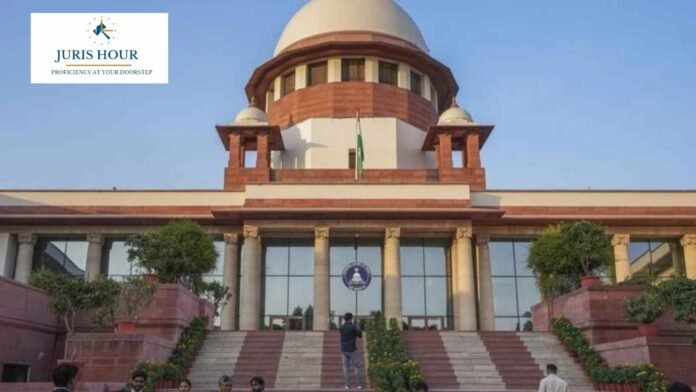
The Supreme Court has held that High Courts should not entertain petitions under Article 227 of the Constitution challenging an arbitral tribunal’s rejection of jurisdictional objections under Section 16 of the Arbitration and Conciliation Act, 1996, unless there is a clear and patent lack of inherent jurisdiction.
The bench of Justice K.V. Viswanathan and Justice Vijay Bishnoi emphasized that the appropriate remedy against such orders ordinarily lies under Section 34 of the Arbitration Act after the final arbitral award is passed.
The litigation arose from a long-running family and corporate dispute involving the affairs of a partnership firm and several tea companies. The appellant, a partner in the partnership firm, had instituted a civil suit in 2012 alleging mismanagement, financial irregularities, diversion of profits, and seeking rendition of accounts relating to the partnership and associated companies.
Buy Now: Supreme court Judgements E-Compilation – JUNE 2026
Initially, an application under Section 8 of the Arbitration and Conciliation Act seeking reference of the disputes to arbitration had been rejected by the trial court. The rejection was upheld by the Gauhati High Court. However, in 2024, the Supreme Court, acting on the consent of the parties, referred the disputes to arbitration and appointed a former Gauhati High Court judge as the sole arbitrator. Respondent companies, although parties to the proceedings before the Supreme Court, did not contest the order referring the disputes to arbitration.
After arbitration commenced, three respondent companies sought deletion from the arbitral proceedings, contending that they were non-signatories to the arbitration agreement contained in the partnership deed. Their applications, though styled under provisions of the Civil Procedure Code, were treated by the arbitral tribunal as objections to jurisdiction under Section 16 of the Arbitration Act.
The tribunal rejected their objections, observing that the Supreme Court’s earlier order referring the disputes to arbitration left no scope for revisiting the issue at that stage and that questions relating to non-signatories would be examined during the arbitration proceedings.
The respondent companies challenged the tribunal’s order by filing a revision petition under Article 227 before the Gauhati High Court.
The High Court stayed the notices issued to the companies and subsequently rejected the appellant’s preliminary objection regarding maintainability. It held that where an arbitral tribunal allegedly suffers from a “patent lack of inherent jurisdiction,” the supervisory jurisdiction of the High Court under Article 227 remains available. It also observed that the Supreme Court’s earlier order had not specifically dealt with the “Group of Companies” doctrine for binding non-signatories.
The appellant challenged both High Court orders before the Supreme Court.
A Bench examined the statutory framework of the Arbitration and Conciliation Act and reiterated that the Act constitutes a complete code intended to ensure speedy dispute resolution with minimal judicial intervention.
The Court highlighted that Section 5 expressly restricts judicial intervention except where specifically provided by the Act, while Section 16 incorporates the doctrine of kompetenz-kompetenz, empowering arbitral tribunals to decide their own jurisdiction. Although Article 227 jurisdiction cannot be legislatively excluded, its exercise in arbitration matters must remain extremely limited.
The Bench relied extensively on earlier landmark decisions including: SBP & Co. v. Patel Engineering Ltd., where the Court had disapproved routine challenges to arbitral tribunal orders under Articles 226 and 227 during ongoing arbitration. Deep Industries Ltd. v. ONGC, which held that Article 227 intervention is permissible only where there exists a patent lack of inherent jurisdiction. Punjab State Power Corporation Ltd. v. EMTA Coal Ltd., clarifying that such lack of jurisdiction must be so obvious that the perversity “stares one in the face.” Tarini Prasad Mohanty v. Sunflag Iron & Steel Co. Ltd., reiterating that courts must respect the legislative intent of minimal interference until arbitral proceedings conclude.
The Supreme Court also referred to the Constitution Bench decision in Cox and Kings Ltd. v. SAP India Pvt. Ltd., which held that determining whether a non-signatory is bound by an arbitration agreement involves complex factual and legal inquiries.
The Court observed that such questions fall squarely within the jurisdiction of the arbitral tribunal under Section 16. Therefore, the tribunal was fully competent to determine whether the respondent companies were “veritable parties” to the arbitration agreement despite not being signatories.
The Bench noted that while exercising supervisory jurisdiction under Article 227, the High Court had failed to record any prima facie finding demonstrating a patent lack of inherent jurisdiction or manifest perversity in the tribunal’s order.
Instead, it merely entertained the revision petition and stayed part of the arbitral proceedings without satisfying the stringent threshold laid down in earlier Supreme Court decisions.
The Court observed that before entertaining such petitions, High Courts should first record a prima facie finding that the tribunal’s order suffers from a patent jurisdictional defect after hearing all concerned parties. In the absence of such a finding, interference at an interlocutory stage defeats the legislative objective of expeditious arbitration.
The Court also remarked that the respondent companies had been parties before the Supreme Court when the disputes were referred to arbitration in 2024 but chose not to contest the proceedings or seek review or modification of that order.
Having failed to challenge the referral order earlier, they could not subsequently initiate another round of litigation through Article 227 proceedings. Such repeated judicial interventions unnecessarily delay arbitration and undermine the very purpose of the Arbitration and Conciliation Act, the Court observed.
The Supreme Court set aside the Gauhati High Court’s interim stay order dated 2 September 2025; set aside the High Court’s order dated 28 January 2026 holding the revision petition maintainable; dismissed the Article 227 revision petition filed before the High Court.
The court directed the arbitral tribunal to independently determine the status of the respondent companies as non-signatories without being influenced by any observations made by the Supreme Court.
The court directed the tribunal to conclude the arbitration proceedings expeditiously in accordance with law.
Membership Required to Access Case Details & Order Copy
To view the complete Case Details and Download Order Copy, you must have an active membership. Please subscribe to continue.

