
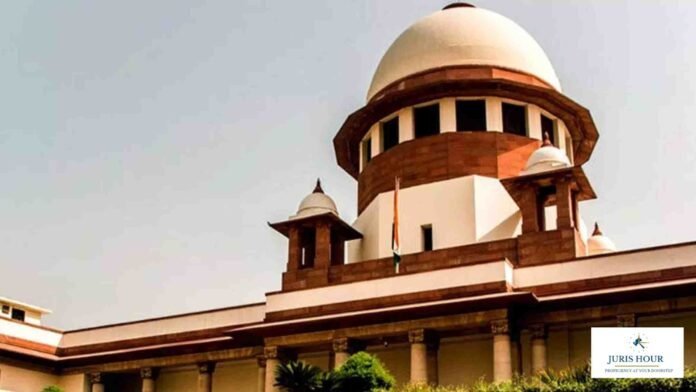
The Supreme Court has held that a spouse cannot be completely barred from pursuing remedies under the Domestic Violence Act merely on account of a prior mediated settlement, especially where allegations of continuing economic abuse are raised.
The bench of Justice Rajesh Bindal and Justice Vijay Bishnoi has observed that a mediated settlement does not automatically extinguish the right to seek remedies under the Domestic Violence Act; Allegations such as retention of stridhan or financial deprivation may constitute continuing economic abuse, giving rise to a fresh cause of action; and Courts must carefully examine whether subsequent proceedings are an abuse of process or are based on legitimate grievances.
The judgment came in the case of Dhananjay Rathi v. Ruchika Rathi, where the Court examined whether proceedings initiated under the Protection of Women from Domestic Violence Act, 2005 could be quashed in light of a prior settlement agreement between the parties.
The dispute arose from matrimonial discord between the husband and wife, who had entered into a comprehensive settlement agreement during mediation in May 2024. The agreement provided for dissolution of marriage by mutual consent, along with financial settlement of ₹1.5 crore, transfer of assets, and return of jewellery.
Pursuant to the settlement, the parties proceeded with the first motion for divorce under the Hindu Marriage Act, 1955, and partial compliance of financial terms was carried out. However, before the second motion could be completed, the wife withdrew her consent, alleging non-fulfilment of certain assurances and inequitable terms.
Subsequently, she initiated proceedings under the Domestic Violence Act alleging economic abuse, leading to parallel litigation before multiple forums.
The Delhi High Court, while hearing a petition to quash the domestic violence complaint, declined to completely restrain the proceedings. Instead, it directed the wife to deposit ₹89 lakh received under the settlement and restrained her from alienating jewellery, while allowing her to continue prosecuting her complaint.
This order was challenged before the Supreme Court.
The Court framed crucial legal questions, including: Whether proceedings under the Domestic Violence Act can be quashed due to a prior settlement; Whether a party can withdraw from a mediated settlement agreement; and Whether the Court can exercise powers under Article 142 of the Constitution to dissolve the marriage on grounds of irretrievable breakdown.
The Court undertook a detailed analysis of settlement agreements in matrimonial disputes and emphasized that while settlements are encouraged, they cannot override statutory rights—particularly in cases involving allegations of continuing harm.
It reiterated that mutual consent divorce under Section 13B of the Hindu Marriage Act requires continuous consent of both parties till the final decree, and either party is legally entitled to withdraw consent before the second motion.
The judgment clarifies that while settlement agreements carry significant weight, they are not absolute. A party may withdraw from such agreements if consent was conditional or based on unfulfilled assurances; the agreement is alleged to be inequitable or one-sided; there is subsequent conduct indicating breach of obligations.
However, the Court also cautioned that parties cannot be permitted to misuse legal processes after deriving benefits from settlements, and each case must be evaluated on its own facts.
Case Details
Case Title: Dhananjay Rathi Versus Ruchika Rathi
Citation: JURISHOUR-752-SC-2026
Case No.: Criminal Appeal No(S). 1924 Of 2026
Date: 13/04/2026

