
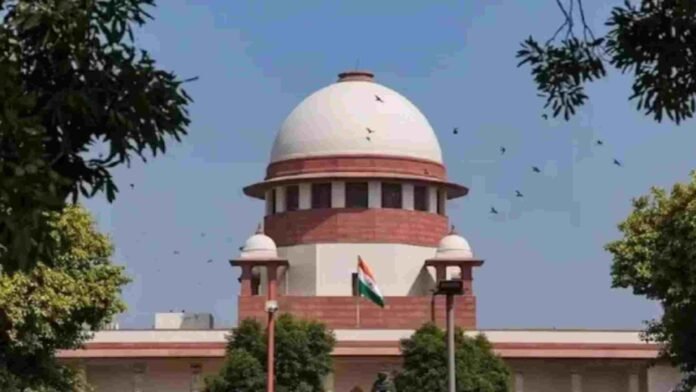
In a significant ruling impacting faculty members in Kerala’s technical education service, the Supreme Court of India has held that promotions granted to certain lecturers in compliance with its earlier judgments cannot be disturbed by subsequent orders of the Kerala High Court.
The Bench ofJustice Dipankar Datta and Justice Aravind Kumar has observed that the High Court could not, in essence, revisit or disturb the finality of the Supreme Court’s earlier judgment in respect of the appellants. It emphasized that once relief had been granted by the apex court and implemented, there was no occasion for the High Court to unsettle those benefits.
The controversy traces back to the introduction of Rule 6A in the Kerala Technical Education Service (Amendment) Rules, 2004. The amendment granted certain exemptions from acquiring a Ph.D. degree for promotion to higher academic posts such as Professor, Joint Director, and Director of Technical Education.
The rule was framed in line with notifications issued by the All India Council for Technical Education (AICTE), particularly those dated March 15, 2000 and February 18, 2003. While AICTE prescribed a Ph.D. as a minimum qualification for appointment and promotion, it also allowed a seven-year relaxation period for acquiring the degree in certain cases.
The validity of Rule 6A was challenged before the Kerala High Court, which struck it down. However, the Supreme Court, in Christy James Jose v. State of Kerala, later set aside the High Court’s decision, holding that non-acquisition of a Ph.D. within the stipulated time could at best result in stoppage of increments, but not cancellation of appointment or promotion.
Following that ruling, Dr. Jiji K.S. and others were granted relief by the Supreme Court in connected appeals. Subsequently, the State Government issued orders in March 2019 promoting them to the cadre of Associate Professor with retrospective effect. A contempt petition filed to enforce the Supreme Court’s order was disposed of after noting compliance.
Thereafter, several Original Applications were filed before the Kerala Administrative Tribunal (KAT) challenging other government orders relating to promotions and reversions. The KAT allowed those applications and quashed certain promotions.
The matter reached the Kerala High Court, which, by its judgment dated December 3, 2020, held that after March 5, 2010—when AICTE’s 2010 Regulations came into force—a Ph.D. became mandatory for the posts of Principal, Professor, and Associate Professor. The High Court further held that State Rules would be void to the extent they were repugnant to AICTE Regulations.
Although the government order promoting the present appellants was not under challenge before the Tribunal or the High Court, the appellants contended that the High Court’s findings adversely impacted their service benefits and career progression.
The Supreme Court observed that the appellants had been promoted strictly in compliance with its earlier orders, and the contempt proceedings had been closed after recording such compliance.
The Court clarified that nothing contained in the High Court’s impugned judgment would affect the appellants’ career prospects in view of the special facts of the case.
In the connected special leave petition and intervention applications, the Court addressed the grievance of individuals who were not parties to earlier proceedings but claimed to be adversely affected.
Relying on precedents including K. Ajit Babu v. Union of India, Rama Rao v. M.G. Maheshwara Rao, and Union of India v. Nareshkumar Badrikumar Jagad, the Supreme Court reiterated that persons aggrieved by a judgment—even if not parties to the original proceedings—are not without remedy. They may seek review on limited grounds or approach the appropriate tribunal afresh under Section 19 of the Administrative Tribunals Act, 1985.
The Court granted liberty to such intervenors and petitioners to pursue appropriate remedies before the competent forum in accordance with law.
Case Details
Case Title: DR. JIJI K.S. & ORS. Versus Shibu K & Ors.
Citation: JURISHOUR-151-SC-2026
Case No.: SLP (CIVIL) NO. 8737 OF 2021
Date: 27/02/2026

