
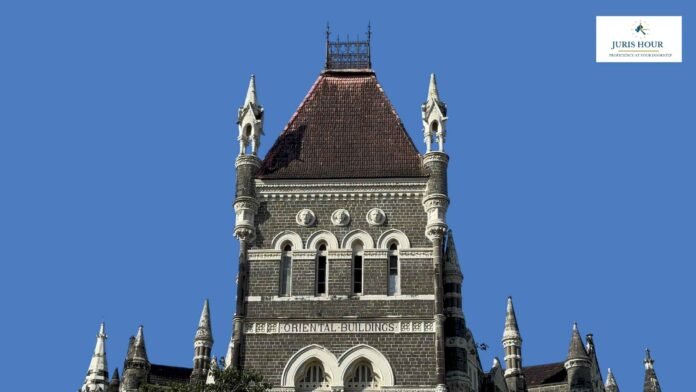
The Bombay High Court has rejected the bail applications of two men accused of involvement in the alleged illicit supply of codeine-based cough syrup, holding that the formulation’s low codeine content and recognised medicinal use were insufficient, by themselves, to establish that the consignments qualified for exemption from the narcotics law.
The bench of Justice Shyam C. Chandak refused bail and found, prima facie, that the transactions involving 6,695 seized bottles were intended for illicit sale rather than therapeutic use.
Buy Now: 160+ GST E-Magazine September 2026
The bench expressly clarified that its observations were confined to deciding the bail applications and that the trial court must determine the case independently.
The central issue was whether codeine-based cough syrup containing codeine within the prescribed concentration limits could be treated as falling outside the Narcotic Drugs and Psychotropic Substances Act, 1985, merely because it was a recognised pharmaceutical preparation.
The defence relied on the exception concerning preparations compounded with other ingredients, containing no more than 100 milligrams of codeine per dosage unit and a concentration not exceeding 2.5% in undivided preparations, and established in therapeutic practice.
The Court accepted, at the prima facie stage, that the seized formulation was compounded with chlorpheniramine maleate, met the stated codeine limits and was established in therapeutic practice. However, it distinguished the medicinal character of the formulation from the legality and purpose of the particular transactions.
It held that those characteristics did not, without supporting material, establish that the buyers were authorised to procure and possess the quantities supplied or that the consignments were intended for therapeutic use.
According to the prosecution, the Narcotics Control Bureau’s Mumbai Zonal Unit intercepted a vehicle near Maharashtra Gadi Karkhana on the Wada–Bhiwandi Road in Thane district on March 28, 2023.
The agency allegedly recovered 3,195 bottles of Monocoff-Plus cough syrup, each containing 100 ml, from the possession of co-accused Fakruddin Momin.
The investigation subsequently led the NCB to a logistics facility in Bhiwandi, where another consignment was allegedly awaiting delivery. A follow-up operation on April 3, 2023, resulted in the seizure of 35 cartons containing 3,500 bottles of the same cough syrup.
The two seizures together comprised 6,695 bottles.
The prosecution alleged that Kholwadwala had procured the consignments from Mayyar’s proprietary concern, M/s Captab Biotec, using the name of M/s The G Next Agency, whose drug licence and GST registration had already been cancelled or surrendered.
The case concerns alleged offences under Sections 8(c), 21(c), 22(c), 28 and 29 of the NDPS Act and is pending before the Special Court at Bhiwandi.
Mayyar argued that he operated a licensed pharmaceutical trading business and had purchased the syrup from a licensed manufacturer.
The Court recorded that the consignments had been supplied through transport operators against GST invoices and e-way bills, with payment of the applicable GST, for delivery to the Surat address appearing in the buyer’s drug licence.
The defence maintained that Mayyar was unaware of the cancellation of the buyer’s licence and that the preparation was governed by the drugs and cosmetics regulatory framework rather than the NDPS Act.
A significant part of this defence concerned an email sent by Dr. Paresh Patel, proprietor of M/s G Next, in December 2022, communicating the cancellation of the firm’s drug licence and GST registration and asking that no further transactions be undertaken with the firm or Kholwadwala.
The Court examined documents showing that this communication had been addressed to a separate entity, M/s Captab Biotech Unit-II, rather than Mayyar’s proprietary concern. It also found, prima facie, that Mayyar had ceased to be associated with that separate entity in 2014.
Nevertheless, the Court held that this circumstance did not establish that Mayyar had verified a valid licence authorising the disputed purchases.
The Court noted that Mayyar’s initial written response to the NCB did not provide particulars of a licence establishing that either Dr. Patel or Kholwadwala was entitled to order, procure and possess the quantities in question.
A copy of the relevant licence had also not been produced to justify the supplies, the Court observed.
It further referred to material considered in an earlier bail order indicating that Dr. Patel had directed Kholwadwala to shut down the operations of M/s G Next after developing concerns about his dealings. Dr. Patel had also taken steps to have the firm’s licence and registration cancelled.
The Court additionally referred to earlier prima facie observations that Kholwadwala had corresponded for supplies in early 2023 while impersonating a doctor, although he was a medical representative.
These circumstances weighed against accepting the transactions as lawful pharmaceutical supplies at the bail stage.
The Court also examined the purchase orders attributed to Kholwadwala.
It observed that the orders had not accompanied Mayyar’s initial response and that the quantities were expressed in a vague and suspicious manner, with references to monthly requirements and supply targets.
Another circumstance was that payment for the consignments came from Kholwadwala’s personal bank account rather than the account of M/s G Next.
Considering these features together, the Court concluded, for the purpose of the bail applications, that the seized bottles had been supplied for illicit sale rather than therapeutic practice.
The Court relied on the Delhi High Court’s Division Bench decision in Mohd. Ahsan v. Customs, which examined Section 9(1)(a)(va) of the NDPS Act, Rule 52A of the NDPS Rules and the notification concerning manufactured narcotic drugs.
As discussed in the order, that decision recognised that violations of the applicable rules governing essential narcotic drugs could attract prosecution under the NDPS Act, including in cases concerning codeine-based cough syrup.
The Court also referred to the principle stated by the Supreme Court in Union of India v. Sanjeev V. Deshpande: a medical or scientific purpose does not, by itself, remove the restrictions under Section 8(c). Such dealings must also comply with the manner and extent permitted by the Act, rules and orders.
Applying this reasoning, the Court declined to accept that the pharmaceutical nature of the syrup alone entitled the applicants to bail.
In Mayyar’s case, the Court found prima facie material connecting him with the alleged unlawful sale of a commercial quantity of codeine-based cough syrup.
Its attention was also drawn to two other similar cases in which, according to the allegations, syrup bottles had been supplied by the same company.
On the material before it, the Court considered that Mayyar was likely to repeat the offence if released. It therefore held that the stringent bail restrictions under Section 37 of the NDPS Act applied and refused his application.
Kholwadwala’s counsel submitted that he had remained in custody for approximately three years and seven months, that charges had not yet been framed, and that the trial was unlikely to commence and conclude within a foreseeable period.
He also sought parity with four co-accused who had secured bail.
The Court distinguished the role of the transport-related co-accused, noting that the earlier bail order had treated his involvement as transporting the goods for hire charges of ₹5,000 without a prima facie nexus with Kholwadwala.
By contrast, the Court found prima facie material indicating that Kholwadwala was involved with Mayyar in procuring the syrup for illicit use. It consequently declined to grant him bail on the grounds urged.
The High Court rejected both bail applications.
The order turns on the circumstances of the alleged bulk transactions, including the buyer’s licensing position, the supporting documents, the purchase orders and the payment trail. It does not amount to a final determination of guilt.
The Court specifically directed that the trial court decide the prosecution without being influenced by any observations in the bail order.
Membership Required to Access Case Details & Order Copy
To view the complete Case Details and Download Order Copy, you must have an active membership. Please subscribe to continue.

