
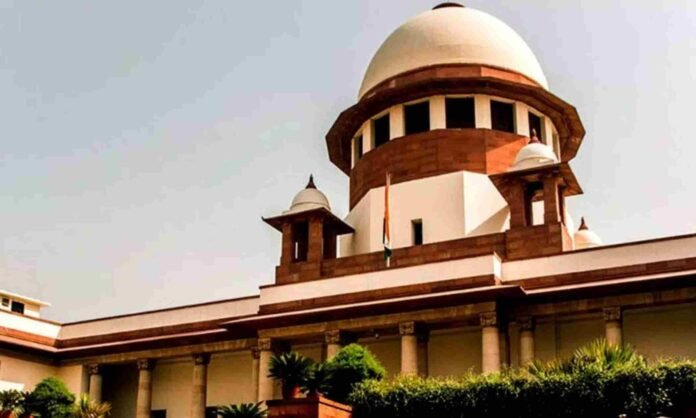
The Supreme Court has set aside an order of the Allahabad High Court granting bail to an accused in a murder case, holding that the High Court failed to consider crucial material collected during investigation and incorrectly relied on the absence of allegations in the inquest proceedings.
The bench of Justice Sanjay Karol and Justice Nongmeikapam Kotiswar Singh reiterated that an inquest report has a limited purpose and cannot be treated as a detailed investigation document to determine the culpability of accused persons.
The case arose from an appeal filed by Bhagat Singh, the nephew of the deceased Bharat Singh alias Pappu and the informant in the case, challenging the Allahabad High Court order dated January 22, 2026 through which accused Kunwarpal Singh was granted bail. The accused was facing prosecution in connection with FIR No.118 of 2025 registered at Chhata Police Station, Mathura, under various provisions of the Bharatiya Nyaya Sanhita, 2023 and the Arms Act.
According to the prosecution’s version, the incident occurred on March 8, 2025 at approximately 10:30 a.m. when the deceased and the informant were proceeding towards their agricultural field. It was alleged that the accused along with two co-accused persons emerged from concealment while carrying country-made pistols, surrounded the deceased, abused him and fired multiple shots, leading to his immediate death. The FIR was registered later the same day after completion of the inquest and post-mortem formalities.
During the investigation, a country-made .315 bore pistol and an empty cartridge were recovered allegedly at the instance of the accused following his disclosure statement. Subsequently, a charge sheet was filed on May 29, 2025. The Sessions Court had earlier refused bail after considering the seriousness of the allegations, post-mortem findings and the recovery of the alleged murder weapon.
However, the High Court later granted bail primarily on the ground that the informant and another witness, who acted as Panch witnesses during the inquest proceedings, had not made allegations against the accused during those proceedings. The High Court considered this factor sufficient for granting relief.
The Supreme Court strongly disagreed with this reasoning and observed that the High Court’s order was “cryptic”, “non-speaking” and reflected non-application of mind. The Bench found that the High Court had overlooked several important materials collected during investigation, including the accused being specifically named in the FIR with allegations of directly firing at the deceased.
The Court noted that the post-mortem report recorded ante-mortem firearm injuries, including entry and exit wounds with blackening and tattooing, and the medical opinion concluded that death had occurred due to shock and haemorrhage caused by firearm injuries. Additionally, the alleged murder weapon was recovered during investigation at the accused’s instance. Witness statements recorded during investigation also prima facie supported the prosecution’s allegations.
Addressing the issue of inquest proceedings, the Supreme Court clarified that proceedings under Section 174 of the Code of Criminal Procedure, now corresponding to Section 194 of the Bharatiya Nagarik Suraksha Sanhita, are only meant to ascertain the apparent cause of death. Such proceedings are not intended to record the names of accused persons or narrate detailed facts regarding the incident. The Court relied on earlier decisions in Pedda Narayana v. State of Andhra Pradeshand Amar Singh v. Balwinder Singh, which had similarly clarified the limited scope of inquest reports.
The Court observed that even if the absence of allegations during inquest proceedings could be considered, it could not be viewed in isolation while ignoring stronger evidence gathered during investigation. It held that the FIR allegations, witness statements, forensic material, charge sheet and weapon recovery were all significant circumstances requiring proper judicial consideration.
Finding the High Court’s reasoning inconsistent with settled principles governing grant of bail in serious offences, the Supreme Court set aside the bail order and remanded the matter back to the High Court for fresh consideration in accordance with law. The accused has been directed to surrender before the concerned jail authorities within one week and remain in judicial custody until the High Court decides the matter afresh.
Case Details
Case Title: Bhagat Singh Versus The State Of Uttar Pradesh And Anr.
Citation: JURISHOUR-1345-SC-2026
Case No.: Special Leave Petition (Crl.) No. 4240 Of 2026
Date: 22/05/2026

