
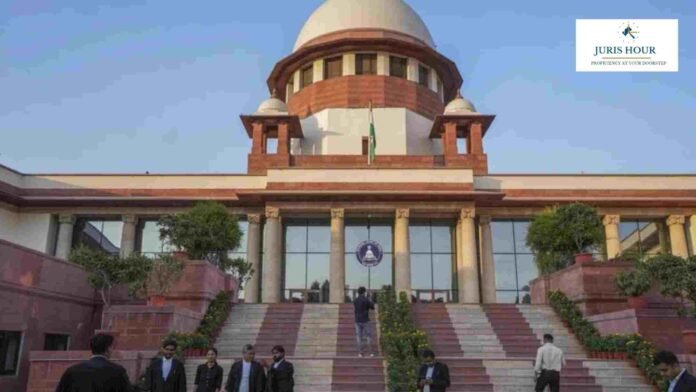
The Supreme Court has upheld the validity of promotions granted under relaxed service rules and cautioned against belated challenges to seniority by “fence-sitters.”
The bench of Justice Ahsanuddin Amanullah and Justice R. Mahadevan set aside the judgment of the Madras High Court and restored the Government Order granting notional promotion and consequential benefits to a municipal employee in Tamil Nadu.
The judgment came in The State of Tamil Nadu & Anr. vs. R. Sasipriya & Anr. along with connected appeals, where the apex court examined the legality of promotions granted by relaxing statutory service rules in the Coimbatore Municipal Corporation.
The dispute arose from a Government Order, which granted notional promotion to an employee as Assistant Engineer with retrospective effect from 14.04.1997, along with monetary benefits from a later date. The order also placed him above certain Town Planning Inspectors who were redesignated as engineers following a departmental merger.
The respondent challenged this Government Order, arguing that it violated service rules and improperly altered seniority. While a Single Judge had dismissed the challenge, a Division Bench of the High Court later set aside the Government Order and directed reconsideration of promotions, prompting appeals before the Supreme Court.
The central issue before the Court was whether the State could validly relax service rules to grant retrospective promotions and whether such relaxation disturbed the settled seniority structure.
The case also involved interpretation of the Tamil Nadu Municipal Corporation Service Rules, 1996, particularly the impact of departmental merger and the prescribed 3:1 ratio between degree-holder and diploma-holder engineers.
The Court held that the promotion granted through relaxation of rules was consistent with the Government’s policy decisions and earlier High Court directions. The relaxation was not arbitrary but part of a broader framework governing merger and promotions.
It noted that employees from the Town Planning Department were to be placed below those in the Engineering Department after the merger. Since the promoted employee belonged to the Engineering Department, his placement above others was legally justified.
The Court relied on findings of a Three-Member Committee and prior contempt proceedings, which had already examined the promotions and found no irregularity, malpractice, or favoritism.
The apex court criticized the Division Bench for ignoring key developments, including subsequent promotions of both parties and earlier judicial findings validating the promotion process.
The Court refused relief to an impleading applicant who sought promotion at a later stage, describing him as a “fence-sitter.”
The Court held that persons who do not challenge seniority or promotions in time cannot later seek relief. Courts should not entertain stale claims, especially where third-party rights have crystallized. Delay and laches are valid grounds to deny relief in service matters.
The Court relied on settled principles that discourage reopening long-settled service positions.
Allowing the appeals, the Supreme Court set aside the High Court’s judgment and review order; restored the Government Order granting notional promotion; upheld all consequential promotions to higher posts; and denied relief to impleading applicants seeking belated claims.
The Court also affirmed that the employee would be entitled to further promotions as per eligibility.
Case Details
Case Title: The State Of Tamil Nadu And Another Versus R. Sasipriya And Another
Citation: JURISHOUR-1095-SC-2026
Case No.: Civil Appeal Nos.6883-6884 Of 2026
Date: 04/05/2026

