
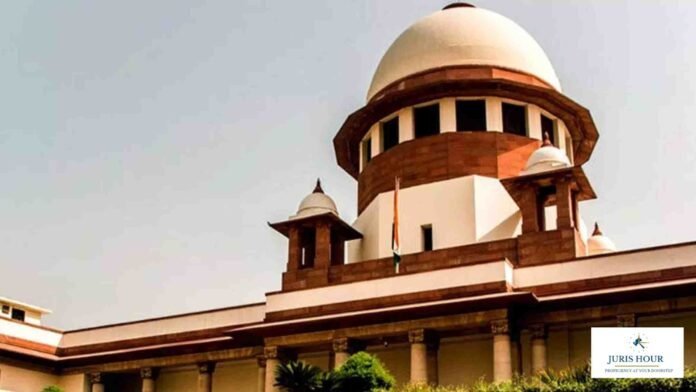
The Supreme Court has set aside the dismissal of former Air Force officer Ex. Sqn. Ldr. R. Sood, holding that once the armed forces opted for a criminal trial and the officer was discharged, subsequent administrative action on the same facts was legally unsustainable.
The Bench of Justice Dipankar Datta and Justice K.V. Viswanathan, not only restores the officer’s honour after over three decades but also clarifies the legal position on the interplay between criminal proceedings and departmental action under the Air Force Act, 1950.
The case traces back to a 1987 incident when the officer, then serving as a Senior Operations Officer in a desert-based Air Force unit, was accused of forcibly removing an intoxicated civilian driver from the camp and leaving him at a remote location. The driver was later found dead.
Following the incident, both criminal and departmental proceedings were initiated. The Air Force chose to proceed through a criminal court instead of a court-martial. However, in January 1990, the Sessions Court discharged all accused, holding that no prima facie case existed and noting procedural lapses such as lack of sanction.
Despite this, the Air Force later initiated administrative action under Section 19 of the Air Force Act read with Rule 16 of the Air Force Rules and dismissed the officer from service in 1993.
The Supreme Court decisively answered this question in the negative. It held that once the armed forces exercised their statutory choice to proceed before a criminal court, the outcome of that proceeding—whether acquittal or discharge—attains finality.
The Court clarified that a discharge is not a lesser outcome than acquittal but stands on a higher footing, as it reflects absence of even sufficient material to proceed to trial.
Accordingly, it ruled that the Air Force, having opted for criminal prosecution, could not later resort to disciplinary action on the same facts. Initiating administrative proceedings after discharge was “bad in law and non-est.”
The Court also strongly criticised the basis on which disciplinary action was taken. It noted that the authorities relied on vague expressions such as “morally convincing evidence” without identifying any concrete material or reasoning.
Such a standard, the Court held, falls far short of the requirements of a valid disciplinary decision.
Further, the authorities failed to meaningfully consider the officer’s detailed reply to the show cause notice, rendering the decision arbitrary and violative of principles of natural justice.
A striking aspect of the judgment is the Court’s focus on disparity in punishment. While the appellant was dismissed from service, his superior officer—who had issued the original instructions—was merely awarded “severe displeasure” for three years.
The Court found this differential treatment unjustified, especially when the appellant had acted under orders. It held that punishing a subordinate harshly while showing leniency to the superior violated the principle of equality and fairness.
The Court also directed that the officer be formally “signed off” in the manner he would have been entitled to had the dismissal not occurred, underscoring the importance of honour in defence service.
Case Details
Case Title: Ex. Sqn. Ldr. R. Sood Versus Union Of India & Ors.
Citation: JURISHOUR-804-SC-2026
Case No.: Civil Appeal Nos. 6929 – 6930 Of 2009
Date: 15/04/2026
Read More: Bank Liable for Letting Cheques Turn Stale, Supreme Court Cuts Compensation to 6%

