
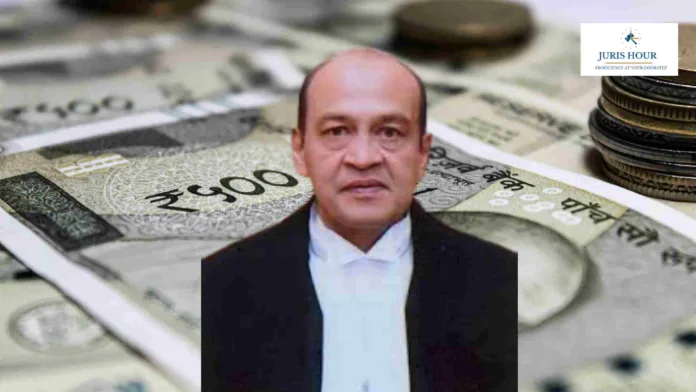
The Supreme Court’s in-house committee probing the serious allegations against Justice Yashwant Varma, then a sitting judge of the Delhi High Court, has submitted its report to Chief Justice of India (CJI) Sanjiv Khanna.
This marks a crucial turning point in a case that has drawn national attention following reports of sacks of burning currency allegedly found at Justice Varma’s official residence.
Key Developments So Far
The in-house inquiry committee—constituted on March 22, 2025—comprises Justices Sheel Nagu (Chief Justice, Punjab & Haryana High Court), G.S. Sandhawalia (Chief Justice, Himachal Pradesh High Court), and Anu Sivaram (judge, Karnataka High Court). The committee was set up under the In-House Procedure adopted by a full court of the Supreme Court in 1999 to examine complaints against members of the higher judiciary.
On March 28, Justice Varma was transferred back to his parent high court in Allahabad and has since been divested of all judicial responsibilities.
Meanwhile, CJI Khanna has already made public the preliminary fact-finding report submitted by the Delhi High Court’s Chief Justice D.K. Upadhyaya, along with Justice Varma’s response to the allegation involving the discovery of burnt cash at a storehouse in his official premises.
What the In-House Procedure Mandates
The in-house mechanism empowers the committee to conclude one of the following:
- There is no substance in the allegations.
- The allegations have sufficient substance, and the misconduct is serious enough to warrant removal.
- The allegations have some substance, but the misconduct is not grave enough to justify removal.
Depending on the committee’s findings, the CJI has specific powers:
- If no substance is found, the matter is closed.
- If serious misconduct is found, the CJI may ask the judge to resign or opt for voluntary retirement. If the judge refuses, judicial work is withdrawn, and the President and Prime Minister are informed.
- If misconduct is not serious, the CJI may advise the judge without seeking removal.
These internal mechanisms are backed by the Supreme Court’s rulings, including in Addl. District & Sessions Judge ‘X’ v. High Court of M.P. (2014) and Indira Jaising v. Registrar General, Supreme Court (2003). Notably, the latter ruling emphasizes that in-house inquiry reports are preliminary and not subject to disclosure—even to the complainant. However, post-RTI Act jurisprudence increasingly favors transparency and accountability in judicial administration.
What Happens Next?
At present, the findings of the in-house panel on Justice Varma remain confidential. The Supreme Court may or may not make the report public. Legal experts point out that although the in-house inquiry is not binding or a substitute for the process under the Judges (Inquiry) Act, 1968, its conclusions heavily influence the CJI’s administrative decisions.
If the committee has found Justice Varma’s alleged misconduct serious, the CJI may recommend initiation of impeachment proceedings by informing the Prime Minister and the President. This course of action has precedent:
- In 2018, the in-house committee found Justice Narayan Shukla of the Allahabad High Court guilty in a medical college bribery case. Then CJI Dipak Misra wrote to the Prime Minister, but impeachment was never moved.
- In 2008, Justice Soumitra Sen of the Calcutta High Court faced impeachment for misappropriation of public funds. He resigned after the Rajya Sabha passed a motion and before the Lok Sabha could vote.
Constitutional Framework on Removal of Judges
Articles 124 and 217 of the Constitution stipulate that a High Court or Supreme Court judge can only be removed via impeachment by Parliament. The Judges (Inquiry) Act, 1968 requires at least 100 Lok Sabha members or 50 Rajya Sabha members to initiate a motion, after which a three-member panel investigates the charges.
Will the Report Be Made Public?
Though the Indira Jaising judgment has so far shielded such reports from public disclosure, its relevance in the RTI era is increasingly being questioned. In 2019, a Constitution Bench held that transparency and judicial independence are not mutually exclusive, hinting at a shift toward openness in judicial accountability.
Conclusion
The next steps in the Justice Yashwant Varma case depend entirely on the contents of the in-house committee’s report, which remains under wraps. CJI Sanjiv Khanna will be guided solely by this report while deciding whether to advise, censure, or recommend Justice Varma’s removal. If the misconduct is deemed grave, the episode could become the latest high-profile judicial scandal leading to a rare motion for impeachment.
Read More: Good News For Rs. 50 Lakh to Rs. 1 Crore Income-Earners

