
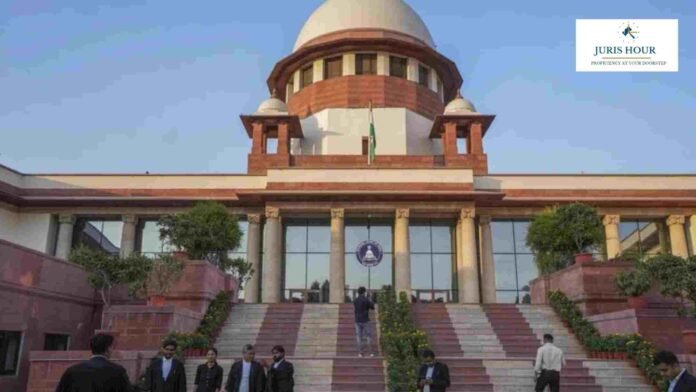
The Supreme Court has held that First Information Reports (FIRs) should not be quashed while investigations are still ongoing, especially in cases involving serious allegations such as fraud and forgery.
The bench of Justice Vikram Nath and Justice Sandeep Mehta delivered the judgment while setting aside a decision of the Himachal Pradesh High Court, which had earlier quashed an FIR at a preliminary stage.
The case originated from a complaint filed by Sharla Bazliel, who accused three individuals—Baldev Thakur, Daljit Singh, and Jienpuri Kamsuon—of conspiring to unlawfully acquire her family’s ancestral property in Shimla.
According to the complaint the accused allegedly took advantage of her father’s deteriorating mental and physical health. Large sums exceeding ₹1.23 crore were transferred from his bank accounts without lawful justification. Family land spanning nearly 50 bighas was sold at a significantly undervalued price of ₹3.9 crore. Documents used in the transaction, including consent records, were allegedly forged.
The complainant also raised suspicion regarding her father’s death, which reportedly occurred under unclear circumstances at a hotel owned by one of the accused.
In January 2024, the Himachal Pradesh High Court exercised its inherent powers under Section 482 of the Code of Criminal Procedure (CrPC) to quash the FIR.
The High Court reasoned that the allegations appeared speculative. Essential ingredients of offences like fraud and forgery were not clearly established.
As a result, the criminal proceedings were terminated before the investigation could be completed.
The Supreme Court strongly disagreed with this approach, observing that the High Court had acted prematurely and overlooked critical aspects of the case.
The bench noted that the investigation was still in progress when the FIR was quashed. Key documents had already been sent for forensic examination. Important evidence, including handwriting analysis, had not yet been received.
The Court emphasized that quashing an FIR at such a stage effectively halts the discovery of truth.
Subsequent forensic reports from the State Forensic Science Laboratory revealed serious discrepancies: signatures on crucial documents did not match the genuine signatures of the complainant’s father. Some signatures were found to be facsimile (stamp-like) rather than handwritten. Property sale documents showed undervaluation compared to official circle rates.
Investigators also found that the undervaluation caused a loss of over ₹35 lakh in stamp duty to the government.
The Supreme Court laid down an important legal principle that the courts should refrain from quashing FIRs when investigations are ongoing and material evidence is yet to be examined.
The bench clarified that the allegations of forgery require technical verification, such as forensic and handwriting analysis. Interference at an early stage may obstruct justice. High Courts must exercise caution while using their inherent powers under Section 482 CrPC.
Allowing the appeals filed by the complainant and the State, the Supreme Court set aside the High Court’s order quashing the FIR.
The court directed the investigating agency to complete the probe expeditiously and allowed the trial court to proceed in accordance with law if a charge sheet has been filed.
The Court also clarified that its observations are limited to the issue of quashing and will not affect the merits of the case during trial.
Case Details
Case Title: Sharla Bazliel Versus Baldev Thakur And Others
Citation: JURISHOUR-415-SC-2026(Ker)
Case No.: SLP(Crl.) No(s). 3533 of 2024
Date: 17/03/2026
Read More: No ‘Mini-Trial’ at Summoning Stage: Supreme Court Sets Standard U/s 319 CrPC

