
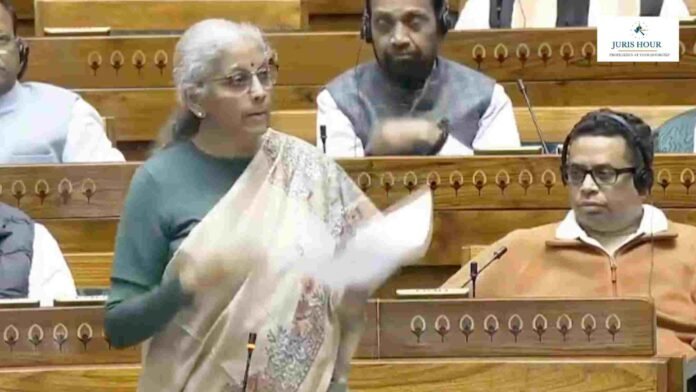
The Union Budget for the financial year 2026–27 will be presented on Sunday, February 1, 2026, at 11:00 AM IST, marking a historic first as the Budget will be tabled in Parliament on a Sunday. Finance Minister Nirmala Sitharaman will present her eighth consecutive Union Budget, continuing the tradition of February 1 presentations that began in 2017.
The Budget Session of Parliament will commence on January 28, 2026, with the President’s address to the joint sitting of both Houses. The Economic Survey 2025–26, outlining the state of the Indian economy, will be presented on January 31, a day before the Budget.
Budget 2026: Live Telecast and Market Arrangements
The Union Budget speech will be broadcast live on Sansad TV, Doordarshan, and the official Union Budget portal. In view of the weekend presentation, the National Stock Exchange (NSE) and Bombay Stock Exchange (BSE) are expected to conduct a special trading session to enable market participation and investor response.
Policy Direction: Growth with Fiscal Prudence
Despite global uncertainties arising from international tariff disputes and evolving regional geopolitical challenges, the Union Budget 2026–27 is expected to prioritise tax relief, capital expenditure, and economic resilience. The government aims to balance fiscal discipline with strategic investments that deliver high economic returns, aligned with the long-term vision of Viksit Bharat @2047.
The Budget is expected to target an economic growth rate of 7–7.5 per cent, supported by policy reforms, public investment, and private sector participation.
Income Tax Reforms Likely Under New Regime
Significant changes are anticipated under the new income tax regime, with the government expected to increase the basic exemption limit to ₹5 lakh. The threshold for the 30 per cent tax slab may be raised to between ₹36 lakh and ₹40 lakh, offering substantial relief to middle- and high-income earners.
Additionally, the standard deduction for salaried taxpayers is likely to be enhanced, while the deduction for home loan interest could be increased to ₹3 lakh, encouraging home ownership and boosting the real estate sector.
Infrastructure Push Continues
Infrastructure development remains a cornerstone of the government’s economic strategy. The capital expenditure outlay is expected to remain robust at around ₹11.21 lakh crore, with focused investments in railways, renewable energy, urban infrastructure, and digital connectivity.
To promote domestic manufacturing under the Make in India initiative, the government may simplify customs duty structures, reducing the existing eight slabs to four rationalised slabs. Targeted support for MSMEs, start-ups, and innovation-driven enterprises is also anticipated.
Sectoral Focus: Defence, Agriculture, Technology and Green Energy
In response to ongoing geopolitical tensions, defence allocations are expected to rise, with a strong emphasis on indigenous defence manufacturing. The agriculture sector may see enhanced funding for climate-resilient seed research, irrigation projects, and farmer-centric financing schemes.
The technology and green energy sectors are likely to receive policy incentives, including tax benefits for AI and robotics, electric vehicle (EV) subsidies, and GST rationalisation for battery storage systems, supporting India’s clean energy transition.
Fiscal Numbers and Borrowings
The government is projected to maintain a fiscal deficit target of around 4.4 per cent, with gross market borrowings estimated at ₹14.82 lakh crore. Transfers to states are expected to rise by 12.5 per cent, reaching approximately ₹25.60 lakh crore, strengthening cooperative federalism and state-level development.
Strategic Priorities
The Union Budget 2026–27 is expected to rest on three key pillars:
employment generation, mobilising private investment, and enhancing national self-reliance. By addressing macroeconomic risks while accelerating long-term structural reforms, the government aims to lay a strong foundation for sustained and inclusive growth.

