
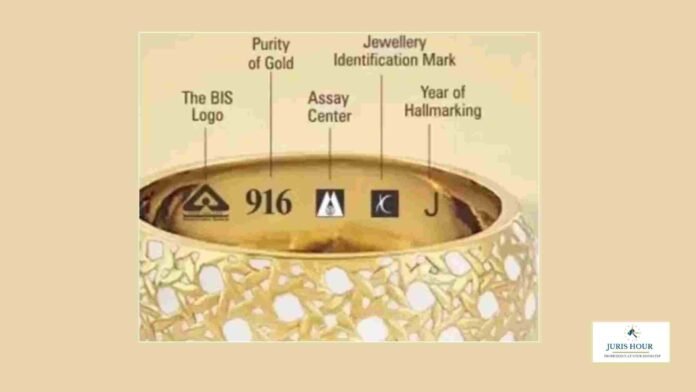
The Central Government has notified the Hallmarking of Gold Jewellery and Gold Artefacts (Amendment) Order, 2026, significantly expanding the list of districts where mandatory hallmarking of gold jewellery will apply. The notification was published in the Official Gazette on March 2, 2026, and has come into force with immediate effect.
Issued by the Ministry of Consumer Affairs, Food and Public Distribution (Department of Consumer Affairs), the amendment has been made in exercise of powers under the Bureau of Indian Standards (BIS) Act, 2016, in consultation with the Bureau of Indian Standards.
Table of Contents
Annexure Substituted, Wider Coverage Introduced
The 2026 Order substitutes the existing Annexure to the 2020 Hallmarking Order with a revised and significantly expanded list of districts across States and Union Territories.
The updated Annexure now covers districts across 26 States and Union Territories, including major jewellery markets and emerging urban centres in:
- Uttar Pradesh (39 districts including Lucknow, Kanpur Nagar, Ghaziabad, Varanasi and Prayagraj)
- Maharashtra (29 districts including Mumbai City, Mumbai Suburban, Pune, Nagpur and Nashik)
- Tamil Nadu (31 districts including Chennai, Coimbatore and Madurai)
- Gujarat (25 districts including Ahmedabad, Surat and Rajkot)
- Rajasthan (25 districts including Jaipur, Jodhpur and Udaipur)
- West Bengal (21 districts including Kolkata, Howrah and Hooghly)
Several districts in Assam, Bihar, Haryana, Telangana, Karnataka, Kerala, Madhya Pradesh, Odisha, Punjab, Uttarakhand, Himachal Pradesh, Jammu & Kashmir, Tripura, Goa, Chandigarh, Puducherry and Chhattisgarh have also been included.
This substitution replaces the earlier Annexure under the 2020 Order, which was last amended in July 2025.
Legal Basis and Public Interest Rationale
The government stated that the amendment has been issued in public interest under Section 14(3) read with Sections 15, 16, 17 and 25 of the BIS Act, 2016.
Mandatory hallmarking is intended to:
- Ensure purity and quality assurance of gold jewellery
- Protect consumers from under-caratage
- Promote transparency in the jewellery trade
- Strengthen trust in domestic gold markets
Hallmarking certifies the purity of gold through BIS-recognised Assaying and Hallmarking Centres and requires jewellers to register with BIS.
Impact on Jewellers and Consumers
With the expanded district list, a larger number of jewellers will now be required to sell only BIS-hallmarked gold jewellery in notified areas. Jewellers operating in the newly included districts will need to:
- Obtain or update BIS registration
- Ensure their products carry mandatory hallmark components, including the BIS logo, purity grade, jeweller’s identification mark, and HUID (Hallmark Unique Identification) number
Industry observers note that the expansion reflects the government’s phased approach to universal hallmarking, gradually extending compliance requirements beyond major metropolitan centres to tier-2 and tier-3 markets.
For consumers, the move is expected to enhance confidence in gold purchases, particularly in semi-urban and rural markets where quality verification has historically been inconsistent.
Background
The principal Hallmarking of Gold Jewellery and Gold Artefacts Order, 2020 was originally notified on January 15, 2020, and has since undergone multiple amendments, the last prior amendment being issued on July 31, 2025.
With the 2026 amendment now in force, the scope of mandatory hallmarking has been further broadened, marking another step toward nationwide standardisation of gold purity certification under the BIS framework.
Notification Details
Notification No. F. No. V-6/1/2017-BIS
Date: 02/03/2026
Read More: Rs. 27 Crore GST Demand Against Dell Stayed Over Alleged Jurisdictional Error: Allahabad High Court

