
Ask Jurishour AI

Generic selectors
Exact matches only
Search in title
Search in content
Post Type Selectors
tdb_templates
saswp_reviews
saswp-collections
saswp_rvs_location
tdc-review-email
web-story-font
web-story
googlesitekit_email
tds_locker
tds_email
saswp
mailpoet_page
mailpoet_email
tdcpt_tunes
tdc-review
pronamic_payment
pronamic_gateway
pronamic_pay_subscr
wpcode
HomeInternational TaxationThe Effect of the 27% Reciprocal Tariff: Minimal Impact on India, Higher...

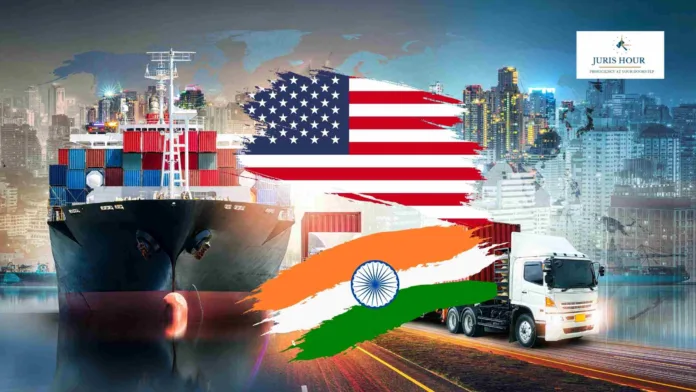
The Effect of the 27% Reciprocal Tariff: Minimal Impact on India, Higher Prices for Americans

Published on

🚀 Stay Connected With JurisHour

WhatsApp X Telegram

The recent imposition of a 27% reciprocal tariff on certain Indian exports has raised concerns in global trade circles, but its actual impact on India is expected to be relatively minor. Only around $2 billion worth of Indian exports fall under this tariff slab, which is a small fraction of India’s overall export economy. While such tariffs are often perceived as protectionist measures that could disrupt international trade, the specific effects on India’s exports remain limited in scope. However, these tariffs will also impact American consumers, who will have to pay higher prices in their domestic market due to increased import costs.

Limited Exposure for Indian Exports

India’s total exports affected by this tariff amount to approximately $2 billion. In the grand scheme of India’s export economy, which exceeded $450 billion in the fiscal year 2023-24, this represents a marginal fraction. The sectors impacted are those subject to the tariff classification, but given the diversified nature of India’s export portfolio, the overall economic consequences are not significant.

However, it is worthwhile to note that textiles and marine products will be severely affected, which forms a major export from India.

The amount of Indian Exports affected is 11 billion dollars and at the highest tariff of 27% the net effect is 2.2 billion dollars.  “Why twist yourself over such a piddly amount,” Indian mock.

Reciprocal Tariffs and Their Domestic Impact

While tariffs are aimed at protecting domestic industries, they often result in higher prices for consumers in the imposing country. In this case, American consumers and businesses that rely on imports from India will likely face increased costs. This could lead to shifts in supply chains, but it remains unlikely to cause major disruptions in trade flows.

Minimal Macroeconomic Disruptions

From a macroeconomic perspective, the 27% tariff does not pose a substantial challenge to India’s trade balance or economic stability. India continues to have strong trade relations with multiple countries, and any marginal reduction in exports to one market may be offset by increased trade with other regions. Additionally, Indian businesses are adept at adjusting to shifting trade dynamics, often finding alternative markets or negotiating new trade terms.

Conclusion: Much Ado About Little

The introduction of the 27% reciprocal tariff may create initial concerns, but its overall impact on India remains minimal. While some businesses and industries will experience cost adjustments, the broader trade framework remains resilient. The greater burden of this tariff will likely fall on American consumers, who will see higher prices on imported goods. As such, this policy measure, while significant in rhetoric, is unlikely to cause major economic disruptions in India’s trade landscape.

Read More: Assam Revises Professional Tax Slabs for Salary and Wage Earners: New Rates Effective April 2025 [READ NOTIFICATION]

Amit Sharma
Amit Sharma
Amit Sharma is the Content Editor at JurisHour. He has been writing about the Indian legal market. He has covered tax & company litigation stories from the Supreme Court, High Courts and Various Tribunals. Amit graduated from MLSU Law College with B.A.LL.B. and also holds an LL.M. from MLSU, Udaipur, Rajasthan. An Advocate in Taxation, and practised in Tribunals as well as Rajasthan High Court and pursued Masters in Constitutional Law. He started out small with little resources but a big plan to take tax legal education to the remotest locations across India and eventually to the world. His vision is to make tax related legal developments accessible to the masses.

Latest articles

Ocean Freight IGST Refund Can’t Be Denied for Payments Before Mohit Minerals Ruling: GSTAT

The Goods and Services Tax Appellate Tribunal (GSTAT), Surat Bench, has held that refund...

ITC On Resort Construction Blocked Despite Taxable Business Use; ₹9.32 Lakh Demand Upheld: GSTAT

The Goods and Services Tax Appellate Tribunal (GSTAT), Bengaluru Bench, has dismissed a resort’s...

ITC Reversal Dispute Involves Question Of Law, Can’t Be Decided Merely By Checking GST Returns: GSTAT

The Goods and Services Tax Appellate Tribunal (GSTAT), Chennai Bench, has held that a...

Rs. 1.53 Crore GST Refund Dispute Over Place Of Supply Must Be Heard By Principal Bench: GSTAT

The Goods and Services Tax Appellate Tribunal (GSTAT), Delhi State Bench, has transferred a...

More like this

Ocean Freight IGST Refund Can’t Be Denied for Payments Before Mohit Minerals Ruling: GSTAT

The Goods and Services Tax Appellate Tribunal (GSTAT), Surat Bench, has held that refund...

ITC On Resort Construction Blocked Despite Taxable Business Use; ₹9.32 Lakh Demand Upheld: GSTAT

The Goods and Services Tax Appellate Tribunal (GSTAT), Bengaluru Bench, has dismissed a resort’s...

ITC Reversal Dispute Involves Question Of Law, Can’t Be Decided Merely By Checking GST Returns: GSTAT

The Goods and Services Tax Appellate Tribunal (GSTAT), Chennai Bench, has held that a...