
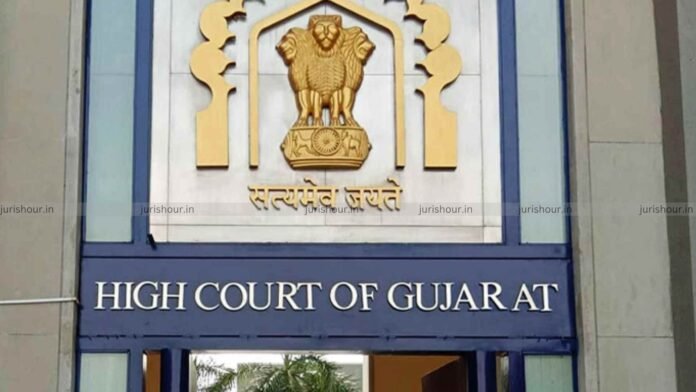
The Gujarat High Court has held that a refund claim for service tax cannot be rejected on the ground of limitation when the very levy of tax has been declared ultra vires and unconstitutional.
The bench of Justice A.S. Supehia and Justice Vaibhavi D. Nanavati quashed an order denying refund to the assessee for the financial years 2009-10 to 2012-13 and directed the department to reconsider the claim on merits, including the issue of interest.
The dispute arose from a refund claim filed by YMCA seeking reimbursement of service tax collected from it in relation to services provided by a members’ club to its members. The association sought a refund of approximately ₹9.38 crore after the Gujarat High Court had earlier declared the levy of service tax on club-member transactions to be unconstitutional in the landmark case of Sports Club of Gujarat Ltd. v. Union of India. The Supreme Court subsequently affirmed this position in State of West Bengal v. Calcutta Club Ltd..
Despite this legal position, the department partly allowed YMCA’s refund claim for FY 2013-14 but rejected the claim relating to FYs 2009-10 to 2012-13 on the ground that it was filed beyond the one-year limitation period prescribed under Section 11B of the Central Excise Act, 1944.
The tax department argued that the refund application had been filed after the Gujarat High Court’s decision in Sports Club of Gujarat Ltd. and therefore the refund claim pertaining to earlier years was clearly barred by limitation under Section 11B. The department relied on the Constitution Bench judgment of the Supreme Court in Mafatlal Industries Ltd. v. Union of India to contend that statutory refund claims must satisfy the prescribed limitation requirements.
The High Court noted that it was undisputed that the levy of service tax on services rendered by incorporated clubs to their members had already been declared ultra vires in Sports Club of Gujarat Ltd. The Supreme Court in Calcutta Club Ltd. had affirmed that the Finance Act, 1994 did not contemplate levy of service tax on incorporated members’ clubs, recognizing the doctrine of mutuality and holding that clubs and their members could not be treated as separate entities for such taxation purposes.
Referring extensively to the Supreme Court’s observations, the Court emphasized that from 2005 onwards the Finance Act did not validly impose service tax on incorporated members’ clubs. Consequently, the collection of such tax was without authority of law.
The Bench rejected the department’s contention that the refund claim could be denied solely on limitation grounds. It observed that once the levy itself has been declared ultra vires, the taxpayer’s entitlement to refund cannot be frustrated merely because the claim was filed beyond the period specified in Section 11B.
The Court relied upon precedents holding that taxes collected under a mistake of law must be returned and that retention of such amounts would violate Article 265 of the Constitution, which mandates that no tax shall be levied or collected except by authority of law. The Bench referred to decisions including 3E Infotech v. CESTAT, Chennai and Abdul Samad v. Commissioner of Central Excise and Service Tax, Mangaluru, which recognized that limitation provisions cannot be used to retain taxes collected without legal authority.
The Court held that the case stood on an even stronger footing because the very collection of service tax from incorporated clubs had already been declared unconstitutional. Therefore, the refund application filed after the declaration of law could not have been rejected as time-barred for FYs 2009-10 to 2012-13.
The High Court quashed the refund rejection order insofar as it denied the claim for the disputed years and remanded the matter to the authorities for fresh consideration on merits.
The Court directed the department to decide the refund claim, including the question of interest, within six weeks from receipt of the judgment.
Membership Required to Access Case Details & Order Copy
To view the complete Case Details and Download Order Copy, you must have an active membership. Please subscribe to continue.
Read More: Income Tax Dept. Can’t Reopen Completed Assessment Beyond 4 Years: Gujarat HC

