
The Bangalore Bench of the Customs, Excise and Service Tax Appellate Tribunal (CESTAT) has held that reimbursed salary paid to a seconded employee cannot be subjected to service tax and has consequently reduced a service tax demand raised under the reverse charge mechanism. The extended period of limitation could not be invoked in the absence of any suppression or misstatement of facts by the assessee.
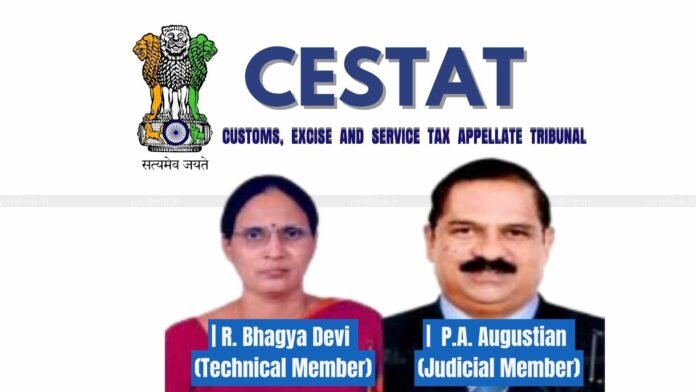
The bench of P.A. Augustian (Judicial Member) and R. Bhagya Devi (Technical Member) has observed that personnel supplied by the foreign parent company continued to remain employees of the overseas entity. Their salaries and employment benefits were initially borne by the parent company and subsequently reimbursed by the Indian subsidiary.
The dispute originated from an audit conducted by the Service Tax Department, which found that the company had allegedly failed to discharge service tax under the reverse charge mechanism on services received from its Canadian holding company during the period from October 2007 to March 2012. The Department treated the arrangement as a supply of manpower under a secondment agreement and raised a demand of ₹25.57 lakh along with interest and penalties.
Apart from the secondment-related demand, the Department also raised demands relating to management services received from a foreign associate company and amounts collected under a cost-sharing arrangement. The Commissioner confirmed all demands and imposed penalties under Sections 77 and 78 of the Finance Act, 1994.
The appellant contended that the secondment arrangement could not automatically be classified as a taxable manpower supply service. It further argued that a substantial portion of the demand—₹13.15 lakh—represented mere reimbursement of salary paid to a seconded employee and therefore could not form part of the taxable value. Reliance was placed on the Supreme Court’s ruling in Union of India v. Intercontinental Consultants and Technocrats Pvt. Ltd., which held that reimbursable expenses cannot be included in the value of taxable services.
The company also challenged the invocation of the extended limitation period, arguing that all relevant agreements and transactions had been fully disclosed to the Department and there was no suppression of facts.
Regarding management services and cost-sharing arrangements, the appellant submitted that certain activities were carried out outside India and that the cost-sharing arrangement merely involved allocation of common expenses without any provision of taxable services.
The Department relied heavily on the Supreme Court’s judgment in Northern Operating Systems Pvt. Ltd., contending that the secondment agreement clearly involved the provision of personnel by the foreign parent company and therefore attracted service tax under the reverse charge mechanism. The Revenue also argued that the assessee had already paid portions of the disputed tax liabilities, thereby acknowledging its tax obligations.
The Bench noted that the appellant had already paid service tax amounting to ₹12.42 lakh along with interest in respect of the technical services received. However, the remaining amount of ₹13.15 lakh represented reimbursement of salary paid to one of the seconded employees. The Tribunal accepted the appellant’s contention that this reimbursed salary component could not be included in the taxable value for service tax purposes.
Accordingly, the Tribunal excluded the reimbursed salary amount from the tax demand and held that service tax could be sustained only on the remaining taxable portion.
A significant aspect of the ruling relates to limitation. The Tribunal observed that the entire arrangement was governed by written agreements that had been disclosed to the Department. Since the transactions were fully reflected in the records and there was no evidence of deliberate suppression or misrepresentation, the extended period of limitation could not be invoked.
The Bench therefore restricted the demand to the normal limitation period.
With respect to the management services received from a Netherlands-based associate company, the Tribunal noted that the assessee had admitted during the audit that service tax had not been paid on certain payments. The company subsequently discharged the tax liability of ₹5.90 lakh along with interest before issuance of the show cause notice.
Finding no substantive challenge to the taxability of these services, the Tribunal upheld the demand relating to management services.
The Tribunal similarly rejected the appellant’s challenge to a demand of ₹2.32 lakh arising from amounts paid to an associate company. Although the assessee characterized the arrangement as mere cost sharing, the Bench found that the payments related to services rendered by the associate company and therefore attracted service tax. The demand was accordingly sustained.
While partly upholding the tax demands, the Tribunal granted substantial relief on penalties. It observed that the audit report had been submitted to the Department explaining the reasons for non-payment and that the appellant had voluntarily discharged tax liabilities along with interest upon being pointed out by the audit. In these circumstances, the Bench found no justification for imposing penalties.
Consequently, all penalties imposed under the Finance Act, 1994 were set aside.
The CESTAT partly allowed the appeal by excluding reimbursed salary paid to a seconded employee from the taxable value, restricting the demand to the normal limitation period, and deleting all penalties. However, the Tribunal upheld service tax demands relating to management services and payments made to associate companies where services were found to have been rendered.
Membership Required to Access Case Details & Order Copy
To view the complete Case Details and Download Order Copy, you must have an active membership. Please subscribe to continue.

