
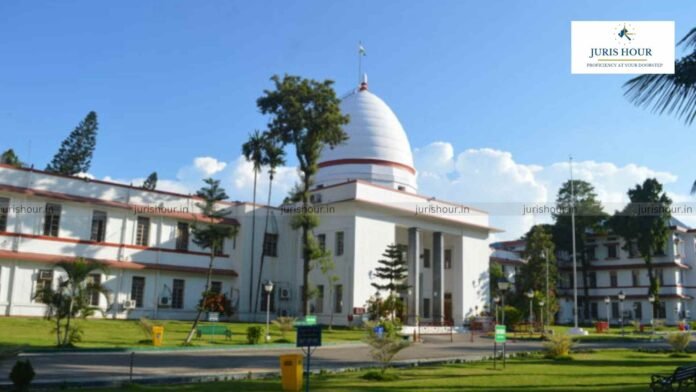
The Gauhati High Court has held that a taxpayer whose GST registration was cancelled for failure to file returns for six consecutive months may still seek restoration of registration by complying with the requirements prescribed under Rule 22(4) of the CGST Rules, 2017.
The bench of Justice Kardak Ete examined the statutory framework governing cancellation of GST registration under Section 29(2)(c) of the CGST Act and the procedural safeguards provided under Rule 22 of the CGST Rules, 2017. The proviso to Rule 22(4) specifically enables a taxpayer to avoid cancellation proceedings if all pending returns are furnished and outstanding tax, interest and late fees are paid.
The petitioner challenged the cancellation of his GST registration by the Superintendent, CGST, Duliajan Range. The order of cancellation had been passed on July 28, 2025, after the taxpayer allegedly failed to file GST returns continuously for six months.
The petitioner was engaged in the business of providing light motor vehicles on hire and was registered under the Central Goods and Services Tax Act, 2017 as well as the Assam Goods and Services Tax Act, 2017. According to the records, a show cause notice was issued on August 13, 2024, requiring the taxpayer to explain why his registration should not be cancelled due to non-filing of returns. Simultaneously, the registration was suspended. Subsequently, the registration was cancelled in July 2025.
Before the Court, the taxpayer contended that the default occurred because of a communication gap between him and his tax consultant. He further submitted that although he intended to seek revocation of the cancellation, the statutory time limit for filing such an application had already expired. The petitioner informed the Court that all pending GST returns had since been updated up to June 2025 and expressed readiness to comply with all statutory requirements for restoration.
The petitioner relied on an earlier judgment of the Gauhati High Court in Dhirghat Hardware Stores & Anr. v. Union of India & Ors., where similar relief had been granted in circumstances involving cancellation of GST registration due to prolonged non-filing of returns. The Revenue also acknowledged that the issues involved in the present case were substantially similar to those decided in the earlier judgment.
The Court emphasized that cancellation of GST registration has serious civil and commercial consequences for a business. Therefore, where a taxpayer is willing to regularize defaults by filing pending returns and clearing statutory dues, authorities should consider restoration in accordance with the scheme of the law.
Following the precedent laid down in Dhirghat Hardware Stores, the High Court directed that the petitioner be permitted to approach the competent GST authority within 60 days seeking restoration of his GST registration. The Court further directed that if the petitioner files the necessary application and complies with the requirements of Rule 22(4), the authorities shall consider the request for restoration in accordance with law and take appropriate steps expeditiously.
The Court also clarified that the petitioner would remain liable to pay all arrears, including tax, interest, penalty and late fees. Additionally, it directed that the limitation period under Section 73(10) of the CGST Act would be computed from the date of the Court’s order, except for Financial Year 2024-25, where the provisions of Section 44 would continue to apply.
Membership Required to Access Case Details & Order Copy
To view the complete Case Details and Download Order Copy, you must have an active membership. Please subscribe to continue.

