
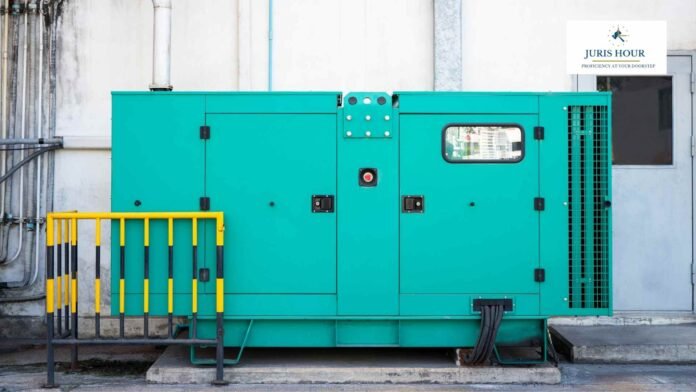
The Chennai Bench of the Customs, Excise and Service Tax Appellate Tribunal (CESTAT) has set aside a service tax demand holding that the hiring of diesel generator (DG) sets amounted to a transfer of the right to use goods—a deemed sale liable to VAT—and therefore fell outside the ambit of taxable “Supply of Tangible Goods for Use” (STGU) service under the Finance Act, 1994.
The bench of Ajayan T.V. (Judicial Member) has observed that once the generator was delivered and commissioned at the customer’s site, the appellant could not transfer the same right to use that equipment to any other person during the contractual period. These facts satisfied the Supreme Court’s tests for a transfer of the right to use goods and established that the transactions constituted deemed sales rather than taxable services.
The appeal arose from an order passed by the Commissioner of Central Excise, Chennai-III, confirming service tax demands, interest and penalties for the period 2008-09 to 2011-12 on the ground that the company had supplied DG sets on hire without discharging service tax under the STGU category. The Department alleged that the appellant had failed to remit service tax and had not filed the required ST-3 returns.
The appellant/assessee has been engaged since 2004 in supplying diesel generator sets on rental basis to manufacturing, construction and software companies. According to the company, the DG sets were delivered to customers’ premises and remained under their possession and use throughout the rental period. The company contended that customers exercised effective control over the equipment and that VAT had been paid on the transactions as deemed sales.
The appellant argued that the optional provision of operators did not alter the nature of the transaction and that maintenance support was merely incidental. It relied upon Article 366(29A)(d) of the Constitution and CBEC Circular No. 334/1/2008-TRU dated 29 February 2008, which clarifies that transactions involving transfer of possession and effective control are liable to VAT and not service tax.
The Department maintained that effective possession and control had never been transferred to customers. It pointed to contractual clauses under which the appellant remained responsible for operation, maintenance, spares and breakdown services, arguing that the arrangement constituted a taxable supply of tangible goods service. The Department further contended that payment of VAT alone could not determine the true nature of the transaction.
The Tribunal examined Section 65(105)(zzzzj) of the Finance Act, 1994, which taxed the supply of tangible goods for use “without transferring right of possession and effective control.” It also considered the CBEC circular explaining the distinction between a taxable service and a deemed sale.
Referring extensively to the Supreme Court’s decision in Bharat Sanchar Nigam Ltd. v. Union of India (BSNL), the Tribunal reiterated the five established tests for determining whether a transaction amounts to a transfer of the right to use goods. These include identification of the goods, availability for delivery, exclusive right of use with the transferee, and inability of the owner to transfer the same right to another during the contract period.
After scrutinizing the work orders placed by customers, the Tribunal found that specific DG sets were delivered and stationed at customer premises, the hiring period commenced upon delivery, and customers were entitled to use the equipment according to their own operational requirements. The appellant’s role was limited to maintenance and breakdown support.
The Tribunal also noted that the appellant had been registered under sales tax and VAT laws and had consistently paid VAT on the rental transactions. Further, service tax relating to transportation charges had already been paid prior to the issuance of the show cause notice.
Holding that the essential requirement of STGU service—namely, supply of goods without transfer of possession and effective control—was absent, the Tribunal concluded that the foundation of the service tax demand itself was unsustainable. Consequently, the allegations of tax evasion, invocation of the extended limitation period, interest liability and penalties under Sections 77 and 78 of the Finance Act, 1994, could not survive.
The impugned order was therefore set aside and the appeal allowed with consequential relief.
The tribunal, while concurring with the final outcome, stated that the matter could be decided by applying existing Tribunal precedents, particularly Express Engineers & Spares Pvt. Ltd. v. Commissioner of CGST and Agrawal Builders v. CCE.
Membership Required to Access Case Details & Order Copy
To view the complete Case Details and Download Order Copy, you must have an active membership. Please subscribe to continue.
Read More: 3Kg Gold Recovered in Nadia During Probe Into Former TMC MLA Sabyasachi Dutta

