
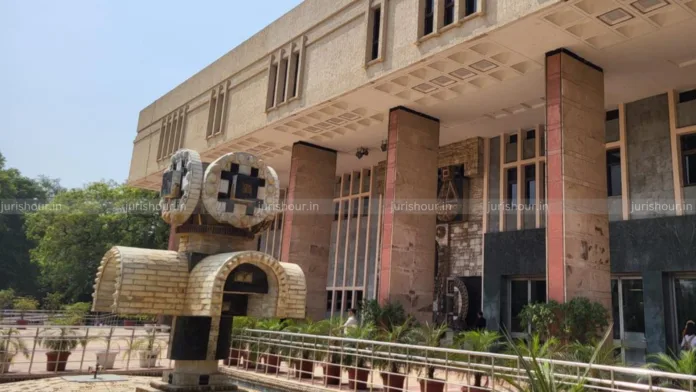
The Delhi High Court has quashed the seizure, detention of goods in transit for mere minor technicality.
The bench of Justice Yashwant Varma and Justice Harish Vaidyanathan Shankar has observed that the levy of penalties under the GST Act must be guided by the salutary principles which stand embodied in Section 126. That statutory provision is undoubtedly an embodiment of the legislative intent of levy of penalties being guided by principles of moderation, restraint and reasonableness.
The petitioners/assessee have approached this Court aggrieved by the demands raised by the respondents in purported application of the provisions enshrined in Section 129 of the Central Goods & Services Tax Act, 20171 and which have subsequently come to be affirmed by the appellate authorities.
The Order came to be affirmed by the appellate authority in terms of its decision rendered on 15 January 2022.
The department contended that Section 129 is a penal provision that necessarily entails a levy and demand of tax. They view that provision as envisaging a compulsory exaction or impost. In fact, the department urged that provision as being one which contemplates the levy of a statutory penalty. Notwithstanding the absence of mens rea, fraudulent motive or an intent to evade tax, where goods are sought to be transported in contravention of the provisions of the Act, a demand of tax would inevitably arise.
The petitioner contended that since the solitary ground for a demand of tax rested on an allegation of goods being transported without the cover of requisite documents, the only penalty which could have been imposed upon them would have been INR 10,000/- as contemplated under Section 122(1)(xiv) of the GST Act. It was their submission that since the respondents do not rest their case on an allegation of evasion of tax or furnishing of false information, the levy of penalty is wholly arbitrary and illegal.
The court held that the harsh consequences which would follow a confiscation clearly warrant the provisions of the GST Act being accorded an interpretation which would be fair, reasonable and in consonance with the requirement of Article 14 of the Constitution. In any event, Section 129 can neither be construed as envisaging an inevitable levy of tax nor the imposition of a penalty. The provision is primarily concerned with the release of seized and detained goods.
The court quashed the tax demand and penalty against the petitioner.
Case Details
Case Title: Kamal Envirotech Pvt. Ltd Versus Commissioner Of Gst And Anr; M/S Zeon Life Sciences Ltd Versus Chief Secretary,Government Of Delhi & Ors.
Case No.: W.P.(C) 12142/2022
Date: 17 January, 2025
Counsel For Petitioner: Abhas Mishra
Counsel For Respondent: Anuj Aggarwal

