
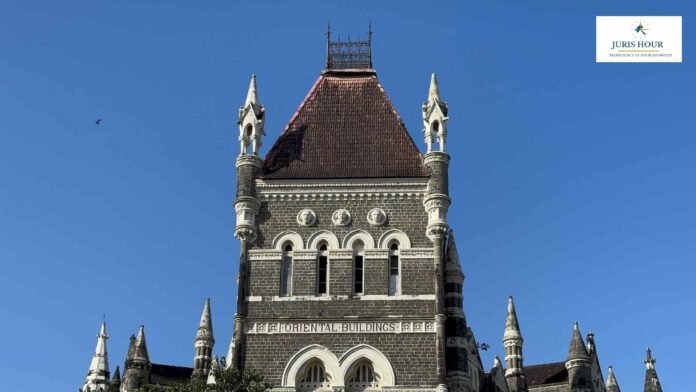
The Bombay High Court has reiterated that allegations of violation of natural justice, without specific factual foundation, cannot be used to bypass the statutory appellate mechanism under the Goods and Services Tax (GST) law.
Dismissing a writ petition challenging an adjudication order confirming GST and penalty demands of about ₹6.50 crore, the bench of Justice Suman Shyam and Justice Advait M. Sethna held that the petitioner had failed to establish any exceptional circumstances warranting interference under Article 226 of the Constitution.
The dispute arose out of search and seizure proceedings initiated under Section 67 of the CGST Act in February 2021. According to the petitioner, authorities had seized business records, books of accounts, electronic devices and laptops without preparing an inventory. Subsequently, a show cause notice dated 26 June 2025 proposed denial of input tax credit under Section 16 of the CGST Act and recovery of IGST, CGST, SGST and other dues, along with penalties aggregating around ₹6.50 crore.
Buy Now: 130 GST Judgments – E-Magazine July 2026
The petitioner argued that the adjudication order was passed in violation of principles of natural justice because the authorities had failed to furnish the seized documents and other relied-upon materials necessary for preparing an effective defence. It contended that this omission prejudiced the adjudication proceedings and justified direct intervention by the High Court instead of pursuing the appellate remedy.
The tax department opposed the petition, contending that a personal hearing notice had been issued and the petitioner had submitted a detailed reply before the adjudicating authority.
The department maintained that the impugned order had specifically considered the petitioner’s grievance regarding non-supply of documents and recorded findings rejecting that contention. It further argued that the petitioner had merely made bald assertions without identifying which documents had actually been withheld or explaining how any prejudice had been caused.
After examining the adjudication order, the High Court found that the petitioner’s principal grievance had already been addressed by the adjudicating authority. The order specifically recorded that the show cause notice and relied-upon documents had been emailed to the petitioner’s registered email address on 28 June 2025 and were again forwarded to another email address on 4 February 2026 at the petitioner’s request. Consequently, the Court found no material to support the allegation that the relied-upon documents had not been supplied.
The Bench also observed that the petitioner had not pleaded or demonstrated which particular documents had remained unavailable or how their absence had prejudiced its defence. In the absence of such particulars, the Court held that it could not presume violation of natural justice merely on the basis of general allegations.
The High Court relied on recent Supreme Court decisions reiterating that High Courts should ordinarily decline to entertain writ petitions where an effective statutory appellate remedy exists. The Court observed that departure from this rule is permissible only in exceptional cases supported by proper pleadings and material, which were absent in the present case.
The Bench also referred to the Supreme Court’s decision in Shaik Arif v. Commissioner of Customs, where even allegations of violation of natural justice and lack of jurisdiction were held insufficient to bypass the statutory appellate mechanism under the Customs Act. Drawing a parallel with Section 107 of the CGST Act, the Court held that similar principles governed GST adjudication.
The High Court noted an increasing tendency among litigants to directly invoke writ jurisdiction instead of pursuing statutory appeals, often with a view to avoid the mandatory pre-deposit requirement prescribed under tax statutes. The Court cautioned that such practice undermines the legislative scheme and observed that merely invoking “natural justice” cannot become a routine ground for bypassing the appellate process.
According to the Bench, constitutional writ jurisdiction must be exercised sparingly and only in compelling cases, with courts carefully distinguishing genuine violations from unsupported allegations.
Holding that no exceptional circumstances had been established, the Court dismissed the writ petition as not maintainable. However, in the interest of justice, it granted liberty to the petitioner to file an appeal under Section 107 of the CGST Act within four weeks from the date of uploading of the judgment.
The Court directed that if such an appeal is filed within the stipulated period and the statutory requirements, including the mandatory pre-deposit, are complied with, the appellate authority shall consider it on its own merits in accordance with law.
The Court clarified that it had expressed no opinion on the merits of the tax dispute, leaving all contentions open before the appellate authority.
Membership Required to Access Case Details & Order Copy
To view the complete Case Details and Download Order Copy, you must have an active membership. Please subscribe to continue.

