
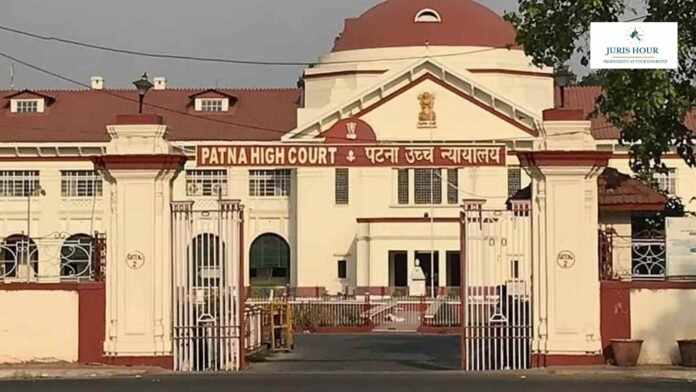
The Patna High Court has asked the taxpayer to seek rectification under extension of the time limit for claiming Input Tax Credit (ITC) mechanism instead of writ petition.
The bench of Justice Rajeev Ranjan Prasad and Justice Kumar Manish disposed of a writ petition holding that the petitioner should avail the statutory rectification mechanism provided under the Central Board of Indirect Taxes and Customs (CBIC) Circular dated October 15, 2024, rather than invoke the writ jurisdiction of the High Court in the first instance.
The petitioner challenged an order passed under Section 73 of the Bihar Goods and Services Tax (BGST) Act, 2017, by which Input Tax Credit claimed on certain tax invoices and debit notes was disallowed. The authorities had denied the credit on the ground that it had been availed beyond the time limit prescribed under Section 16(4) of the BGST Act.
Buy Now: GST Judgements E-Compilation – June 2026
According to the petitioner, although the adjudication order had been passed on March 6, 2020, recovery proceedings were initiated much later. The petitioner argued that, in view of the Finance (No. 2) Act, 2024, which retrospectively inserted Sections 16(5) and 16(6) into the CGST Act with effect from July 1, 2017, the disputed ITC had now become legally admissible. The petitioner relied on CBIC Circular No. 237/31/2024-GST dated October 15, 2024, which clarifies the implementation of these retrospective amendments and sought quashing of the demand along with refund of the recovered amount with statutory interest.
The State opposed the writ petition, contending that the very CBIC circular relied upon by the petitioner also prescribes a specific remedy.
The Government referred to Paragraph 3.5 of the circular, which provides that where a demand order under Sections 73 or 74 has attained finality because no appeal has been filed, but the disputed ITC has become available due to the retrospective amendments introduced through Sections 16(5) and 16(6), the taxpayer may seek rectification under the special procedure notified under Section 148 of the CGST Act through Notification No. 22/2024-Central Tax dated October 8, 2024.
The State argued that instead of approaching the competent authority through the prescribed rectification procedure, the petitioner had directly invoked the writ jurisdiction of the High Court.
The Division Bench accepted the State’s contention that the petitioner’s claim should first be examined by the competent authority under the statutory mechanism created for such cases.
The Court observed that determining whether the petitioner’s case falls within the categories covered by the retrospective extension of the ITC time limit requires factual examination by the designated authority. Consequently, the High Court considered it inappropriate to undertake such an exercise in writ jurisdiction at this stage.
The Court granted the petitioner one month to file a rectification application before the competent authority in accordance with Paragraph 3.5 of the CBIC circular.
The court directed that the competent authority shall entertain the application if filed within the stipulated period. The petitioner must be afforded an opportunity of personal hearing. A reasoned order shall be passed in accordance with law within three months from the date of filing the rectification application.
The writ petition was accordingly disposed of.
Membership Required to Access Case Details & Order Copy
To view the complete Case Details and Download Order Copy, you must have an active membership. Please subscribe to continue.

