
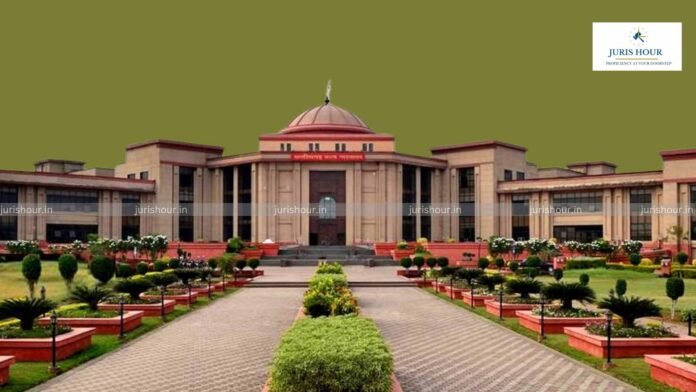
The Chhattisgarh High Court has dismissed a writ petition filed by a liquor outlet operator seeking the release of her bank guarantee furnished for operating an Ahata (drinking area adjoining a liquor shop), holding that the security cannot be released unless all outstanding licence fee dues are cleared.
The bench of Chief Justice Ramesh Sinha and Justice Ravindra Kumar Agrawal ruled that the petitioner’s inability to continue business due to non-availability of suitable premises does not extinguish her contractual and statutory liability to pay the licence fee under the terms of the licence.
The petitioner had participated in the tender process for operating the Ahata attached to the country-made and foreign liquor shop at Takhatpur, Bilaspur, for the excise year 2025-26, covering the period from July 8, 2025, to March 31, 2026.
Buy Now: GST Judgements E-Compilation – June 2026
After emerging as the highest bidder, she was granted the licence through an allotment order dated July 7, 2025. Pursuant to the allotment, she deposited the prescribed licence fee, furnished a bank guarantee, and commenced operations in accordance with the licence conditions. According to the petitioner, she operated the establishment without any complaint from the authorities until a show-cause notice dated March 25, 2026, was issued alleging certain defaults.
The petitioner contended that she became unable to continue operating the Ahata because a suitable premises was unavailable. Citing these circumstances, she sought surrender of the licence under Section 33 of the Chhattisgarh Excise Act, 1915, and requested that her security deposit be adjusted towards the outstanding licence fee. She also deposited the licence fee for April 2026 to demonstrate her bona fides and sought release of the bank guarantee, alleging that the authorities neither considered her surrender request nor returned the security.
The petitioner argued that she had faithfully complied with all licence conditions from the commencement of operations until circumstances beyond her control prevented further business.
It was submitted that the inability to continue operations arose solely because of the non-availability of suitable premises. She had invoked Section 33 of the Chhattisgarh Excise Act seeking surrender of the licence. The security deposit should have been adjusted against any outstanding dues. Since she had acted bona fide by depositing the licence fee for April 2026, the authorities ought to have released the bank guarantee.
On these grounds, she sought a writ directing the respondents to release the bank guarantee along with appropriate interest.
The department opposed the petition, contending that the petitioner had failed to pay the requisite monthly licence fee during the final months of the licence period.
The State further submitted that the petitioner herself applied on March 30, 2026, for surrender of the licence due to non-availability of suitable premises and inadequate infrastructure. Under the applicable licence conditions, the bank guarantee or security deposit could be released only after all outstanding licence fee dues were fully discharged. Since substantial licence dues remained unpaid, the petitioner was not entitled to release of the bank guarantee.
Accordingly, the State argued that no relief could be granted in the writ jurisdiction.
The Court observed that the petitioner had indeed been granted the licence for the specified period. She voluntarily applied for surrender of the licence under Section 33, citing non-availability of suitable premises and lack of infrastructure. She admittedly failed to deposit the licence fee for the relevant period, leaving outstanding dues unpaid.
The Bench held that the principal relief sought was release of the security deposit and bank guarantee. However, the licence conditions expressly prohibited such release until all outstanding licence dues had been cleared.
The Court emphasized that although the reasons advanced by the petitioner might be relevant while seeking surrender of the licence, those circumstances did not absolve her of the contractual and statutory obligation to pay the licence fee in accordance with the licence conditions.
Holding that the petition lacked merit, the High Court dismissed the writ petition.
However, the Court granted liberty to the petitioner to pursue any other remedy available under law for redress of her grievances.
Membership Required to Access Case Details & Order Copy
To view the complete Case Details and Download Order Copy, you must have an active membership. Please subscribe to continue.
Read More: GST ITC Denial Over Supplier’s Tax Default: Himachal Pradesh High Court Orders Fresh Adjudication

