
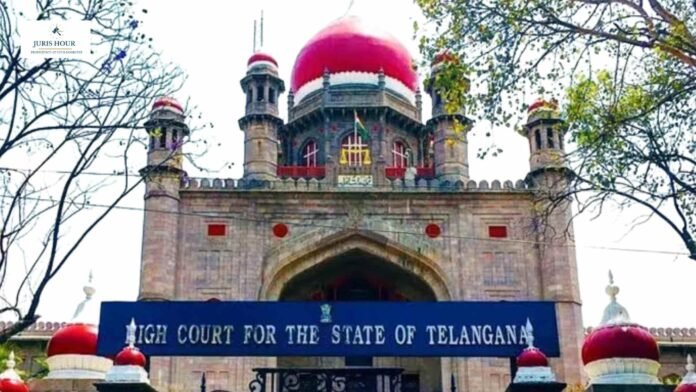
The Telangana High Court has raised a significant jurisdictional question under the Goods and Services Tax (GST) regime by granting interim relief to a battery trader whose refund of nearly ₹3.92 crore was sought to be recovered by the tax department through proceedings under Section 73 of the Central Goods and Services Tax (CGST) Act, 2017.
The Court has questioned whether the Revenue can recover an already sanctioned GST refund without first setting aside the original refund sanction order through the statutory appellate or revisional mechanisms provided under the Act.
The petitioner, engaged in the business of trading batteries, had been granted a GST refund amounting to ₹3,92,50,762through a Refund Sanction Order dated 5 September 2023. The refund was duly sanctioned by the competent authority and attained finality, as the Revenue did not challenge the sanction order by filing an appeal under Section 107 or initiating revision proceedings under Section 108 of the CGST Act.
Buy Now: GST Judgements E-Compilation – June 2026
Subsequently, however, the department issued a show cause notice under Section 73 of the CGST Act proposing recovery of the very same refund. An order-in-original dated 5 May 2025 directed recovery of the sanctioned refund along with penalty. The appellate authority, through its order dated 9 April 2026, affirmed the recovery order, prompting the petitioner to approach the Telangana High Court by way of a writ petition.
Before the High Court, the petitioner argued that once the refund had been validly sanctioned and the sanction order had not been challenged by the department under the statutory remedies available in the CGST Act, the authorities could not indirectly reopen the concluded refund proceedings by invoking Section 73.
The petitioner contended that the proceedings amounted to nothing more than a change of opinion by the same authority and that reopening a finalized refund without first annulling the refund sanction order was without jurisdiction. It was specifically argued that neither the appellate power under Section 107(1) nor the revisional jurisdiction under Section 108had been exercised to invalidate the refund sanction order, making the subsequent recovery proceedings legally unsustainable.
Taking note of the submissions, the Division Bench observed that the case raises an important legal issue regarding the statutory framework governing recovery of GST refunds.
The Court required the Revenue to explain whether recovery of an already sanctioned refund under Sections 73 or 74 of the CGST Act is legally permissible without first challenging or setting aside the Refund Sanction Order through the appellate mechanism under Section 107 or the revisional mechanism under Section 108.
The Court indicated that if the statutory order sanctioning the refund continues to remain valid and operative, proceedings seeking recovery of the same refund may suffer from a jurisdictional defect.
After considering the matter, the Telangana High Court granted the State Tax Department three weeks’ time to obtain instructions and file its counter affidavit.
Pending further consideration of the matter, the Court ordered an interim stay of the appellate order dated 9 April 2026, thereby protecting the petitioner from immediate recovery of the refund amount. The matter has been directed to be listed after three weeks for further hearing.
Membership Required to Access Case Details & Order Copy
To view the complete Case Details and Download Order Copy, you must have an active membership. Please subscribe to continue.

