
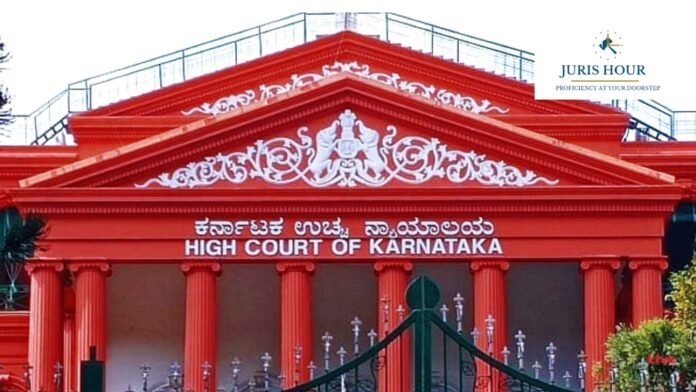
The Karnataka High Court has dismissed the department’s appeal in a dispute involving recovery of ₹29.61 crore in GST refunds, holding that delays in internal communication and post-audit cannot extend the statutory deadline for challenging refund orders.
The Bench of Chief Justice Vibhu Bakhru and Justice K.S. Hemalekha upheld the Single Judge’s decision that the departmental appeals against refund sanction orders were barred by limitation under Section 107 of the Central Goods and Services Tax Act, 2017 and held that, for intra-departmental purposes, the expression “communication of the decision or order” under Section 107(2) must be construed as the date of issuance of the order. The limitation period cannot remain open-ended merely because the reviewing authority claims to have received the order several months later.
Buy Now: 195+ ITC Judgements Along With GSTAT Rulings – 2017 To 2026
The respondent/assessee claimed to be a 100% Export Oriented Unit engaged in manufacturing and exporting garments. It stated that it had imported capital goods between July 1 and October 13, 2017, and paid Integrated Goods and Services Tax under Section 3(7) of the Customs Tariff Act, 1975.
The company filed six electronic applications seeking refund of accumulated and unutilised input tax credit for July to December 2017, on the basis that its supplies were zero-rated.
The Commissioner of Central Tax subsequently reviewed these orders under Section 107(2). The department considered the refunds erroneous insofar as they related to input tax credit on capital goods, taking the position that such credit was outside the relevant refund computation under Rule 89 of the CGST Rules.
The review orders were issued in February 2019, following which the Additional Commissioner filed appeals against the refund sanction orders.
The company contested the departmental appeals both on limitation and on merits.
However, the Commissioner (Appeals), by an order dated February 27, 2020, rejected the limitation objection and allowed the Revenue’s appeals. The authority held that ₹29,61,78,425 had been erroneously refunded and directed recovery with interest under Section 50 of the CGST Act.
On the substantive issue, the appellate authority reasoned that “net ITC” under Rule 89 covered credit availed on inputs and input services. It also relied on the definition of “input” in Section 2(59), which excludes capital goods.
The company challenged the appellate order before the High Court and also questioned the constitutional validity of Rule 89(4).
A subsequent demand order dated August 1, 2022, issued pursuant to the appellate order, was challenged in a connected writ petition. The Single Judge allowed the petitions by an order dated November 11, 2025. The Revenue’s present appeal concerned the decision in W.P. No. 8128/2020; the judgment recorded that a separate appeal had been filed concerning the connected matter.
The Division Bench confined its consideration to whether the departmental appeals before the Commissioner (Appeals) were time-barred.
The Court explained that Section 107 provides three months for an aggrieved person to appeal from communication of the decision or order. For the Revenue, Section 107(2) provides six months. Under Section 107(4), the appellate authority may condone a further delay of one month upon sufficient cause being shown.
The Commissioner (Appeals) had relied, among other reasons, on the fact that the appeals arose from a post-audit exercise. The High Court rejected that reasoning.
It held that the date of audit, or the date on which audit observations were made, had no relevance to the commencement of limitation. The statutory period runs from communication of the order, rather than from a later departmental discovery that the refund may have been incorrectly sanctioned.
The department argued that the July 2017 refund order had been communicated on July 11, 2018, while the orders for the remaining months had been communicated on July 30, 2018.
The company disputed these dates. It questioned how delivery could have taken five to six months when the Commissioner’s office was located on the same floor as the adjudicating authority that issued the refund orders.
The Court noted that the Commissioner (Appeals) had not recorded findings establishing the actual dates of communication. Applications seeking condonation in four of the six appeals referred only to staff shortages or administrative reasons.
Addressing the central question of intra-departmental communication, the Bench relied on the Delhi High Court’s decision in Grapes Digital Pvt. Ltd. v. Principal Commissioner and Another, decided on December 5, 2023.
Following that decision, the Court held that allowing limitation to depend on an uncertain date of internal receipt would defeat the legislative intention to impose a strict timeframe for departmental appeals. Consequently, communication within the department must be understood with reference to issuance of the order.
The Bench also examined CBIC Instruction No. 03/2022-GST dated June 14, 2022, which prescribes procedures for post-audit and review of refund orders.
The instruction requires refund orders to be transmitted online to the review module immediately after issuance in Form GST RFD-06. It further requires post-audit to be concluded, and its findings communicated to the review branch, within three months of issuance. Review must be completed at least 30 days before expiry of the statutory appeal period.
The Court observed that the longer period available to the Revenue accommodates departmental procedures. Those procedures cannot provide an additional extension beyond the statutory framework.
It also referred to Section 169(1)(d), which recognises making an order available on the common portal as a mode of service. Reading the statutory scheme together, the Bench rejected the contention that communication could be treated as indeterminate or delayed by several months within the department.
The Commissioner (Appeals) had also reasoned that the Revenue could independently recover an erroneous refund under Section 73.
The High Court held that this was irrelevant to deciding whether an appeal under Section 107 had been filed within time. The availability of a separate recovery mechanism does not enlarge the limitation period for an appeal.
The Bench expressly rejected the assumption that Sections 73 and 74 could extend the deadline prescribed by Section 107.
It further held that the Commissioner (Appeals) lacked jurisdiction to condone delay exceeding the additional one-month period. In this case, the delay went substantially beyond that permissible limit.
The Division Bench found no infirmity in the Single Judge’s conclusion that the departmental appeals were filed beyond the prescribed limitation period and dismissed the Revenue’s writ appeal.
Membership Required to Access Case Details & Order Copy
To view the complete Case Details and Download Order Copy, you must have an active membership. Please subscribe to continue.

