
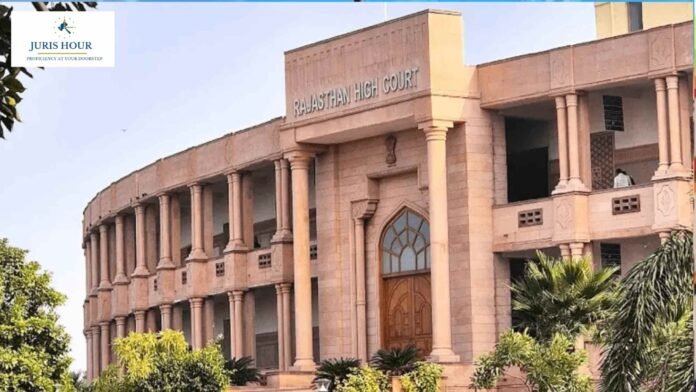
The Rajasthan High Court has refused to entertain a writ petition challenging a GST demand of ₹2.19 crore for the financial year 2017-18, holding that the petitioner must first exhaust the statutory appellate remedy available under the Central Goods and Services Tax (CGST) Act, 2017.
The bench of Justice Arun Monga and Justice Maneesh Sharma has granted significant relief by directing that the period spent litigating before the High Court should be excluded while computing the limitation period for filing an appeal before the appellate authority.
The writ petition was filed before the Jaipur Bench of the Rajasthan High Court against an Order-in-Original and the consequential Form GST DRC-07 issued by the Assistant Commissioner, CGST Division-A, Jaipur.
Buy Now: June 2026 Ultimate Legal & Taxation Combo
The tax authorities had raised a GST demand of ₹2,19,01,564 alleging that the company had wrongfully availed and utilized Input Tax Credit (ITC) during the financial year 2017-18. Aggrieved by the adjudication order, the company approached the High Court directly under Article 226 of the Constitution instead of filing a statutory appeal.
During the hearing, the department objected to the maintainability of the writ petition. They argued that the petitioner had an effective alternative remedy under Section 107 of the CGST Act, 2017, which provides for an appeal before the Appellate Authority against orders passed by an adjudicating authority.
The State contended that since the statutory mechanism had not been exhausted, the High Court should not exercise its extraordinary writ jurisdiction.
The Division Bench agreed with this preliminary objection after examining the case records.
The Court observed that Section 107 specifically provides an appellate remedy to any person aggrieved by an adjudication order under the CGST Act.
Relying on this statutory framework, the Bench held that it was not inclined to directly entertain the writ petition when the petitioner had an adequate and efficacious alternative remedy available under the law.
Accordingly, the Court dismissed the writ petition while granting liberty to the petitioner to raise all legal as well as factual grounds before the competent appellate authority.
Although declining to entertain the petition, the High Court protected the petitioner’s right to pursue the statutory appeal.
The Bench noted that the writ petition had been filed on April 3, 2025, within the permissible period under Section 107 of the CGST Act after considering the statutory provisions regarding condonation of delay.
Recognising that the petitioner had been bona fide pursuing proceedings before the High Court, the Court directed that the time spent before the High Court shall be excluded by the appellate authority while computing limitation, provided the appeal is filed within 30 days from the date the High Court’s order is uploaded on its website.
Membership Required to Access Case Details & Order Copy
To view the complete Case Details and Download Order Copy, you must have an active membership. Please subscribe to continue.
Read More: Fresh Hearing Mandatory After Reply U/s 75(4) Of The CGST Act: Uttarakhand High Court

