
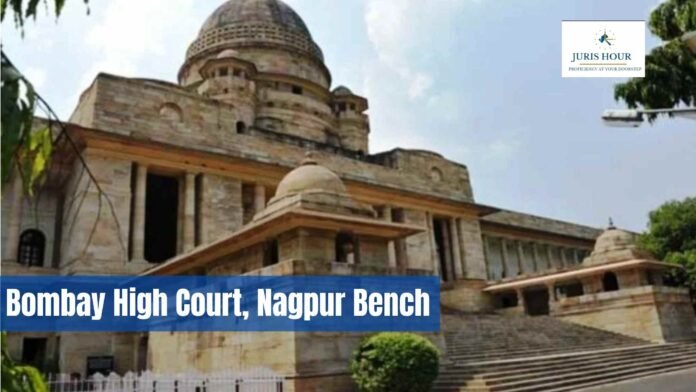
The Bombay High Court has quashed a GST adjudication order and the underlying show cause notice issued against a company that had ceased to exist following its amalgamation, holding that proceedings initiated against a non-existent entity are legally unsustainable even if the tax department was fully aware of the merger.
The bench of Justice B. P. Colabawalla and Justice Firdosh P. Pooniwalla found that the adjudication order had been issued in the name of IDFC Alternatives Limited (IAL), a company that had already ceased to exist following its merger.
IDFC Alternatives Limited was amalgamated with IDFC Limited pursuant to an order of the National Company Law Tribunal (NCLT), Chennai, dated November 22, 2022, and ceased to exist with effect from December 9, 2022. Subsequently, under another NCLT-approved composite scheme dated September 25, 2024, IDFC Limited itself merged into IDFC First Bank Ltd., making the bank the successor entity.
Buy Now: GST Judgements E-Compilation – June 2026
The petitioner informed GST authorities about both amalgamations through multiple communications, including letters dated February 16, 2024, and January 24, 2025. The bank also reiterated the fact of the merger while responding to the show cause notice issued on June 27, 2025. Despite these disclosures, the GST department issued both the show cause notice and the final adjudication order in the name of IDFC Alternatives Limited.
Aggrieved by this, IDFC First Bank approached the High Court contending that the proceedings were void because they had been initiated and concluded against an entity that no longer existed in law.
The tax department argued that the proceedings substantially referred to the amalgamated entity and that the petitioner had actively participated in the adjudication process. According to the department, the petitioner, being the successor company, had inherited both the rights and liabilities of the amalgamating company under the Companies Act and the approved scheme of amalgamation.
The Revenue further contended that merely mentioning the erstwhile company’s name should not invalidate the proceedings, particularly when the petitioner was aware of the investigation and had defended the case on merits. It also argued that the petitioner should pursue the statutory appellate remedy under Section 107 of the CGST Act instead of invoking the writ jurisdiction of the High Court.
Rejecting the department’s contentions, the High Court held that both the show cause notice and the adjudication order had been issued against a non-existent entity and were uploaded on the GST portal of the dissolved company rather than that of the successor entity. The Court observed that merely appending the words “now merged with IDFC First Bank Ltd.” could not cure the fundamental legal defect.
The Bench noted that the adjudicating authority had completely failed to address the petitioner’s repeated submissions regarding the amalgamation and the cessation of IDFC Alternatives Limited. It also emphasized that the reasoning supporting an administrative order must be contained within the order itself and cannot later be supplemented through arguments advanced before the Court.
One of the principal questions before the Court was whether the petitioner’s participation in the proceedings amounted to a waiver of its objection.
Answering in the negative, the Court relied on the Supreme Court’s landmark decision in Principal Commissioner of Income Tax v. Maruti Suzuki India Ltd., which held that participation in proceedings cannot validate actions initiated against a non-existent entity.
The Bench also distinguished the Supreme Court’s ruling in Mahagun Realtors, observing that unlike that case, the GST authorities here had been informed about the amalgamation well before the issuance of the show cause notice. Consequently, the department could not claim ignorance regarding the company’s legal status.
Clarifying the legal position, the Court held that while liabilities of the transferor company undoubtedly pass to the transferee company upon amalgamation, any proceedings seeking to impose or recover such liabilities must necessarily be initiated in the name of the surviving amalgamated entity.
The Bench observed that where tax liabilities arise for periods prior to amalgamation, proceedings can certainly continue, but they must be directed against the successor company rather than an entity that has ceased to exist in the eyes of law.
The High Court quashed both the show cause notice and the adjudication order solely because they had been issued against a non-existent company despite the department’s knowledge of the amalgamation.
Importantly, the Court clarified that it had not examined the merits of the underlying GST dispute. It expressly left open the department’s right to initiate fresh proceedings against IDFC First Bank Ltd., if otherwise permissible under law.
Membership Required to Access Case Details & Order Copy
To view the complete Case Details and Download Order Copy, you must have an active membership. Please subscribe to continue.
Read More: GST Registration Cancellation: Karnataka High Court Holds Appeal U/s 107 Is Proper Remedy

