
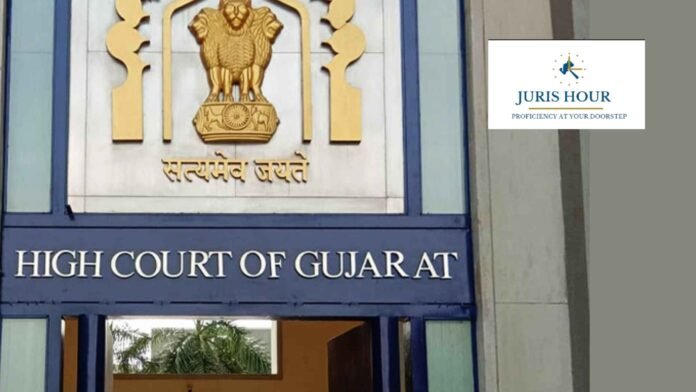
The Gujarat High Court has set aside a GST demand order after finding that proceedings initiated by the Central authorities overlapped with proceedings undertaken by the State authorities for the same financial years.
The bench of Justice A.S. Supehia and Justice Vaibhavi D. Nanavati held that the overlapping periods covered by the State proceedings could not form part of the Central authorities’ consolidated demand where the bar under Section 6(2)(b) of the Central Goods and Services Tax Act, 2017 (CGST Act) was attracted.
Buy Now: E-Handbook: Draft Replies to GST Notices On 40+ Issues
The bench quashed and set aside the order dated January 25, 2025, and remanded the matter to the authorities with a direction to pass a fresh order after excluding FY 2017-18 and FY 2018-19 from the demand.
The petitioner/assessee approached the Gujarat High Court challenging a notice dated August 2, 2025, as well as the order dated January 25, 2025.
The principal grievance was that the proceedings violated Section 6(2)(b) of the CGST Act, which deals with restrictions on initiation of proceedings by another tax authority concerning the same subject matter.
During the hearing, the parties submitted that the matter could be remanded to the department for passing a fresh order in light of the averments contained in the respondents’ affidavit dated November 26, 2025.
The Court noted that the Supreme Court had held that where proceedings initiated by two departments overlap in assessing or recovering the same tax liability, deficiency or obligation arising from a particular contravention, the restriction contained in Section 6(2)(b) applies.
However, where the proceedings concern distinct infractions, the statutory bar would not apply merely because the resulting liability or deficiency may be similar.
This distinction was central to the Gujarat High Court’s determination.
The question was therefore not merely whether both proceedings could potentially result in a similar tax liability, but whether they concerned the same subject matter and overlapping proceedings for the same contravention.
The respondents’ affidavit attempted to distinguish the Central proceedings from the State proceedings.
According to the department’s submission recorded by the Court, the State proceedings covered FY 2017-18 and FY 2018-19, whereas the Central authorities’ notice covered the broader period from July 2017 to November 2022.
The department contended that because the Central proceedings also covered periods that had not been examined by the State authorities, the subject matter and cause of action were distinct. On that basis, it argued that Section 6(2)(b) should not operate, particularly for the period from 2019 to 2022.
The department further relied upon the possibility of adjustment or rectification of any excess recovery or duplication under Section 79(1) of the CGST Act.
The respondents therefore contended that the allegation of double demand was premature until final quantification and cross-verification.
The High Court, however, examined the actual demand confirmed through the impugned order.
The Court noted that the order dated January 25, 2025 determined and confirmed the demand for the period July 2017 to November 2022.
Consequently, the demand also included FY 2017-18 and FY 2018-19, which were already covered by the State proceedings. The overlapping years were therefore taken into consideration while determining the tax demand as well as the consequential interest and penalty.
This was significant because the overlap was not merely theoretical or confined to the scope of the show-cause notice. The overlapping financial years had actually formed part of the demand confirmed by the department.
Considering the consolidated demand and the department’s own averments regarding the proceedings, the Gujarat High Court held that the impugned order could not be sustained to the extent that it included the overlapping financial years.
The department requested two weeks’ time to pass the fresh order.
The High Court accepted the request and permitted the respondent authorities to pass a fresh order within two weeks from the date of receipt of the High Court’s order.
The Court also clarified that if the petitioner remains aggrieved by the fresh order, it would be open to it to pursue an appropriate remedy before the appropriate forum.
Membership Required to Access Case Details & Order Copy
To view the complete Case Details and Download Order Copy, you must have an active membership. Please subscribe to continue.
Read More: Gold Smuggling Gang Busted at Delhi Airport; 6.5 Kg Gold Worth ₹9 Crore Seized

