
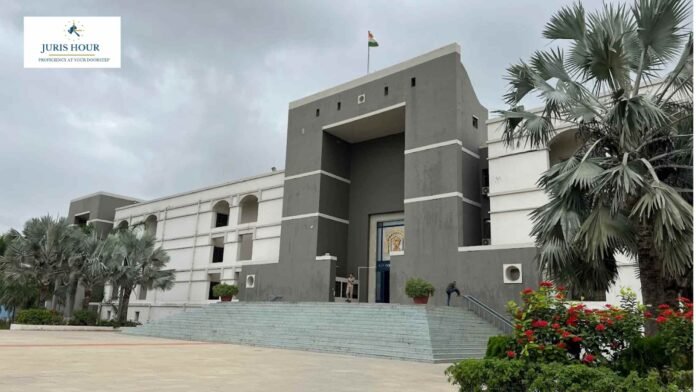
The Gujarat High Court has quashed a series of GST proceedings against a taxpayer after finding that the adjudicating authority had relied on case laws generated through Artificial Intelligence (AI), including judgments that were either non-existent or irrelevant to the dispute.
The bench of Justice A.S. Supehia and Justice Vaibhavi D. Nanavati has directed the State GST authorities to strictly follow newly issued instructions governing the use of AI in adjudication and quasi-judicial proceedings.
The bench had earlier taken serious note of the manner in which authorities had relied upon purported judicial precedents while passing the impugned order.
Buy Now: 130 GST Judgments – E-Magazine July 2026
The dispute came before the High Court after the petitioner challenged the GST orders, contending that the State Tax Officer had relied upon authorities that did not support the proposition for which they had been cited.
The petitioner pointed out that one of the cited cases, stated to be a decision of the Gujarat High Court, was not even in existence. The counsel further submitted that another Madras High Court decision had been cited with a different citation and did not support the ratio attributed to it. A Calcutta High Court judgment cited in the order was also stated to have neither the relevant citation nor a ratio applicable to the dispute.
The High Court observed that the impugned order appeared to have been passed by the State Tax Officer by relying exclusively on AI-generated case laws. The Court warned that if the allegations concerning the non-existent and irrelevant judgments were found to be correct, appropriate action could be taken against the officer who had passed the order.
When the matter was taken up again on August 20, 2026, the State Tax Officer who had passed the impugned order personally appeared before the Court.
In his affidavit, the officer tendered an unconditional apology for citing the judgments. He specifically acknowledged that the judgments had been identified using Artificial Intelligence and that some of the authorities referred to in the order were non-existent or irrelevant.
The officer stated that he was a probationary officer and attributed the mistake to his lack of experience. He also informed the Court that, following its earlier order, he had attended a training programme concerning the use of AI in drafting special civil applications and adjudication/appellate orders on August 18, 2026.
Following the High Court’s intervention, the Additional Commissioner of State Tax (Administration), Gujarat State, Ahmedabad issued instructions dated August 18, 2026, concerning the use of AI by adjudicating and quasi-judicial authorities.
The instructions specifically recognise that AI may be used to assist officers in preparing orders, but require every AI-generated legal reference to be independently verified through primary and official sources before it is incorporated into an order.
The Department has directed officers to verify the accuracy of citations, the relevance of judgments and their current legal status. Officers must also ensure that a judgment relied upon has not subsequently been overruled by a higher judicial forum.
Importantly, where AI paraphrases the ratio of a judgment, the officer has been instructed to locate the original paragraph and reproduce it in the order before relying upon it.
The instructions go beyond verification of AI-generated material. They expressly require adjudicating authorities to consider judgments cited by taxpayers.
If an authority concludes that a judgment relied upon by the taxpayer is not applicable to the case, the officer must record reasons explaining why the decision does not apply.
The Department has also stressed that AI and other technological tools must operate under appropriate human oversight because of concerns relating to accuracy, transparency and the reliability of underlying information.
The instructions make clear that an adjudication order must reflect the officer’s own independent legal reasoning and application of mind. AI output may assist the officer but cannot substitute independent judicial or quasi-judicial reasoning.
One of the most significant aspects of the instructions is the express allocation of responsibility to the officer who issues the order.
The Gujarat GST Department has stated that the ultimate responsibility for the correctness of an order remains with the issuing authority, regardless of the technological tools used in preparing it.
The Department has further warned that failure to comply with the instructions, including passing orders based on unverified AI-generated material, would amount to misconduct and could invite disciplinary action.
The High Court subsequently directed that these instructions be followed scrupulously. It further clarified that any violation of the directions would amount to contempt of the Court in view of the directions issued in the proceedings.
On the substantive GST dispute, the State authorities informed the Court that they intended to revise the entire set of impugned orders by invoking Section 108 of the GST Act, 2017. The Department also indicated that, if considered appropriate, the existing orders could be set aside and a fresh show cause notice issued to the taxpayer.
Taking note of the Department’s position and the circumstances of the case, the High Court quashed and set aside the show cause notice dated October 30, 2025, the GST cancellation order dated December 15, 2025, the order rejecting the revocation application dated March 10, 2026, issued on March 23, 2026, and the appellate order dated May 25, 2026, along with the GST APL-04 dated May 26, 2026.
The authorities have been directed to issue a fresh notice to the taxpayer. The Court made it clear that the taxpayer must cooperate with the proceedings and that the defence and reply submitted by the taxpayer must be duly considered by the adjudicating authority.
The fresh proceedings must culminate in a reasoned order passed in accordance with law. At the same time, the Court left all rights and contentions of both sides open.
Membership Required to Access Case Details & Order Copy
To view the complete Case Details and Download Order Copy, you must have an active membership. Please subscribe to continue.
Read More: GST Registration Cancellation Stayed: Allahabad High Court Questions 99% ITC Utilisation Cap U/R 86B

