
The Goods and Services Tax Appellate Tribunal (GSTAT), Lucknow Division Bench, has delivered a significant ruling holding that Form GST DRC-01, being merely a summary of a Show Cause Notice (SCN), cannot substitute the statutory requirement of serving a proper SCN under Section 73(1) of the UPGST Act.
The bench of Narendra Kumar (Judicial Member) and Alok Chopra (Technical Member) found that where the SCN attached to DRC-01 was addressed to an entirely different taxpayer, the taxpayer concerned was effectively deprived of an opportunity to understand and defend the allegations against it. Holding issuance of an SCN to be the foundation of adjudication proceedings, the Tribunal declared the subsequent proceedings invalid and set aside the entire demand.
Buy Now: E-Way Bill Judgements From 2020–2026 [Includes Orders of GSTAT]
The appellant/assessee is a provider of Information Technology Services, was subjected to proceedings concerning discrepancies in its GST returns for Financial Year 2018-19.
The proceedings initially began with a notice under Section 61 of the UPGST Act dated 8 November 2023. The notice pointed out discrepancies between the taxpayer’s returns concerning taxable supplies and tax liability. The taxpayer responded through Form ASMT-11, explaining that a transaction had inadvertently not been reported in GSTR-1, although the correct tax liability had been discharged through GSTR-3B.
The dispute subsequently took a different turn when the adjudicating authority proceeded against the taxpayer on the basis of an alleged difference between input tax credit reflected in GSTR-2A and ITC availed in GSTR-3B.
According to the taxpayer, the purported SCN dated 16 December 2023 was not actually addressed to it. Instead, the SCN was addressed to M/s Sai Kripa Medical Store, a different taxpayer having a different GSTIN.
At the same time, a summary of the SCN in Form GST DRC-01 was uploaded against the appellant. The DRC-01 proposed reversal of IGST, CGST and SGST.
The taxpayer therefore contended that no SCN had ever been served upon it and that DRC-01 alone could not constitute a valid SCN.
Despite the taxpayer’s contention, the adjudicating authority passed an order on 19 April 2024, accompanied by Form GST DRC-07.
The order raised a total tax demand of Rs. 67,180, comprising:
- IGST – Rs. 20,250
- CGST – Rs. 23,465
- SGST – Rs. 23,465
Interest of Rs. 60,463 and penalty of Rs. 30,000 were also imposed.
The taxpayer challenged the order before the First Appellate Authority. However, the appeal was dismissed and the original adjudication order was upheld.
The taxpayer thereafter approached the GSTAT.
The Tribunal identified two principal legal issues for consideration.
First, it examined whether Form DRC-01, which is a summary of an SCN, can itself substitute the statutory requirement of serving a proper SCN under the GST law.
Second, the Tribunal considered whether an ITC demand founded merely on a mismatch between GSTR-2A and GSTR-3B could be sustained, particularly in the context of the relevant period and the procedure prescribed by CBIC.
The Tribunal examined Section 73(1) of the UPGST Act and Rule 142(1)(a) of the UPGST Rules.
Section 73(1) requires the proper officer, where tax has not been paid or has been short-paid or ITC has been wrongly availed or utilised, to serve notice on the person chargeable with tax requiring that person to show cause why the proposed tax, interest and penalty should not be recovered.
Rule 142, on the other hand, provides for service of the summary of the notice electronically in Form GST DRC-01.
The Tribunal therefore drew a clear distinction between the two.
According to the Tribunal, the statutory requirement under Section 73(1) is that a notice must be served on the person against whom the proceedings are initiated. Form DRC-01 is merely a summary accompanying that statutory notice.
The use of the word “shall” in Section 73(1), the Tribunal observed, reflects a mandatory statutory obligation which cannot be diluted by the tax administration.
Consequently, DRC-01 cannot independently replace the SCN.
The Tribunal described the Show Cause Notice as the “bedrock of adjudication proceedings”, emphasising its role as an important safeguard of natural justice.
The Tribunal explained that an SCN serves three principal purposes: It informs the taxpayer about the allegations against it. It specifies the proposed tax, interest and penalty. It provides an opportunity to the taxpayer to defend itself before an adverse order is passed.
The Tribunal further indicated that while examining the validity of an SCN, certain fundamental questions become relevant, including: Who is the person against whom proceedings are initiated? What tax, ITC or refund is alleged to be erroneous? What is the relevant period? Under which statutory provision is the action proposed? What is the factual and legal basis of the allegation? Was the taxpayer given an opportunity to respond to the particular allegation?
These requirements, according to the Tribunal, are not merely procedural formalities but are central to a fair adjudication process.
The problem was more fundamental.
The SCN attached to DRC-01 was not addressed to the appellant at all. It was addressed to another taxpayer.
The Tribunal noted that the DRC-01 issued against the appellant contained figures under “tax and other dues”, but did not provide the substantive factual and legal reasoning necessary to enable the taxpayer to understand the alleged violation.
The Tribunal observed that the taxpayer was therefore “in the dark” regarding the cause against which it was required to defend itself.
This, according to the Tribunal, amounted to a basic denial of the opportunity that ought to have been provided to the taxpayer.
The Tribunal also noted that neither the adjudicating authority nor the First Appellate Authority had adequately dealt with the crucial issue that the SCN attached with DRC-01 belonged to another taxpayer.
The Tribunal took note of the decision of the Jharkhand High Court in NKAS Services Pvt. Ltd. v. State of Jharkhand, wherein it was held that a Show Cause Notice and its summary are distinct and that DRC-01 cannot take the place of a proper SCN.
The Tribunal also referred to the Gauhati High Court decision in Construction Catalysers (P.) Ltd. v. State of Assam, decided on 26 September 2024, which similarly held that Form DRC-01 cannot replace the statutory requirement of a Show Cause Notice under Section 73(1).
The Tribunal found these principles directly relevant to the dispute.
After examining the facts, the Tribunal concluded that the absence of a proper SCN was fatal to the proceedings.
The Tribunal held that where there was no Show Cause Notice issued to the taxpayer, the subsequent proceedings could not be sustained.
It specifically observed that the absence of a SCN rendered the proceedings “invalid and void ab initio.”
Therefore, the issue was not merely one of an incorrect notice or a curable procedural defect. The defect went to the very foundation of the adjudication.
The second major issue concerned the demand of CGST of Rs. 23,465 and SGST of Rs. 23,465, which was based on the difference between ITC reflected in GSTR-2A and ITC availed in GSTR-3B.
The Tribunal considered CBIC Circular No. 183/15/2022-GST dated 27 December 2022, which dealt with the procedure for dealing with differences in ITC claimed in GSTR-3B and the figures appearing in GSTR-2A.
The Tribunal noted that GSTR-2A was not available to taxpayers during the initial stages of GST implementation and that the restrictions under Rule 36(4) of the CGST Rules were introduced only with effect from 9 October 2019.
This aspect was particularly relevant because the dispute related to FY 2018-19.
The Tribunal took note of the appellant’s submission that non-reflection of an invoice in GSTR-2A may occur for several reasons.
These included situations where:
- The supplier had paid tax but inadvertently reported the transaction as a B2C supply in GSTR-1.
- The supplier had reported an incorrect place of supply.
- The supplier had not filed GSTR-1 but had discharged tax through GSTR-3B.
- The supplier had discharged tax through DRC-03.
Thus, according to the Tribunal’s reasoning, a mere numerical difference between GSTR-2A and GSTR-3B cannot automatically establish wrongful availment of ITC without examining the underlying transaction and statutory conditions.
The Tribunal highlighted Paragraph 4 of Circular No. 183/15/2022-GST, under which the proper officer is required to first seek details from the registered person regarding invoices on which ITC was claimed in GSTR-3B but which did not appear in GSTR-2A.
The officer is thereafter required to examine fulfilment of the applicable conditions governing ITC.
However, the Tribunal found that such verification had not been undertaken in the present case.
The adjudicating authority had referred to the general statutory requirements for availing ITC, but there was no proper examination of issues such as the alleged absence of tax invoices or non-receipt of goods by the appellant.
The Tribunal also found no meaningful examination of the procedure prescribed under the CBIC circular.
The Tribunal’s observations underscore an important distinction: a GSTR-2A versus GSTR-3B mismatch may trigger verification, but the mismatch itself cannot automatically conclude that ITC is inadmissible.
The underlying invoices and transactions, payment of tax by suppliers and fulfilment of the statutory conditions for ITC have to be examined in accordance with the applicable law and prescribed procedure.
The Tribunal also referred to decisions including the Calcutta High Court’s ruling in Suncraft Energy Private Limited v. Assistant Commissioner, State Tax and the Kerala High Court’s decision in Divya Agencies, noting that the judicial view cited before it had favourable bearing on the proposition that non-reflection of tax in GSTR-2A, by itself, should not be sufficient to deny an ITC claim.
An additional feature of the proceedings was the difficulty faced by the departmental representative in participating through the GSTAT portal.
The hearings commenced on 15 July 2026, with subsequent hearings on 10 August, 9 September and 14 September 2026.
The Tribunal recorded that the respondent had repeatedly been advised to complete the required ID-mapping process on the portal and upload documents, including authorisation issued by the competent authority for appearing before GSTAT.
The Registry had also communicated the issue to the Commissioner, State Tax, SGST, Lucknow.
However, by the date of pronouncement of the judgment, the department had apparently been unable to complete the required process.
The Tribunal observed that the matter could not be allowed to linger indefinitely because of the respondent’s lack of a proactive and responsive approach. It therefore proceeded to decide the matter on merits based on the material available before it.
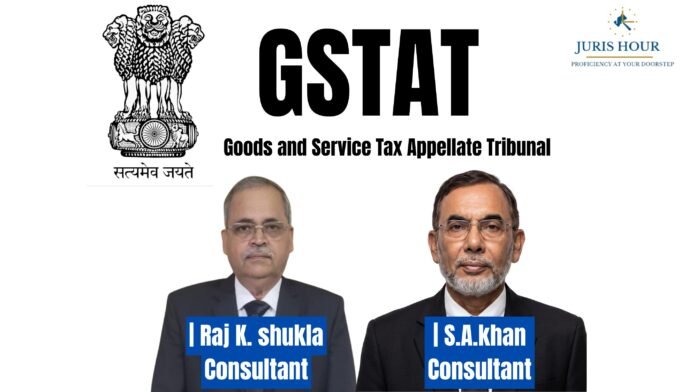
The assessee was represented by Consultants : RK shukla and SA khan ; the department was represented by SGST Deputy Commissioner, Rajesh Kumar Singh.
Membership Required to Access Case Details & Order Copy
To view the complete Case Details and Download Order Copy, you must have an active membership. Please subscribe to continue.
Read More: JURISHOUR | TAX LAW DAILY BULLETIN : 14 SEPTEMBER, 2026

