
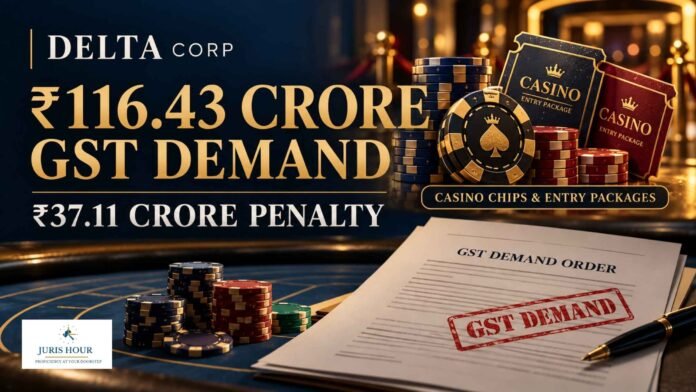
The Goa GST authority has also imposed a ₹37.11 crore penalty and demanded interest on the disputed tax. The company says it is reviewing the orders and intends to appeal.
Delta Corp Limited and two of its subsidiaries, Hightstreet Cruises and Delta Pleasure Cruise, have received GST adjudication orders raising a combined differential tax demand of ₹116.43 crore for periods between July 2017 and March 2022. The orders, dated September 25, 2026, were issued by the Additional Commissioner of Central GST, Goa.
Buy Now: E-Magazine: 1000+ Landmark GST Judgments (2017–2026)
The demand concerns two aspects of the casino business: the valuation of actionable claims linked to chips sold to customers, and the GST treatment of casino entry packages. The authority has also imposed a penalty of ₹37.11 crore and sought interest at 18% per annum on the tax demand from the applicable due dates until payment.
The tax and penalty together amount to ₹153.54 crore, excluding interest. Delta Corp has said its management is evaluating the orders and plans to challenge them through appeals within the statutory timelines.
₹79.32 Crore Demand Linked to Casino Chips
Of the total differential GST demand, ₹79.32 crore relates to actionable claims. According to the reported details of the orders, this amount has been calculated with reference to the value of chips sold to casino customers.
The valuation method is central to the dispute. The amount on which GST is calculated can substantially affect the resulting demand, particularly where chips are purchased and used across multiple rounds of play. The orders quantify a historical shortfall for the affected tax periods; they do not, by themselves, settle any challenge Delta Corp may bring against the authority’s calculation or legal reasoning.
Casino Entry Packages Draw Separate Demand and Penalty
The remaining ₹37.11 crore of differential GST relates to casino entry packages treated by the authority as mixed supplies taxable at 28%. A further penalty of ₹37.11 crore has been imposed in connection with this component under Section 74 of the Central Goods and Services Tax Act, 2017.
A key issue in any appeal will be whether the entry packages were correctly classified and taxed as mixed supplies. The company may also contest the basis for invoking Section 74 and imposing a penalty equal to the disputed tax on those packages. Those questions will depend on the contents of the orders and the evidence considered in adjudication.
Interest is an additional exposure. Although the reported rate is 18% per annum, the information available does not state a final rupee amount for interest, which would depend on the relevant due dates and the amount ultimately held payable.
Earlier Provision and Financial Impact
Delta Corp had recognised an exceptional provision of ₹200.62 crore in its first-quarter FY27 results in relation to GST liabilities on actionable claims. The September orders now specify a ₹79.32 crore differential demand for the actionable-claims component and introduce a separately quantified demand and penalty concerning entry packages.
The ₹200.62 crore provision should not simply be added to the ₹153.54 crore tax-and-penalty figure: the extent to which the provision covers amounts raised in these orders requires a review of the company’s accounting disclosures. The ultimate financial impact will also depend on the outcome of the proposed appeals and the treatment of interest.
The orders mark a significant step in the long-running dispute over GST on casino operations, but the demands remain open to challenge. For now, the principal questions are whether the tax authority’s valuation and classification will survive appeal, whether the penalty will be sustained, and how much interest, if any, will ultimately be payable.

